Cognitive Resilience
-
News
-
Just now
This article was translated by AI. Read the original article on Kompas.com. See Original

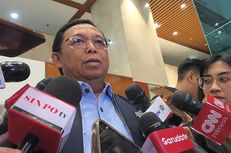
AHMAD Basarah, Secretary of the Vice Presidential Candidate Verification Team (Cawapres) of the MPR, stated that the change of vice president mid-term is a consequence of "the lack of thoroughness in organizing the Presidential Election in 2024" (Kompas.com, 25/11/2026).
This remark was made during the MPR's verification of the two vice presidential candidates proposed by President Prabowo Subianto, Sugiono and Andi Amran Sulaiman.
Basarah's statement warrants further contemplation.
Why were electoral organizers lax in reviewing candidate qualifications?
Was this negligence merely an administrative error due to incompetence, or are there more fundamental issues in the relationship between power and state institutions?
This question is crucial, as the founders of our nation chose a democratic state that requires not just correct procedures, but institutions with the courage and independence to fulfill their mandates.
When state institutions lose autonomy in the face of power, the issue goes beyond mere individual mistakes of the electoral organizers.
We may be confronting potential structural issues within the political culture.
The candidacy of Gibran Rakabuming Raka for vice president serves as a significant and costly lesson.
The Constitutional Court's (MK) ruling Number 90/PUU-XXI/2023 altered the interpretation of age requirements for presidential and vice presidential candidates.
This ruling was subsequently followed by controversies surrounding the nomination process.
The Honorary Council of the MK (MKMK) stated that Anwar Usman committed severe ethical violations and dismissed him from his position as Chief Justice.
The Honorary Council of Election Organizers (DKPP) also imposed ethical sanctions on KPU commissioners related to the Prabowo-Gibran nomination process.
While these events do not necessarily prove organized political engineering or pressure, they raise critical questions regarding why institutions designed to uphold the constitution and democracy become involved in issues that erode public trust.
I believe this dilemma arises from a lingering feudalism of power within the republic. Certain parties might profit from its maintenance, even fostering its growth.
Antonio Gramsci explained that power is not always maintained through coercion.
Dominance can also occur through hegemony, where the views and interests of the dominant group are accepted as normal by society, including those outside the group.
This concept is relevant for understanding how power can influence institutions without always manifesting as direct commands.
In a highly centralized political environment around a leader, officials may grasp the interests of power and adjust their behavior without needing explicit orders.
Compliance can then arise not solely from fear of sanctions.
It can stem from the belief that upholding the will of the ruler is part of one's duty or, at the very least, the safest choice.
This is where hegemony operates. Personal interests can appear to be collective interests.
Loyalty to a figure may be perceived as loyalty to the state. Meanwhile, a critical stance towards the powers that be risks being seen as disloyalty.