
Jimly Asshiddiqie Proposes Upcoming Presidential Election to Only Choose President, Vice President Elected by MPR
-
News
-
2 minutes ago
This article was translated by AI. Read the original article on Kompas.com. See Original
JAKARTA, KOMPAS.com - A year has passed since flash floods and landslides affected several areas in Aceh, North Sumatra, and West Sumatra.
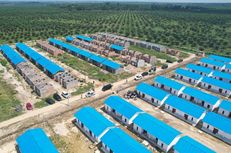
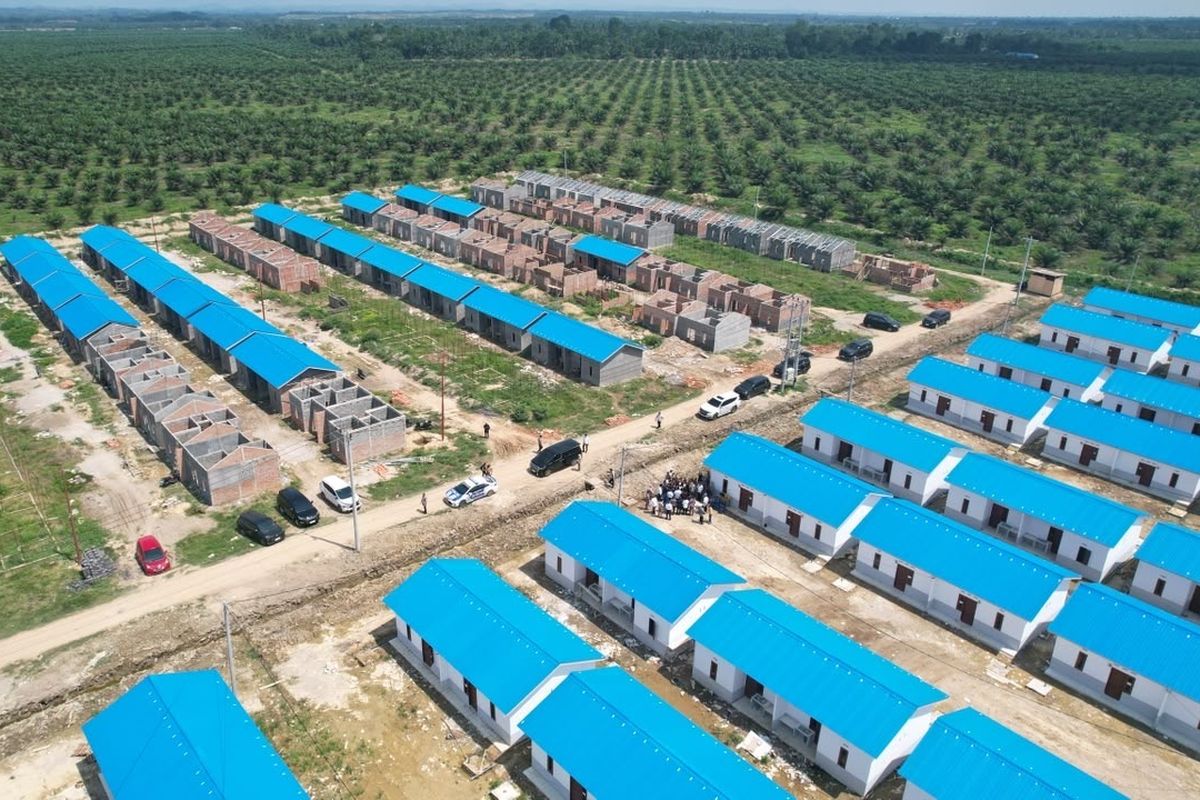
In the recovery phase, the government is focusing on rehabilitation and reconstruction, which includes the construction of permanent housing (Huntap) for residents who lost their homes, as well as the restoration of infrastructure and public facilities.
Expert from the Government Communication Agency (Bakom) RI Muhamad Hidayat stated that the handling and recovery efforts are being conducted by the government in collaboration with local governments and all relevant stakeholders, and the process continues to progress.
Most public services in the affected regions have resumed operations.
“One year after the Sumatra disaster, we see that most community activities and basic services have returned to normal. This outcome results from the collaboration between the central government, local governments, the military, police, and all community elements in expediting recovery,” Hidayat said in a statement from Bakom RI, Wednesday (25/11/2026).
He revealed that the rebuilt infrastructure spans several sectors.
In the education sector, 4,821 out of 4,922 affected schools have resumed learning in their original buildings.
Meanwhile, 99 schools are temporarily utilizing makeshift classrooms, and two schools are using alternative locations.
So far, some schools are still conducting learning activities in tents.
In the healthcare sector, all 87 hospitals and 867 community health centers (puskesmas) that were affected have resumed providing services to the public.
However, six supporting puskesmas in Tapanuli Tengah and Sibolga City have not yet returned to their original buildings.
The management of these facilities is scheduled to continue into 2027–2028.
Meanwhile, the construction of housing for affected residents is ongoing.
From a target of 60,055 permanent housing units (Huntap), 2,892 units have been completed, and 9,902 units are still under construction.
In total, there are 12,794 Huntap units that have been completed or are in the process of being built.
The government has also constructed 20,770 temporary housing units out of a target of 20,803 units.
Additionally, Housing Waiting Funds have been disbursed to 26,761 recipient families, covering all households targeted by the program.
However, this situation does not mean that the entire recovery process is complete.
“The government acknowledges that recovery is not yet fully accomplished. The construction of permanent housing for residents who lost their homes is still ongoing. The government is committed to ensuring that affected communities can return to live in safe and adequate housing, providing them with stability to rebuild their lives,” he said.
He also acknowledged that the recovery process still faces several challenges.
The weather conditions in some affected areas impact the smooth progress of construction work and river normalization.
Furthermore, the extensive affected areas necessitate that rehabilitation and reconstruction work be conducted gradually according to priority scale.
In addition, some affected locations are in remote areas that are hard to reach, and the disruption of main transportation routes delays the mobilization of heavy equipment and the distribution of building materials.
From a coordination standpoint, Minister of Home Affairs Tito Karnavian reported that the post-disaster rehabilitation and reconstruction plan for Sumatra includes 11,520 activities conducted by 23 ministries and agencies.
The budget required for implementation over three years, from 2026 to 2028, is estimated at around IDR 100.1 trillion.
Of that total, approximately IDR 29.9 trillion has already been disbursed.
Additionally, the government is preparing to continue recovery programs in 2027.
A number of projects that could not be completed in 2026, such as school construction and the recovery of the agriculture and fisheries sectors, are proposed to be continued the following year.
The recovery budget for 2027 is projected at around IDR 42 trillion and is still under discussion by the government.
Beyond the recovery of housing and basic services, the government continues addressing flood control infrastructure.
Normalization is being conducted on 137 rivers and 38 estuaries.
As of November 2026, normalization has been completed on 36 rivers and seven estuaries, while work at other locations is still ongoing.
“For the government, recovery is not just about repairing damaged infrastructure but also restoring the lives and hopes of the community. Therefore, the rehabilitation and reconstruction process will continue gradually until the needs of affected residents are met,” Hidayat stated.
It is noted that the floods and landslides in November 2025 impacted 53 districts/cities and 4,533 villages across three provinces.
More than 2.1 million people were temporarily displaced, and damage was recorded on more than 184,000 homes, 4,922 educational facilities, and 954 health facilities.