
Perludem: Election of Vice President Through Deliberation Contradicts UU MD3
-
News
-
1 minute ago
This article was translated by AI. Read the original article on Kompas.com. See Original
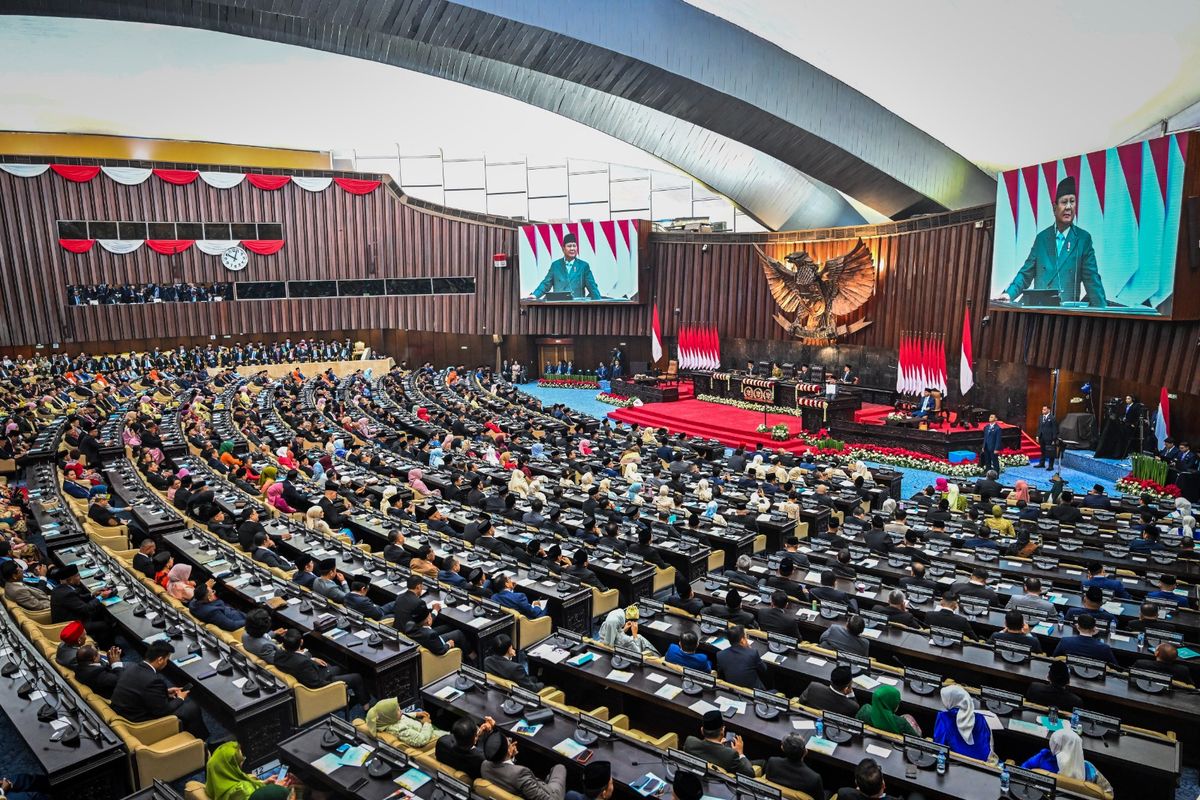
JAKARTA, KOMPAS.com - The proposal for the People's Consultative Assembly (MPR) to elect the vice president through a deliberation mechanism is considered to contradict Law No. 13 of 2019 regarding the MPR, the House of Representatives, the Regional Representative Council, and the Regional House of Representatives (UU MD3).
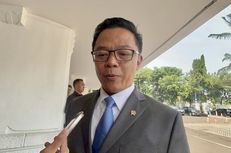
"If it is changed to a consensus approach, it will contradict the UU MD3," said Haykal, a researcher from the Association for Elections and Democracy (Perludem), to Kompas.com on Wednesday (25/11/2026).
Haykal explained that the current MD law explicitly mandates a voting process in this procedure.
This is stipulated in Article 46 Paragraph (5) of the UU MD3, which states, "The vice presidential candidate who receives the most votes in the MPR's plenary session shall be appointed as Vice President."
"If we adhere to the existing rules in the UU MD3, the appropriate process should be voting, as Article 46 stipulates that the vice president is the one with the most votes," Haykal said.
He cautioned that changing the election mechanism to consensus would violate established legal norms.
Moreover, Haykal also highlighted the potential for expedited legislative revisions aimed at facilitating this proposal.
According to him, making rapid changes to the law to accommodate consensus would present serious legal complications.
"It feels very forced if a law is altered in a short time just to accommodate consensus processes," Haykal stated.
"From a legal standpoint, this would be problematic, and its legal legitimacy could be questioned," he added.
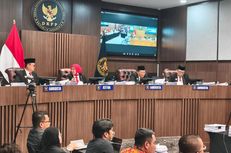
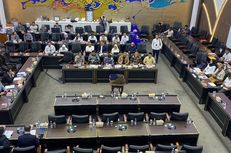
Previously, the MPR RI was reviewing the proposal for vice presidential elections in a plenary session through consensus without a voting process.
The Executive Chairman of the Ad Hoc Committee (PAH) of the MPR, Benny K Harman, stated that this proposal arose during initial discussions on Tuesday (24/11/2026) as it was deemed in line with the fourth principle of Pancasila.
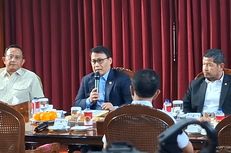
"There were suggestions for consensus because that reflects our national spirit, the fourth principle of Pancasila. However, others mentioned that our constitution mandates that all decisions in the MPR must be made through voting," Benny said at the Parliament Complex, Senayan, Jakarta.
Benny emphasized that both options are yet to be decided as discussions are still in the gathering of input stage from the members of the PAH MPR.
Meanwhile, several constitutional law experts invited by the MPR to discuss the mechanism for selecting the vice president also suggested consensus as a method.
For instance, Jimly Asshiddiqie proposed that the MPR deliberate involving President Prabowo Subianto in selecting the vice president.
"For example, represented by MPR leadership from all parties, to discuss what is best. No need for voting. Just choose between these two. If necessary, deliberation should also be conducted with the president to see what is best, because generally, the factions in the MPR prefer this way," Jimly said.
Similarly, Hamdan Zoelva also encouraged the MPR to prioritize deliberation over voting.
"Certainly, in our state tradition and also in the reality of the decision-making hierarchy in the MPR, deliberation is the most fundamental practice that should be prioritized. Hence, if an agreement is reached through deliberation, it is more harmonious. It is better," Hamdan stated.
However, both emphasized that the MPR may still use a voting system to select the vice president if the deliberation mechanism is not feasible.