
Meutya Hafid: Journalistic Work Must Be Protected from Appropriation by AI
-
News
-
7 minutes ago
This article was translated by AI. Read the original article on Kompas.com. See Original
THERE are nations that view geography merely as expanses of land, coastlines, clusters of islands, and territorial boundaries.
However, there are also nations that understand geography as both a historical destiny and a source of strength to determine their future.
Indonesia should belong to the latter category.
As an archipelagic nation located at the intersection of two continents and two oceans, Indonesia not only possesses geographical advantages but also bears a geopolitical responsibility that shapes the trajectory of its history.
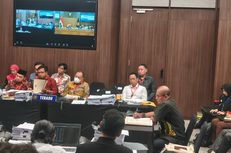
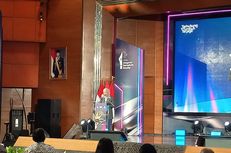
This perspective was increasingly highlighted during the National Seminar themed “Geopolitics and Indonesia’s Future”, organized by Universitas 17 Agustus 1945 (Untag) in Surabaya, East Java, on Monday, November 23, 2026.
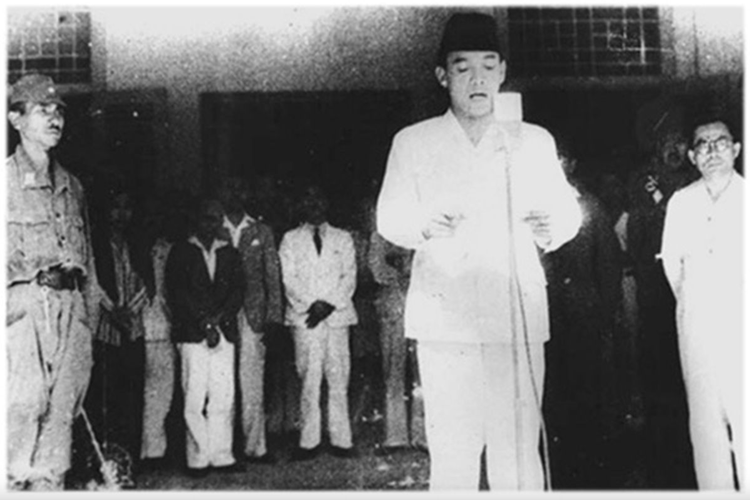
In a forum attended by approximately 450 participants, Dr. Hasto Kristiyanto revisited the geopolitical thoughts of Bung Karno.
He reminded the audience of the diminishing narrative of liberation in contemporary political discourse, while simultaneously positioning Pancasila as an instrument for changing social structures.
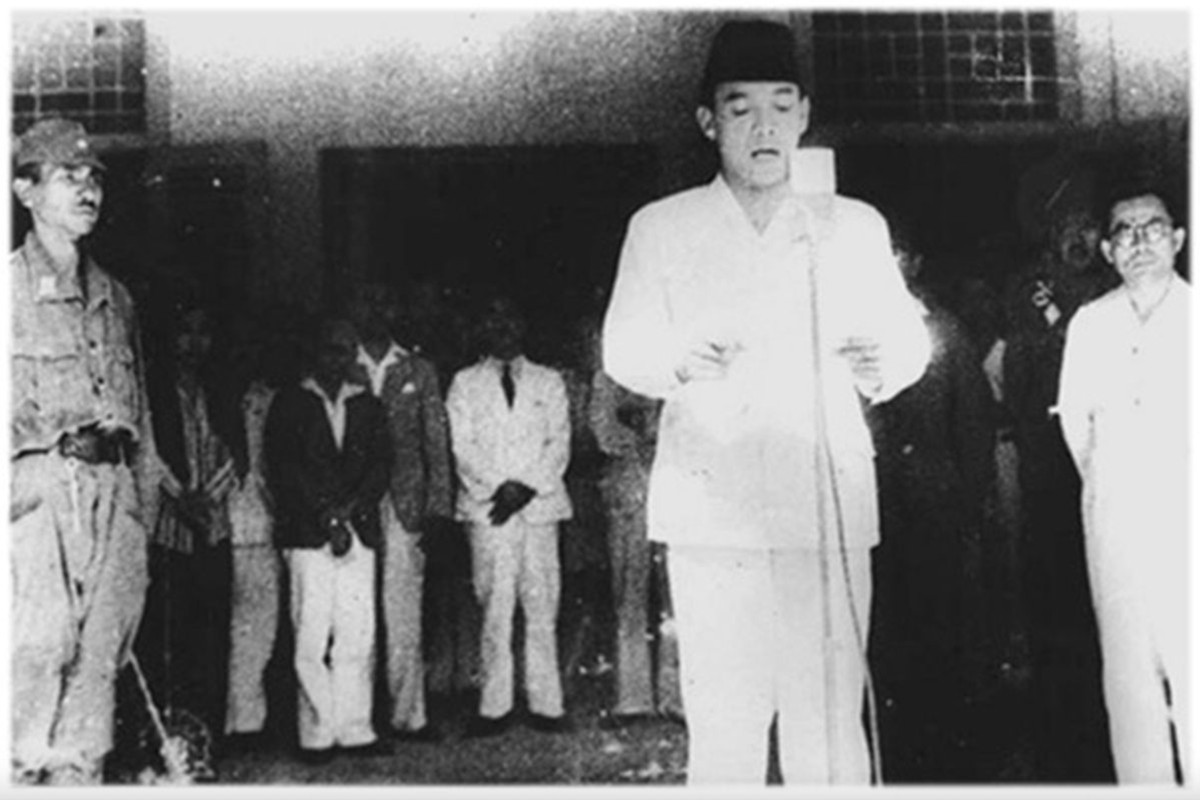
Therefore, the geopolitics of Bung Karno should not merely be perceived as a theory related to the relationship between territory and power.
Within it lies a deeper question: what is the purpose of a nation’s independence, what kind of strength is to be cultivated, and to whom should all that strength be dedicated?
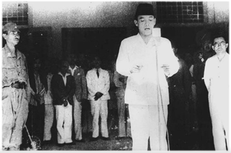
Bung Karno once had significant concerns about the Pacific region.
This great leader of a great nation laid the groundwork to understand that geography is not just a matter of location, land mass, clusters of islands, or the expanse of oceans.
Geography is also a historical force that can determine the direction of a nation’s journey.
From the geopolitical perspective of Bung Karno, the Pacific is not an empty space separating continents but a strategic area where global economic, political, trade, defense, and civilizational interests converge.
Bung Karno once articulated his view that the future of the world lies in the Pacific, and whoever controls the region will exert significant influence worldwide.
This idea is compelling not only for its boldness in interpreting the changing times but also for reflecting the awareness that the center of gravity of global power can shift in response to economic, technological, and strategic interests of countries.
Now, as the world enters the 21st century, the relevance of these thoughts becomes increasingly apparent.
The Indo-Pacific region, connecting the Indian Ocean and the Pacific Ocean, has evolved into a center of global geopolitical competition.
In this area meet major economic powers, international trade routes, energy sources, and the defense interests of large nations.
Indonesia stands right in the middle of this strategic space. However, advantageous geographical positioning alone does not automatically generate geopolitical strength.
A strategic position only holds significance when accompanied by economic, technological, defense, and diplomatic capabilities that can transform geographical advantages into national bargaining power.
Indonesia must not merely be a crossroads of global interests but must be able to determine its own interests.
Today, the Indo-Pacific region is not just a geographical term but a strategic space that reflects changes in the structure of international power.
Whereas in the previous century, global geopolitical focus was heavily centered around Europe and the Atlantic, the Indian and Pacific Oceans are increasingly shaping global trade, security, and economic growth.
This shift is related to the economic rise of China and India, as well as the growing interests of the United States, Japan, Australia, and European countries in this region.
The rivalry between the United States and China is one of the main axes of Indo-Pacific dynamics.