
Meutya Hafid: Journalistic Work Must Be Protected from Appropriation by AI
-
News
-
7 minutes ago
This article was translated by AI. Read the original article on Kompas.com. See Original
However, Indonesia's geopolitical interests do not stop at merely safeguarding its territory.
The sea must become a source of prosperity and national economic strength.
Developing ports, inter-island connectivity, fisheries industries, processing of marine products, and strengthening coastal economies are integral to Indonesia's maritime strategy.
Likewise, mineral, energy, and natural resource wealth must be managed to create added value.
Thus, mastery of processing technologies, manufacturing industries, and distribution networks will enhance national bargaining power.
In facing great power competition, Indonesia must maintain a free and active foreign policy.
Being free does not mean distancing itself from international cooperation, while being active does not imply following every interest of major powers.
This principle provides space for Indonesia to collaborate with the United States, China, Japan, India, Australia, and other countries based on national interests.
Most importantly, these relationships must not diminish Indonesia’s capacity to assert its own stance.
Indonesia must be able to bridge the interests of various nations without losing its principles.
In an increasingly competitive world, diplomatic strength grows from the capability to build trust while maintaining principles.
The fundamental question surrounding the entire Indo-Pacific dynamic is how Indonesia positions itself in the changing world order.
Will it merely become a nation with a strategic geographical location, or evolve into a power that shapes the direction of the region?
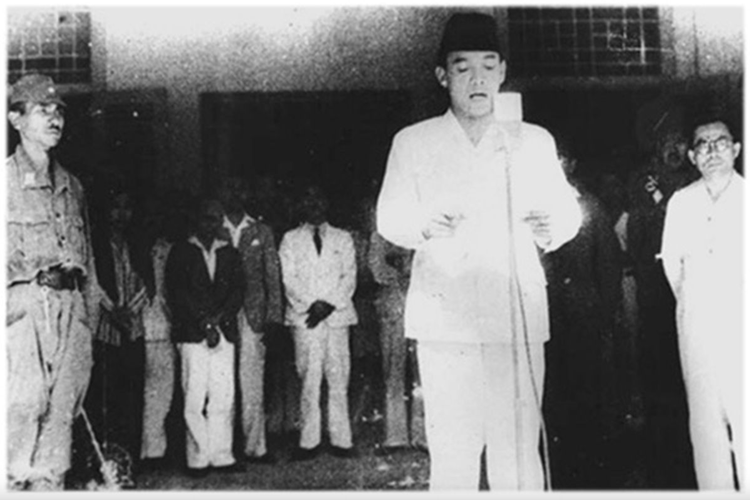
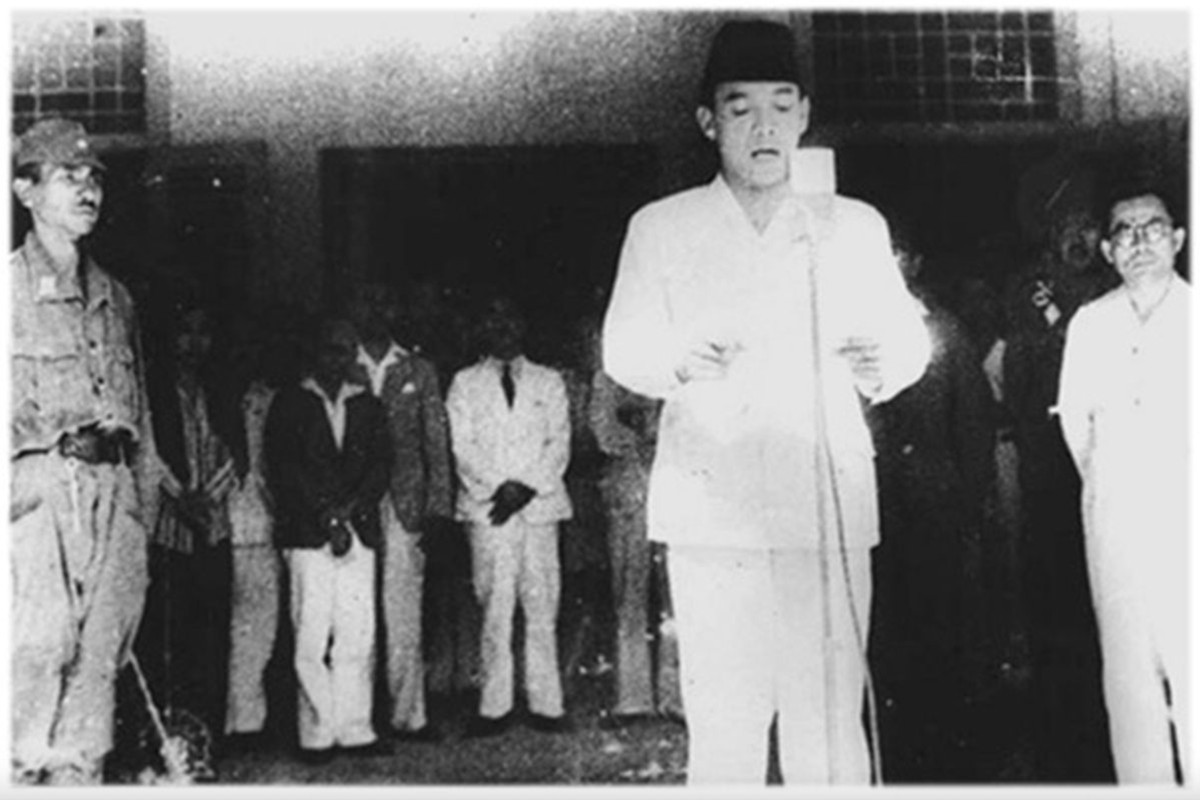
This question takes us back to Bung Karno’s thoughts.
The 1955 Asian-African Conference illustrated Indonesia's past efforts to transform nations that once were subjects of colonialism into subjects with a voice in international relations.
The conference affirmed every nation’s right to determine its own future without having to submit to the will of major powers. This legacy shows that a nation's strength is not always measured by the number of warships, fighter jets, or defense budgets.
There is, therefore, a power that stems from ideas, international solidarity, and the courage to fight for justice.
Thus, Indonesia's geopolitical sovereignty must be built through strengthening maritime defense, economic independence, mastery of technology, energy and food security, and regional diplomatic leadership.
Geopolitics must not stop as a discussion about territorial boundaries and competition between nations.
Ultimately, it must answer how geographical space and national resources generate welfare for all citizens.
Bung Karno’s thoughts remind us that independence is not just about being free from colonialism; it is also about the ability to determine the course of one’s own history.
In the context of contemporary geopolitics, that teaching takes on new meaning: Indonesia must be independent in thought, autonomous in building national strength, and sovereign in determining its international relations.
The Pacific can indeed become one of the decisive centers of the world’s future.
However, for Indonesia, the real issue is not merely who will control the Pacific but how to ensure that the future of the region is not determined without the presence and interests of the Indonesian nation.
A nation must not merely exist in the vortex of history; it must possess the capability to shape history.