
Gibran's Nomination Hearing at DKPP, KPU to Present Former Chairman Hasyim Asy'ari as Witness
-
News
-
1 minute ago
This article was translated by AI. Read the original article on Kompas.com. See Original
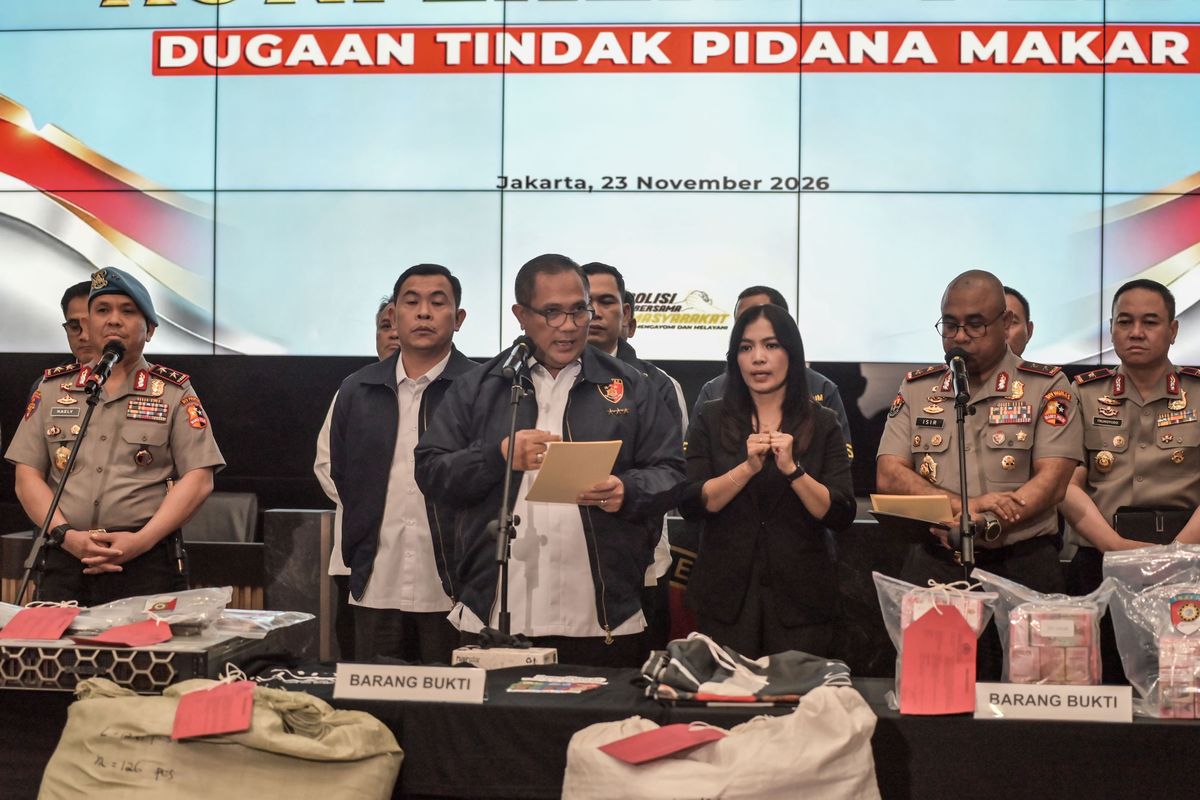
If the legal and political complexities above are not managed well, there is a risk that the police will be seen as engaging in excessive criminalization against LSP and the Gank.
This means that, although there is strong evidence to conclude that LSP and his group engaged in illegal wiretapping, items such as shirts and flags are too far-fetched to then be used as the basis for designating LSP and his group as committing treason.
Excessive criminalization, in turn, is counterproductive to positive public sentiment toward National Police Chief General Suyudi Ario Seto.
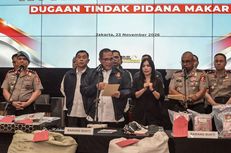
Based on the presentation by the Head of Criminal Investigation Department of the National Police, I formulate LSP's actions into three objectives. LSP's objective is to maintain the position of National Police Chief. The goal is the erosion of public trust in the Prabowo Subianto government.
The aim—or the ultimate goal of LSP—is the realization of a situation depicted in Articles 191 and 193 of the Criminal Code.
If the police persists in holding that the aforementioned items are evidence of preparation for treason, linked to Article 193 of the Criminal Code, the police's work in this case will succeed in convincing the public that after the government is toppled, the police can quickly announce what LSP's next target is.
As a four-star general, especially a former National Police Chief, it can be assumed that LSP has certainly contemplated what he would do or what would transpire after the government is overthrown.
It is almost inconceivable that a high-ranking police officer of LSP's caliber would be obsessed solely with toppling Prabowo from the presidency, period.
The same applies when linked to Article 191 of the Criminal Code; it would be naive to assume that, as a former TB-1 with the longest term, LSP's thoughts would stop solely at paralyzing President Prabowo's government.
In other words, should criminal proceedings conclude at the moment LSP and his group are subjected to penalties, there would seem to be a lack of genuine state action to reach what should be the desired endpoint.
Assuming the legal process—let's just say—has been completed, it could still feel incomplete since it was contained to a certain scope, preventing the deeper mysteries of LSP's mind from being revealed, which is, "after Prabowo is toppled, what then?"
There is still one more concern that also relates to the incompleteness in uncovering the alleged treason case involving LSP and his group.
Starting from two facts. First, the Lawful Interception Management System (LIMS) has been owned by the police institution since 2010. Second, the police are not a clean state institution devoid of the abuse of power.
According to Human Rights Commission data, the police rank first as the state institution most frequently reported by the public.
The serious question is: is General Listyo Sigit Prabowo really the only National Police Chief who has ever engaged in illegal wiretapping?
Besides Prabowo Subianto, have there been previous presidents who also fell victim to abuse of power by TB-1?
Where are the wiretap data utilizing LIMS prior to 2025—neatly archived or also lost?