Police Law Formally Flawed, MK Highlights Unpublished Draft
-
News
-
5 minutes ago
This article was translated by AI. Read the original article on Kompas.com. See Original

Who guarantees the auction's transparency and that the buyers do not have conflicts of interest?
The managing and supervising bodies established under this law must work with independent audits, data transparency, and accountability that can be scrutinized by the public.
Without this, the success of asset seizure will only give rise to new problems: we manage to take assets from corruptors but subsequently lose the assets in their own management.
The 2025 Corruption Perceptions Index presents an uncomfortable context indicating that Indonesia's score dropped three points to 34 out of 100, ranking 109 out of 182 countries.
This index measures the perception of corruption in the public sector, not the extent of corruption or the effectiveness of the Asset Forfeiture Law.
Nevertheless, this drop serves as a reminder that regulatory renewal occurs amid challenges to trust in governance and law enforcement.
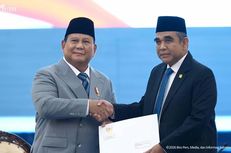
Therefore, the work does not conclude with the ratification ceremony. The government must ensure that implementing regulations and the two mandated bodies are transparently established.
The House of Representatives should supervise this process substantively. KPK, the Attorney General's Office, the National Police, and PPATK require clear coordination protocols, secure data exchange, and distinct divisions of responsibility to avoid overlaps.
At the same time, the government needs to explore unexplained wealth or illicit enrichment instruments through appropriate legal channels, with standards of proof, rights to defense, and robust judicial oversight.
Thus, the measures of success must be expanded. No longer should we only count how many suspects are arrested or the monetary value of assets seized. Those are just the beginning.
Far more crucial is the tally of how much illegal wealth is genuinely traced, proven in court, confiscated, and ultimately returned to state coffers or to the victims.
How long will that take? What are the costs of managing those assets during the process? How much value do assets lose or diminish due to mismanagement?
All of this must be made public. Without such transparency, we will never know if this law truly works or operates only on paper.
This Asset Forfeiture Law is an advancement, but not the final answer. A strong state in combating corruption is not merely one with greater power to seize people's property.
A strong state is one capable of doing four things simultaneously: uncovering hidden illegal wealth, proving its origins, restoring it to the public, and simultaneously overseeing its own officials executing that power.
For without capability and accountability, this new anti-corruption weapon will only leave old gaps dressed in new clothes.
Ultimately, the Asset Forfeiture Law ratified after an 18-year wait represents a paradoxical advancement. It provides the state with sharper weapons to seize the proceeds of crime.
Yet, at the same time, it leaves the most strategic gap open: the lack of illicit enrichment and unexplained wealth instruments to scrutinize officials’ wealth growth without reasonable explanations, stringent restrictions on non-conviction asset forfeiture only applicable in cases of death, flight, or permanent illness with a minimum value of Rp 1 billion, and the prohibition of retroactive application that keeps older assets difficult to touch.
This legal gap is compounded by the significant gap between 43.7 million financial reports received by PPATK and the assets that genuinely return to the state, coupled with a drop in the Corruption Perceptions Index to 34 and a largely compliant status from FATF.
Thus, the true test of this law lies not in how boldly the state seizes assets but in how adept it is at forging data integration between LHKPN-PPATK-tax-land administration, forming transparent and publicly auditable management and supervisory bodies, and reviewing illicit enrichment instruments with strict standards of proof and property rights protections.
Without that capacity and accountability, this law will merely become a procedural victory that confiscates easily provable assets while hidden illegal wealth disguised through nominees, layered companies, and foreign jurisdictions continues to thrive.
A strong state is not the one most empowered to seize assets but the one that effectively proves their origins, restores them to the public, and supervises its officials to ensure that this new power does not devolve into new arbitrariness.