
Careers of Generals Involved in Prabowo Wiretap Case: 3 Officers Transferred
-
News
-
7 minutes ago
This article was translated by AI. Read the original article on Kompas.com. See Original
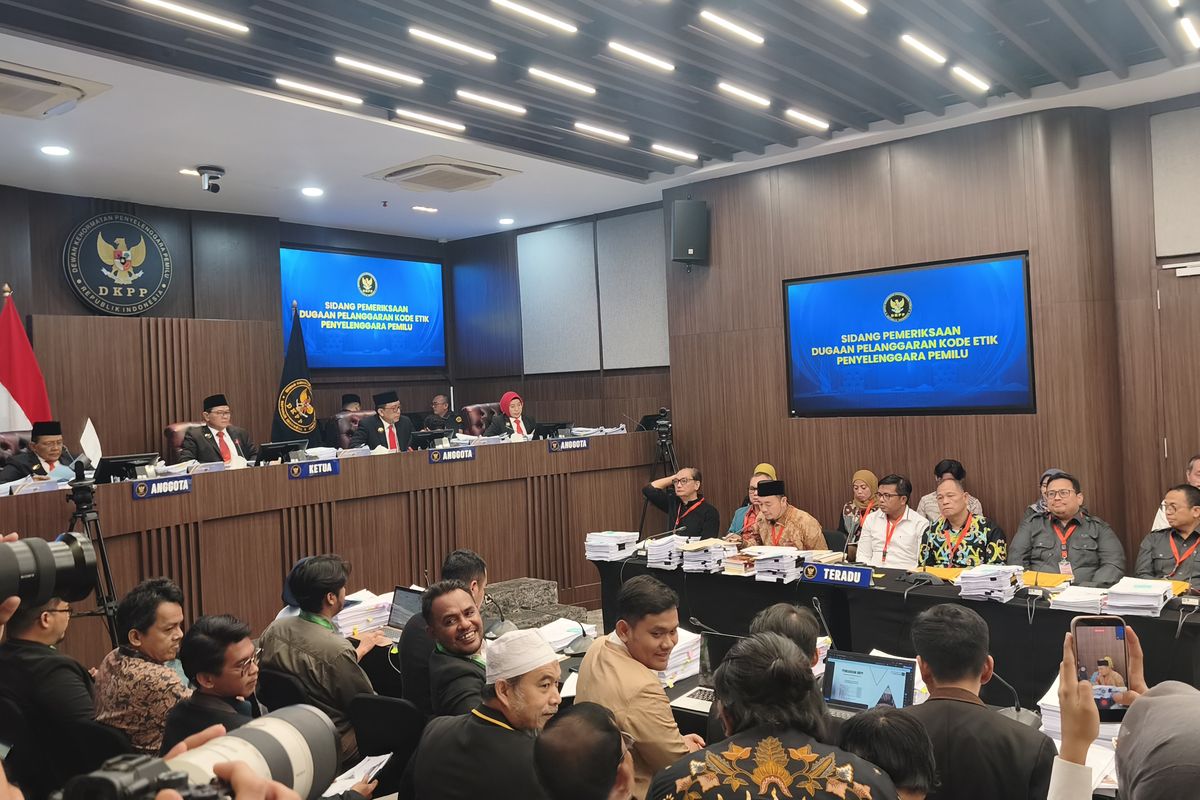
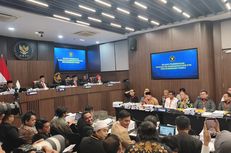
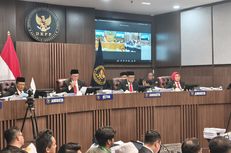
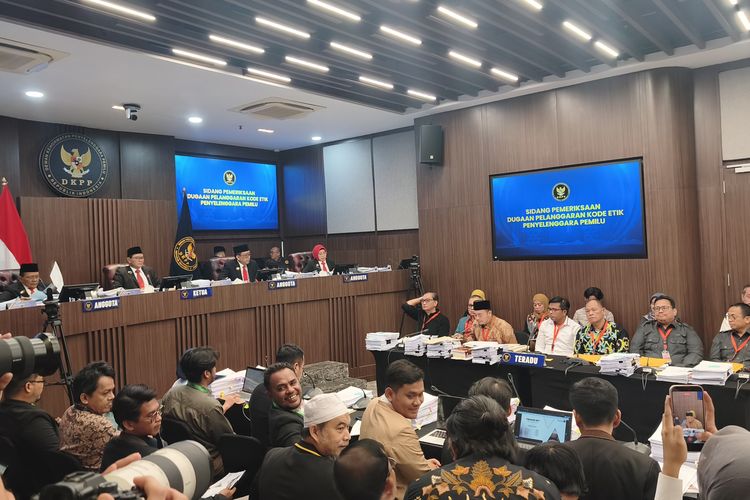
JAKARTA, KOMPAS.com - The Honorary Council of Election Organizers (DKPP) has commenced hearings on allegations of ethical violations by election organizers concerning the educational qualification controversy surrounding Gibran Rakabuming Raka as a vice presidential candidate in the 2024 elections.
During the hearing, complainants raised concerns about the inclusion of Article 18, Paragraph 3 in General Election Commission (KPU) Regulation Number 19 of 2023.
"The essence of the report in this case a quo is the action by KPU RI, which allegedly approved Gibran Rakabuming Raka as a vice presidential candidate by incorporating Article 18, Paragraph 3 into KPU Regulation Number 19 of 2023," said the complainant's attorney for case number 26-PKE-DKPP/XI/2026, Saleh Al Ghifari, during the DKPP hearing on Monday (23/11/2026).
The complainants argued that the provision in Article 18, Paragraph 3 of KPU Regulation Number 19 of 2023 exempts candidates from submitting proof of senior high school (SMA) graduation or an equivalent qualification from foreign institutions if they already possess proof of higher education completion.
According to the complainants, this regulation contradicts Article 169, Letter r of Law Number 7 of 2017 concerning Elections and Article 18, Paragraph 1, Letter n of KPU Regulation Number 19 of 2023.
"The exemption in Article 18, Paragraph 3 of KPU Regulation 19 of 2023 has altered the requirements for educational qualifications for presidential and vice-presidential candidates. KPU RI is also alleged not to have conducted fact verification of the administrative requirements for vice-presidential candidate Gibran Rakabuming Raka," added Saleh.
The complainant in case number 26-PKE-DKPP/XI/2026, Sri Afrianis, outlined four main points regarding the formation and application of Article 18, Paragraph 3 of KPU Regulation Number 19 of 2023.
"First is the issue of transparency and participation in normative formation because the substance of the exemption in Article 18, Paragraph 3 was not presented during public testing or meetings with the DPR but instead emerged during the harmonization stage," stated Sri.
The second point highlighted by the complainants is the differing mechanisms for proving educational qualifications between presidential and vice-presidential candidates compared to candidates for members of the DPR, DPD, and DPRD, despite deriving from the same legal framework.
The third point pertains to KPU’s failure to directly verify educational documents, while the fourth point concerns contradictions in statements made during the Constitutional Court trials.
"The fourth point is revealed in the trial facts at the Constitutional Court which clearly indicate a contradiction between the witness statements presented by KPU and the confirmation provided by the Education and Culture Ministry, which contradict each other," said Sri.