

The MK Claims that the Discussion of the Police Law in the DPR Does Not Comply with the Stages of Law Formation
-
News
-
4 minutes ago
This article was translated by AI. Read the original article on Kompas.com. See Original
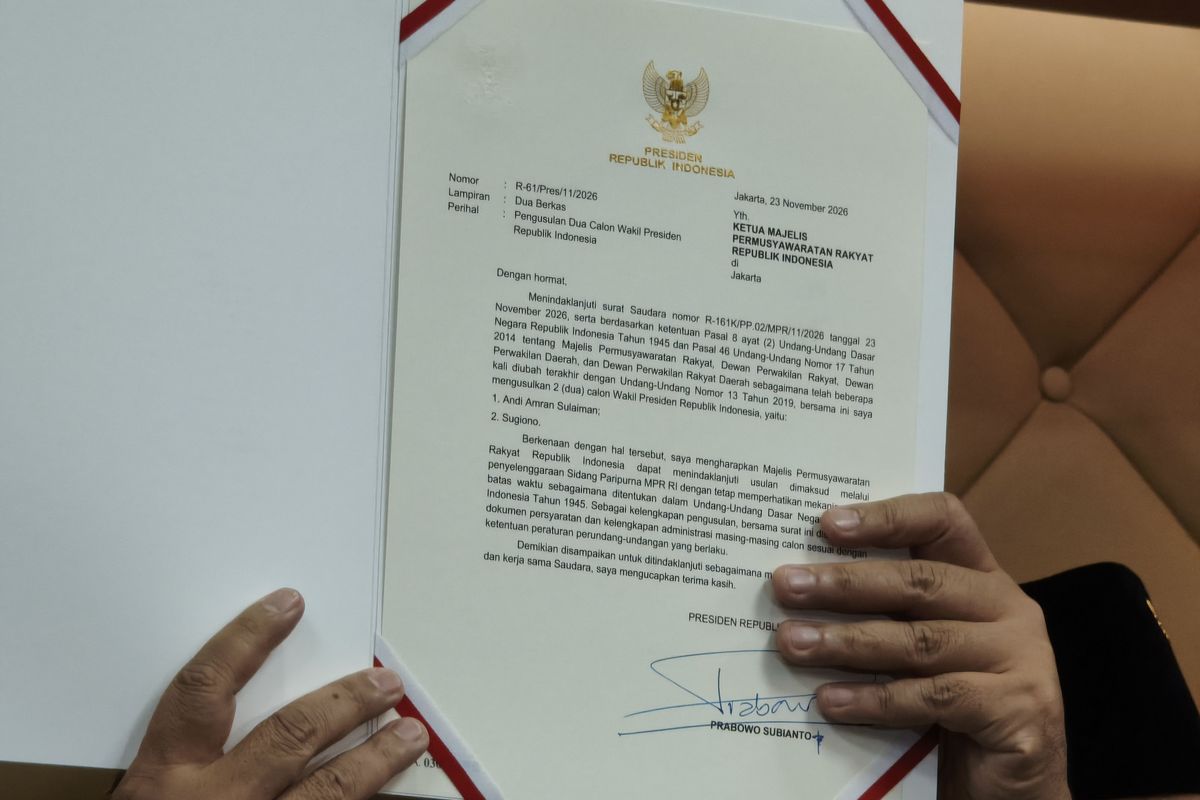
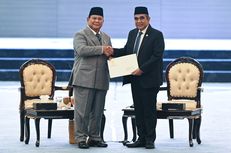
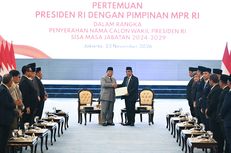
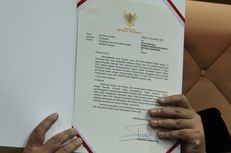
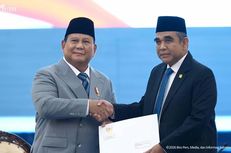
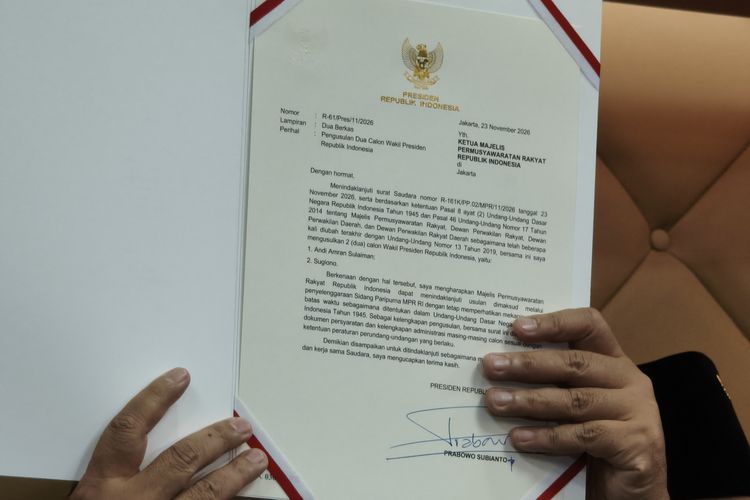
FINALLY, President Prabowo Subianto submitted two names for vice presidential candidates to the People's Consultative Assembly (MPR) on Monday (23/11/2026).
Andi Amran Sulaiman and Sugiono emerged as the answer to the political speculation that had arisen since Gibran Rakabuming Raka announced his withdrawal.
Prior to this, several names were discussed, ranging from Sufmi Dasco Ahmad to Yusril Ihza Mahendra.
Now, the speculation about who the President would nominate has come to an end. However, a much more intriguing question arises: why did Prabowo choose these two figures?
In politics, a leader's decisions never stand alone.
They relate to past experiences, present interests, and future possibilities that one wishes to shape.
Therefore, the nomination of Amran and Sugiono is compelling not merely as a constitutional requirement, but also as a political communication regarding the direction of Prabowo's power.
Niklas Luhmann, in his work Trust and Power, explains how power operates as a communication medium that enables decisions to unfold within a complex society.
From this perspective, the two names forwarded by the President are not merely personal choices, but decisions that alter the future possibilities of political relations.
Both have equivalent constitutional standings.
However, upon examining their networks, experiences, and political positions, Amran seems to offer potential for power expansion that differs from Sugiono's.
Andi Amran Sulaiman is no stranger in the government.
He previously served as Minister of Agriculture during Joko Widodo's first term, was reappointed in October 2023, and retained by Prabowo in the Merah Putih Cabinet.
Born in Bone, South Sulawesi, Amran has experience as a bureaucrat in plantation companies, an entrepreneur, and a government official.
He established the Tiran business group before being widely recognized as a minister known for fieldwork, decisiveness, and achieving targets.
This experience granted him a network that extends beyond agricultural bureaucracy.
He connects with local governments, business actors, and parliament through various policy discussions and budget considerations.
Nonetheless, the ability to manage a ministry is certainly different from the responsibilities of a vice president who must grasp the entirety of state issues.
There is also an interesting geographical dimension. Amran hails from South Sulawesi, a region that previously produced Jusuf Kalla, who served as vice president in two different administrations.
They certainly cannot be equated. However, Amran's presence opens the possibility of re-strengthening representation from Eastern Indonesia in national leadership.
Moreover, Amran is a figure who traverses both the Jokowi and Prabowo administrations.
As the political relationship between these two figures undergoes reconfiguration following Gibran's withdrawal, Amran's presence may serve as a communication channel that maintains relations between power groups.
Herein lies the relevance of Edward Aspinall's and Ward Berenschot's thoughts in Democracy for Sale (2019).
Indonesian politics does not only unfold through parties and formal institutions but also via personal networks, patronage, and reciprocal relationships among elites. Amran is at the intersection of several of these networks.