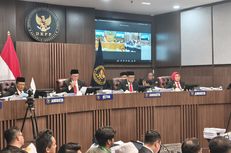


The MK Claims that the Discussion of the Police Law in the DPR Does Not Comply with the Stages of Law Formation
-
News
-
7 minutes ago
This article was translated by AI. Read the original article on Kompas.com. See Original
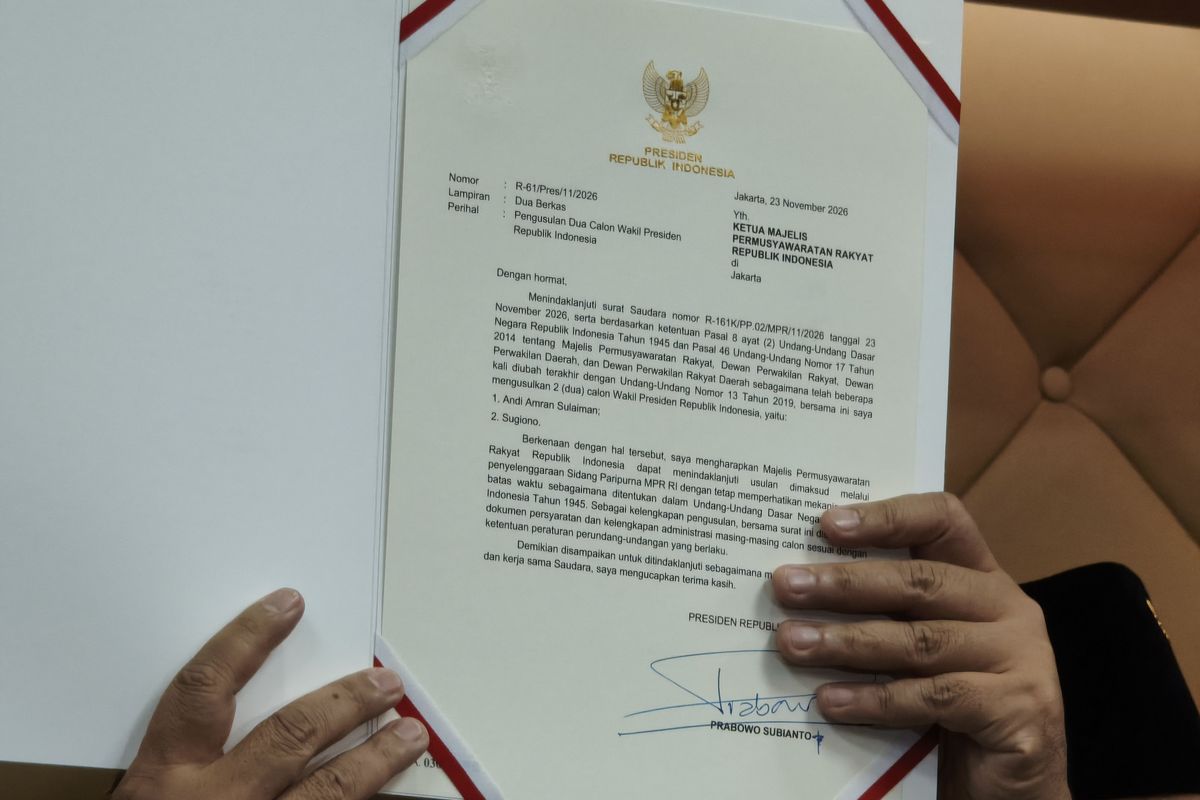
Therefore, the selection of a vice president is not merely a test of Prabowo's coalition strength.
This process will also gauge the MPR's ability to exercise its authority transparently, constitutionally, and responsibly.
A large coalition makes coordination easier.
However, overly concentrated political power can also narrow oversight space if dissent is regarded as a hindrance to governance.
If Amran is ultimately elected, the Prabowo–Amran pair will face challenges far greater than forming political agreements.
Indonesia still grapples with cost of living pressures, employment issues, economic inequality, and global uncertainties.
Amran's experience in the agricultural sector could help the government link food production policies with price stability and farmer welfare.
However, sectoral experience does not automatically address the entirety of economic issues.
The government still requires industrial strengthening, productive investment, public services, and policies capable of expanding economic opportunities for society.
Another issue is how the relationship between the President and vice president is built.
Prabowo needs a partner who can implement joint decisions but also convey differing views when necessary.
Personal closeness can facilitate communication. Conversely, a relationship overly reliant on loyalty risks reducing the space for corrections.
Political trust should allow for differing opinions to be managed, not eliminated.
Returning to Luhmann, trust helps mitigate uncertainty because humans cannot control every possibility of the future.
However, trust always carries risk. It can be maintained when subsequent experiences provide reasons to continue believing.
This is the fundamental challenge for the Prabowo administration, whoever is ultimately chosen by the MPR.
Political support and economic networks may help bolster governance, but they do not automatically generate public trust.
In the end, the most important question is not whether Amran is closer to Prabowo than Sugiono, or how extensive his political and economic networks are.
The question is whether the power configuration formed can improve the lives of the people.
Because power can be built through elite agreements, but public trust cannot be commanded through political decisions.
Indonesia is not merely waiting for a new vice president.
Indonesia is waiting for a new reason to believe that changes at the peak of power truly bring change to the lives of the people.