
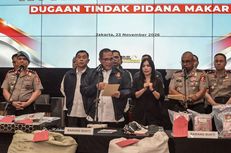
Wiretap Findings of Listyo Sigit and Associates Allegedly Followed by Mass Movements
-
News
-
7 minutes ago
This article was translated by AI. Read the original article on Kompas.com. See Original
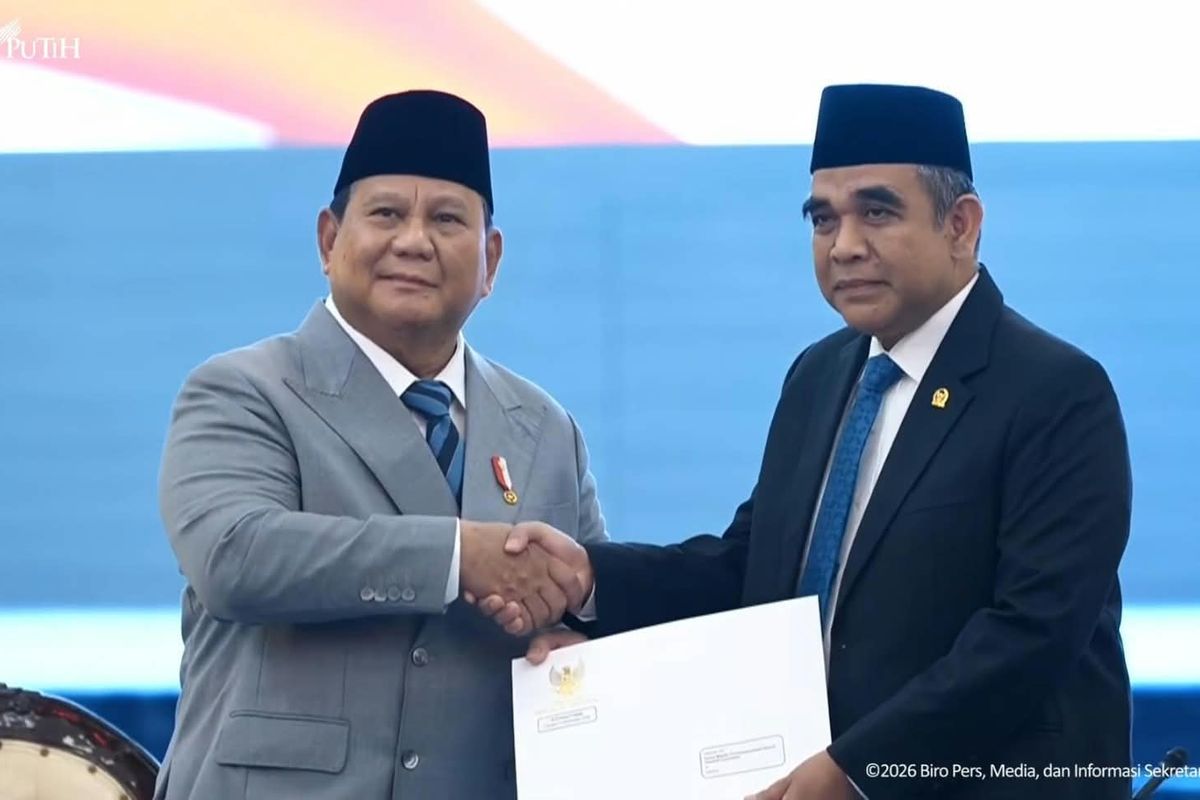
ON DECEMBER 11, 2026, the People's Consultative Assembly (MPR) and President Prabowo will conclude a turbulent chapter in governance by filling the vacant vice presidential seat.
Two names have been proposed, one will be chosen, and promptly inaugurated.
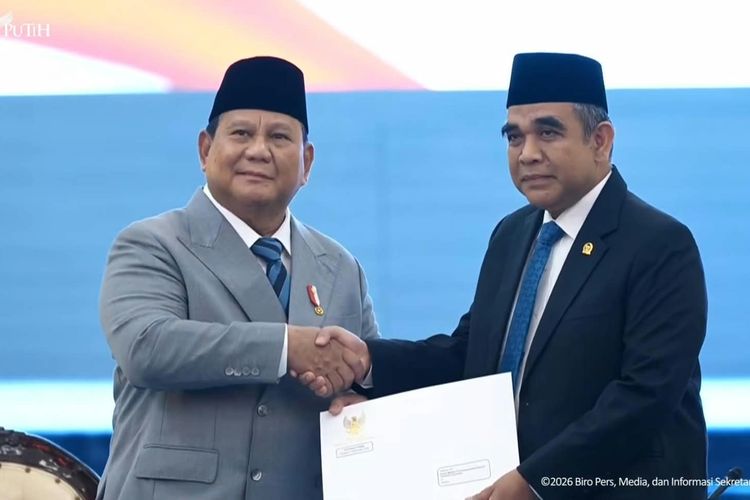
Currently, the noise has narrowed down. President Prabowo has submitted two candidates to the MPR: Sugiono and Andi Amran Sulaiman.
These are not just ordinary names. Both are close associates of the President, both work directly within the cabinet, and both understand how the President thinks and makes decisions.
But precisely because of this, the real question is not merely: who is closer to Prabowo?
A more honest and meaningful constitutional question is: who can translate that closeness into leadership that adheres to the constitution?
Indonesia needs a Vice President who is not just trusted by the President.
Indonesia needs a statesman capable of transforming that political trust into an effective government trusted by the public.
Article 8 paragraph (2) of the 1945 Constitution stipulates that if the vice presidential office is vacant, the MPR must choose a replacement from the two candidates proposed by the President, no later than 60 days.
This constitutional stipulation has been used by the President to determine his running mate.
However, the constitution does not hand over the entire decision to the President. The MPR still has the authority to choose. And the public has the right to question.
Filling the vice presidential seat is not a transaction of power among elites. It is a constitutional mechanism to ensure government continuity.
Samuel P. Huntington in Political Order in Changing Societies (1968) reminds us that stability is not merely the absence of conflict.
Stability is the ability of institutions to manage change without losing effectiveness and legitimacy.
Here lies the importance of examining these proposed names, not just praising them. Both have different credentials. And those credentials must be tested individually.
However, those credentials do not automatically prove one's capacity to fulfill the constitutional responsibilities of a Vice President.
Sugiono is known as a calm, loyal, and meticulous figure in his work.
Having served as Foreign Minister and Secretary-General of the Gerindra Party, he is accustomed to being in the President's decision-making circle.
His advantages are clear. He understands diplomacy, governance, and the President's work language.
In a presidential system, such harmony is important. If the President and Vice President are not aligned, government coordination can be disrupted.
Yet, calmness can also raise a question. Can someone so loyal still offer corrections when the President is wrong?
Max Weber in Politics as a Vocation (1919) introduced what he calls the ethic of responsibility.
A leader must consider the real consequences of their political decisions, not just their good intentions.
This means loyalty to the President must be placed within a higher loyalty: to the constitution, to the people, and to the state.