
Proposal for Three Vice Presidents Triggers Debate: Unconstitutional and Potentially Conflict-Inducing
-
News
-
Just now
This article was translated by AI. Read the original article on Kompas.com. See Original
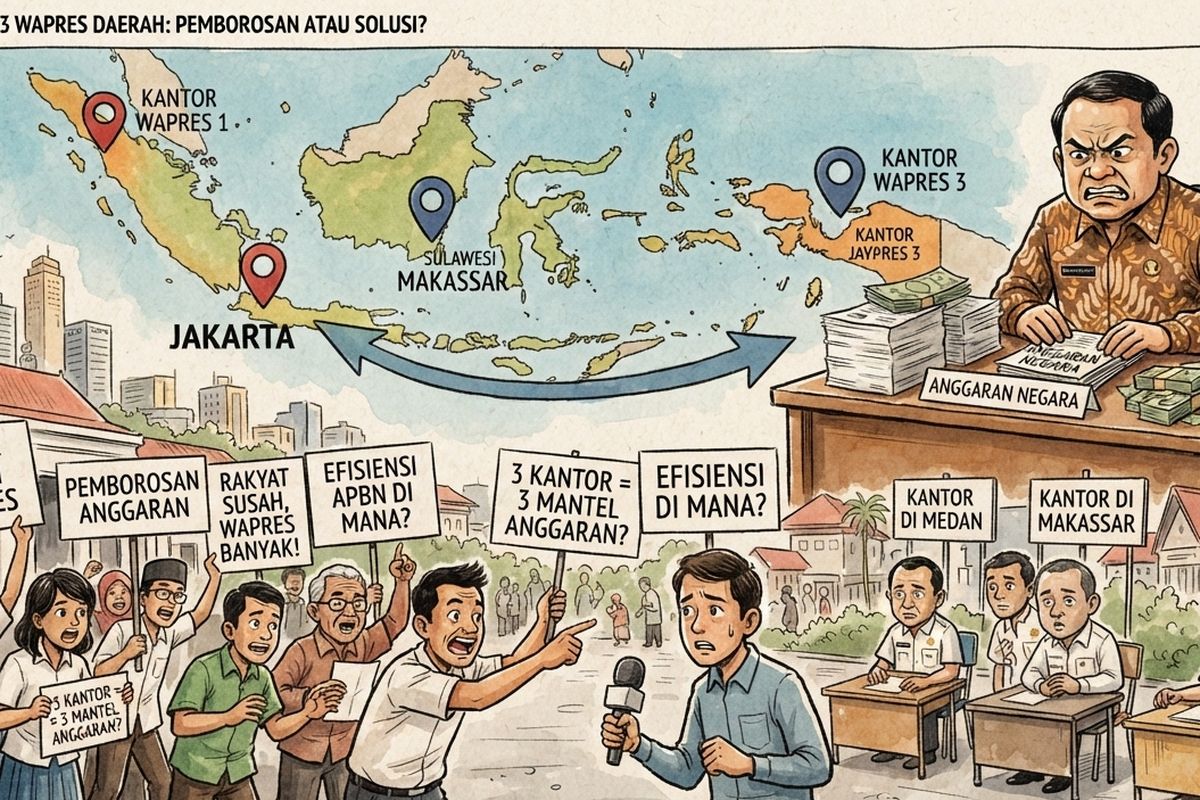
JAKARTA, KOMPAS.com - The proposal by the Chairman of the Regional Representative Council (DPD) of the Republic of Indonesia, Sultan Bachtiar Najamudin, for Indonesia to have three vice presidents (wapres), each based in different regions, has sparked controversy.
According to him, this idea could strengthen the relationship between the central government and the regions, while ensuring that government programs reach all areas of Indonesia.
However, the proposal has drawn criticism from various quarters. Member of Commission II of the Indonesian House of Representatives (DPR), Ahmad Doli Kurnia, believes the idea is inconsistent with the constitution and the principles of statehood.
Meanwhile, constitutional law expert Feri Amsari argues that having three vice presidents is unnecessary and may lead to political conflicts when the president is unable to perform their duties.
On the other hand, Sultan emphasized that his proposal is not intended for immediate implementation.
He referred to this discussion as an old idea that requires further examination and open debate.
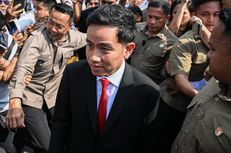
Nonetheless, the proposal has drawn public attention as it was reiterated amidst the process of filling the vice presidency, following Gibran Rakabuming Raka's resignation on November 12, 2026.
Sultan reiterated his proposal to increase the number of vice presidents on Saturday (21/11/2026).
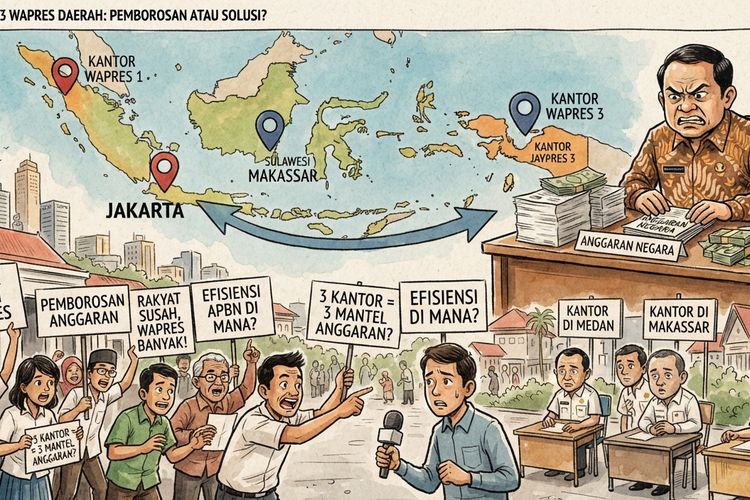
He suggested that Indonesia should have three vice presidents, each based in Papua, Kalimantan, and Sumatra.
According to Sultan, Indonesia's vast geographical landscape features diverse communities and regional needs. Therefore, he believes national leadership should consider regional aspects and political equity.
"Indonesia is a vast archipelago, and it is undoubtedly complex from a sociological perspective. Each region in Indonesia, whether in the West, Center, or East, has unique needs and challenges," he stated.
He also noted that the responsibilities and agenda of the President of Indonesia continue to grow, necessitating more than one vice president to assist in governance.
Sultan hopes that each vice president can oversee government programs while understanding the local needs of their respective regions.
"With a number of vice presidents aligned with regional needs, we believe that government programs can be realized, and the performance of regional heads can be effectively monitored by vice presidents in each area," he said.
Sultan pointed out that this idea is not new, as he first proposed it in 2019 as part of his vision for the future of the national leadership system.
One day after his proposal attracted attention, Sultan further clarified his stance. He stressed that the idea of increasing the number of vice presidents is not an immediate proposal for implementation.
According to Sultan, Indonesia's current constitutional framework is clearly established, meaning any changes must go through appropriate constitutional discussions and processes.
"I want to emphasize that this is not a proposal for immediate implementation. Our governance system is already outlined in the constitution," he stated in a written message on Sunday (22/11/2026).
"If there is ever a thought to change it, there must be serious studies, constitutional processes, and wide national consensus involved," he added.
Sultan urged that his proposal not be associated with momentary political interests. He also encouraged the public to view the proposal more holistically.
He noted that Indonesia comprises thousands of islands, tribes, cultures, and traditions, each facing distinct challenges.
He reminded that Indonesia was formed from the unifying spirit of various regions, kingdoms, sultanates, and all elements of the nation pursuing a common goal to build an independent country.
"Therefore, I always consider how we can develop a national leadership system capable of reaching all regions of Indonesia, strengthening the relationship between the center and the regions, and providing greater space for regional aspirations," Sultan explained.
He acknowledged that his proposal may not necessarily be the right choice, leaving room for constitutional experts, academics, politicians, and the public to evaluate and critique his ideas.
Sultan understands that his proposal may sound unusual since it deviates from the current constitutional framework.
"So if there are reactions of surprise, disagreement, or criticism, I find that entirely reasonable. I appreciate all those perspectives. In democracy, we need space to discuss new ideas, including those we may not have imagined before," he remarked.
Sultan stressed he is not seeking sensationalism with his proposal. As a leader of a state institution, he feels a moral obligation to contribute ideas for Indonesia's future.
Although Sultan describes his proposal as a long-term concept, several parties assert that this notion is inconsistent with Indonesia's current governance framework.
Ahmad Doli Kurnia, a member of Commission II of the DPR, is one of the critics of this proposal.
Doli asserts that the idea for Indonesia to have three vice presidents contradicts the 1945 Constitution of the Republic of Indonesia (UUD 1945), as well as constitutional theory and logic.
"It does not align with the constitution, nor does it fit constitutional theory or the modern and progressive logic of statehood, along with the development of substantive democracy," Doli stated when contacted on Saturday (21/11/2026).
The Deputy Chairman of the Golkar Party also emphasized the importance of understanding the difference between the state and state institutions.
According to Doli, the two terms have different meanings and positions within the governance system and cannot be equated.
"Perhaps Sultan is reminiscing about when he was elected in a package as DPD Chairman or while writing papers in school. We must distinguish between a 'state' and a 'state institution.' They are fundamentally different," Doli commented.
Constitutionally, the UUD 1945 stipulates only one vice president to assist the president.
This provision is outlined in Article 4 Paragraph (2) of the UUD 1945, which states, "In carrying out his duties, the President is assisted by one Vice President."
Therefore, implementing a three-vice president concept would require an amendment to this constitutional provision.
Criticism also came from constitutional law expert Feri Amsari. He believes Indonesia does not need three vice presidents as the constitution has already defined the vice president's role within the government system.
According to Feri, the vice president essentially serves as the substitute for the president under specific conditions, as outlined in the UUD 1945.
"It is entirely unnecessary because our concept has established that the vice president does not have a defined role, as he only serves as a substitute under certain conditions as designated by the constitution. The constitution clearly states that the president is assisted by one vice president," Feri said when contacted by Kompas.com on Sunday (22/11/2026).
Feri also disagrees with the notion that the UUD 1945 should be amended solely to accommodate the idea of three vice presidents.
He argues that having more than one vice president could lead to political complications in the event the president is unable to continue in office.
According to him, this structure holds the potential for conflicts over the position of president due to the presence of multiple vice presidents.
"If the president is incapacitated, who will lead next? This will lead to conflict and prolonged political disputes," Feri stated.
He perceives the discourse as more likely to represent political maneuvering rather than addressing the public's needs.
"So the politicians are articulating things they do not fully understand, merely trying to engage in high-level political bargaining, which fundamentally does not impact the public," he asserted.
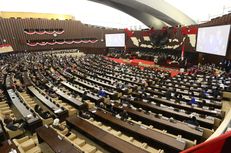
The controversy surrounding the proposal for three vice presidents arises while the government and the People's Consultative Assembly (MPR) are facing the process of filling the vice presidential role after Gibran Rakabuming Raka's resignation on November 12, 2026.
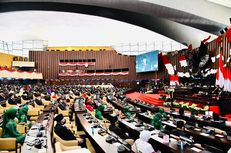
According to Article 8 Paragraph (2) of the UUD 1945, if the vice president resigns, is dismissed, or is unable to perform their duties during their term, the MPR must hold a session to elect a new vice president from two candidates proposed by the president.
The MPR has a maximum of 60 days to select and appoint a new vice president after the position becomes vacant. This time limit is also specified in Article 46 Paragraph (1) of Law No. 17 of 2014 concerning the MPR, DPR, DPD, and DPRD (MD3 Law).
Additionally, the MPR must hold a plenary session within 14 days after the president submits the names of the two vice presidential candidates for selection.