
Cak Imin Highlights Resource-Rich Areas with Persistent Poverty
-
News
-
3 minutes ago
This article was translated by AI. Read the original article on Kompas.com. See Original
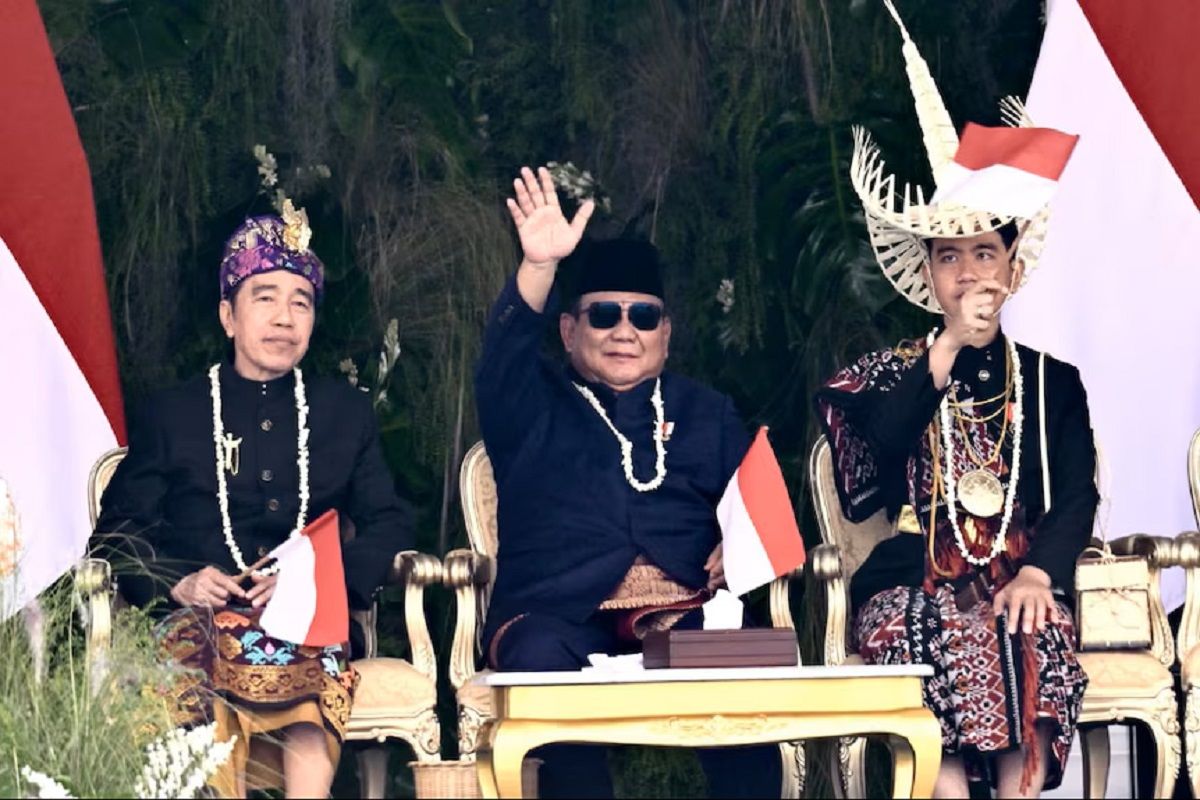
In Max Weber's typology of power, this political alliance combines rational-legal authority with remnants of charismatic and patrimonial authority rooted in the personal support networks of the figures involved.
Some political observers argue that without Gibran’s presence in the inner circle of the palace, President Prabowo indeed gains greater autonomy to conduct single leadership and reorganize cabinet command without the shadow of dual influence.
However, on the other hand, electoral analysts believe that the loss of a direct link at the top of power could potentially allow the traditional mass base of the Jokowi family to evolve into a more autonomous political entity and distance themselves ahead of the 2029 election contest.
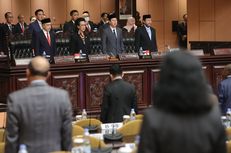
This post-resignation dynamic will also serve as a test for the political maturity of the large coalition in parliament during the transitional phase of executive power.
From the perspective of critical legal and social theory, German legal thinker Gunther Teubner argued in his work Law as an Autopoietic System (1993) that legal systems and political systems have their own operational logics that often clash if not managed through healthy buffering mechanisms.
Meanwhile, eminent social and legal philosopher Jürgen Habermas, in his monumental work Between Facts and Norms (1992), emphasizes that law and political power will only gain true democratic legitimacy if born from communicative deliberation processes in a rational, transparent public space free from narrow interest domination.
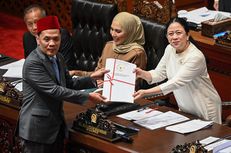
Habermas's perspective becomes relevant as academics and civil society activists highlight the process of filling the vice presidential position through the MPR mechanism.
Observers assert that succession at the vice-presidential level should not be reduced to merely elite transactions in closed spaces but must accommodate rational aspirations in the public sphere.
If President Prabowo can propose a running mate with proven integrity, competent technocratic capacity, and broad acceptance through an accountable process, this vacancy moment could yield political gains in the form of rising public trust in government management quality.
Conversely, if the vice-presidential selection process at the MPR triggers sharp factionalism among coalition parties and ignores public reasoning as warned by Habermas, the government risks experiencing a trust crisis and solidarity fractures in the latter half of its term.
In long-term calculations, the balance of gains and losses for President Prabowo after Gibran Rakabuming Raka's departure depends on the head of state’s skill in navigating this constitutional transitional space.
Legally and institutionally, the government is spared from the storm of impeachment that could paralyze public policy effectiveness and national economic stability.
Meanwhile, in the long-term political dimension, this new phase without Gibran demands Prabowo’s diplomatic flexibility to embrace the entire spectrum of supporting forces while ensuring the government remains focused on accountability and benefits for the people.