
Profit and Loss Calculations in Prabowo's Consolidation Without Gibran
-
News
-
2 minutes ago
This article was translated by AI. Read the original article on Kompas.com. See Original
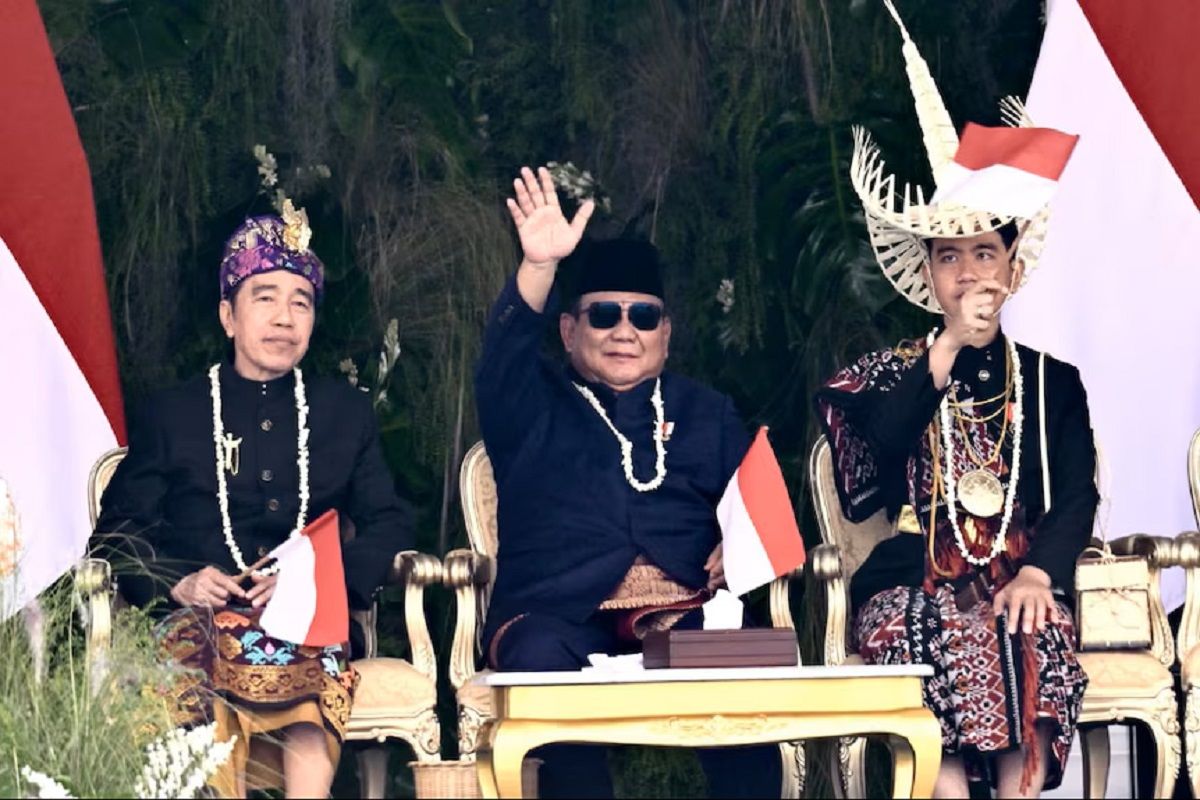
EVENT the resignation letter of Vice President Gibran Rakabuming Raka on November 12, 2026, has drastically shifted the center of gravity in national politics.
For President Prabowo Subianto, the vacancy of the number two position in this republic following the court's ruling on Gibran's educational equivalency document not only closes one chapter of legal administration controversy but also opens a new calculation regarding the gains and losses for cabinet stability until 2029.
Constitutional law experts and political philosophy thinkers view this situation as placing President Prabowo at a strategic crossroads.
On one hand, there is an opportunity to reorganize the power architecture to free itself from constitutional shocks. On the other hand, he must renegotiate the coalition balance and long-term electoral bargaining power.
Several constitutional law observers believe that Gibran's voluntary departure from the executive branch actually provides significant institutional advantages for President Prabowo in maintaining the rhythm of governance.
Should the controversy surrounding the validity of the educational equivalency letter linger and culminate in the House of Representatives' discussion on the right to express opinions (HMP), the cabinet's energy risks being entirely drained in the whirlpool of the impeachment process as stipulated in Articles 7A and 7B of the 1945 Constitution.
From an anti-mainstream perspective, American legal realist thinker Jerome Frank warns in his classic work Law and the Modern Mind (1930) that legal certainty in state practice is often not a rigid mathematical formula, but is greatly influenced by the psychological dynamics and institutional stability of the actors involved.
In line with that view, Gibran's resignation before the parliamentary process begins eliminates psychological and political uncertainties within the bureaucracy, allowing President Prabowo to avoid being tethered by prolonged inter-institutional conflicts.
Furthermore, Danish legal theorist Alf Ross emphasized in his work On Law and Justice (1958) that the validity of constitutional norms is only meaningful as long as those norms effectively operate within the actual behavior of power institutions.
With the enforcement of Article 8 Paragraph (2) of the 1945 Constitution granting the president the authority to propose two vice presidential candidates to the People's Consultative Assembly (MPR), Prabowo gains a clean constitutional space to consolidate government legitimacy without the burden of past disputes.
Within the framework of legal and state rationality, German sociologist Max Weber classified the legitimacy of rational-legal authority as the main foundation of modern governance, where public compliance is based on the validity of procedural rules free from formal defects.
When the legality issues of state officials cause cracks in this rational-legal authority pillar, a constitutional retreat becomes a solution to restore the dignity of the state bureaucracy.
For President Prabowo, restoring this rational-legal authority is a fundamental advantage, allowing all state apparatus to operate objectively without the shadow of a legitimacy crisis.
Although the departure eases parliamentary pressures and restores legal certainty, several political sociology analysts remind that there are losses and strategic challenges that President Prabowo must carefully calculate following Gibran's exit.
Until now, the architect of victory and governance has relied on a combination of Prabowo's prominence and political influence networks connected with the 7th President of Indonesia, Joko Widodo, and his ecosystem of volunteers.