

Law on Asset Forfeiture: Fulfilling Promises, Suffers "Illicit Enrichment" Debt
-
News
-
1 minute ago
This article was translated by AI. Read the original article on Kompas.com. See Original

Lucius gauged that the lawsuits could also arise from the MK's inconsistency in limiting its decisions to constitutional matters while granting legislators authority to decide on open legal policies.
This, Lucius indicated, relates to the Court's ruling granting part of a lawsuit regarding the minimum age limit of 40 years or previous holding of an elected office before the 2024 Presidential Election.
"Since it was previously amended by the MK, the public who hold differing opinions feel entitled to submit similar lawsuits to the MK," Lucius elaborated.
Jojo Rohi, a member of the National Independent Election Monitoring Committee (KIPP) Indonesia, views that due to this earlier ruling, the public ultimately perceives that the requirements for presidential and vice-presidential nominations can be renegotiated.
On the other hand, there are also parties filing lawsuits merely to test their luck.
"Some lawsuits are just for a gamble. The lawsuit for the 19-year age limit reads almost like a satire against the logic of Decision 90. But there are also corrective lawsuits that aim to close loopholes by 2023," Jojo commented.
Jojo then articulated that in essence, changes to various nomination requirements are indeed necessary.
However, these changes should not be limited to debates over age or educational qualifications.
"What is urgent is factual and transparent verification of candidate documents, and prohibiting changes to candidate requirements after the process has begun," he elaborated.
According to Lucius, the MK should reaffirm its jurisdiction regarding issues in the Election Law, particularly those involving numerical values, which should be decided through compromise forums in Parliament.
"Let the Parliament decide on those technical matters so that the public can refocus its attention on Parliament and the Government during the legislative process," Lucius clarified.
Meanwhile, lawyer and constitutional law expert Fahri Bachmid from Muslim University of Indonesia stated that the MK must consistently uphold the constitution without becoming an alternative legislator.
Fahri explained that the MK holds the position of a negative legislator, which tests and declares whether a legal norm conflicts with the constitution.
The Court, according to Fahri, does not serve as a positive legislator, which usurps the authority of Parliament and the Government in enacting laws.
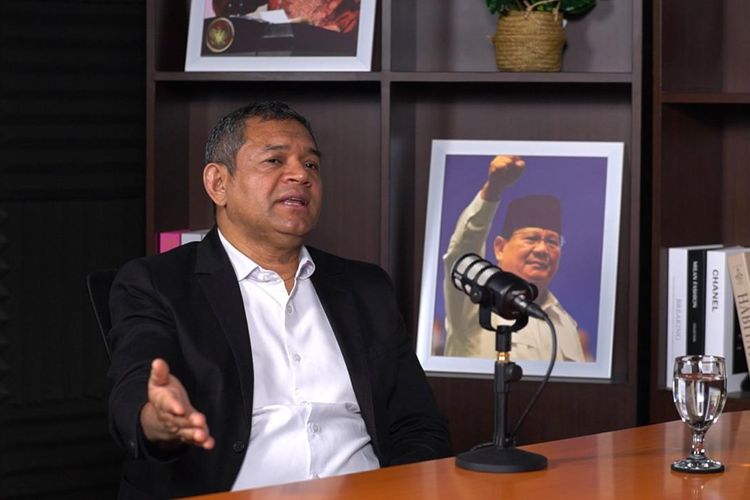 Constitutional Law and Constitutional Expert Fahri Bachmid from Muslim University of Indonesia.
On the other hand, he understands that the MK can indeed provide constitutional interpretations of certain norms. However, this authority must be exercised cautiously to avoid blurring the lines between adjudicating and legislating functions.