
Law on Asset Forfeiture: Fulfilling Promises, Suffers "Illicit Enrichment" Debt
-
News
-
1 minute ago
This article was translated by AI. Read the original article on Kompas.com. See Original

JAKARTA, KOMPAS.com - Numerous lawsuits challenging the Election Law (UU Pemilu) have repeatedly been filed. Are the issues originating from the legislative body or from the Constitutional Court (MK)?
The recurring lawsuits target Article 169 of Law No. 7 of 2017 on Elections (UU Pemilu) at the MK.
The content of the lawsuits varies, ranging from the age limit for presidential and vice-presidential candidates to educational requirements.
Most recently, a lawsuit challenged Article 169 letter q, which sets the minimum age for presidential and vice-presidential candidates at 40 years or requires them to have been elected in previous elections, including local elections.
In the petition, the applicant, Tuan Guru Deri Sulthanul Qulub, case number 432/PUU-XXIV/2026, requested that the MK amend this article to specify a minimum age requirement of 19 years, emphasizing criteria such as competence, honesty, ability to convey ideas, and intelligence.
He argued that a singular age restriction could marginalize citizens who possess the capacity and capability to contribute to governance.
Previously, a lawsuit targeted Article 169 letter r, concerning educational qualifications. The applicant, Jovi Andrea Bachtiar, represented by legal counsel Sinta Dwi Apriliyanti and Buce Abraham Beruat, case number 423/PUU-XXIV/2026, requested the MK to remove the requirement for formal education or a diploma of at least a high school equivalent for presidential and vice-presidential candidates.
The petitioner reasoned that the high school requirement in the Election Law does not automatically determine an individual's leadership, integrity, or capability in running state governance. This article was seen as restrictive of citizens’ constitutional rights to equal opportunities under the law and in governance.
"Making a high school diploma or equivalent a mandatory qualification for presidential and vice-presidential nomination represents an excessively administrative approach to assessing a person's capacity for state office," the petition stated, as quoted by Kompas.com on Saturday (14/11/2026).
Apart from these two cases, a different applicant filed a lawsuit concerning the same article about a month ago. So, why are there so many challenges to the Election Law at the MK?
Lucius Karus, a researcher from the Forum for Concerned Citizens over the Indonesian Parliament (Formappi), evaluated that the numerous lawsuits brought against the Constitutional Court reflects, at least to some extent, the quality of legislation.
The more laws that are challenged, the more it indicates that the quality of legislation in Parliament still needs improvement.
The recurring phenomenon of judicial reviews of Article 169 of the Election Law seems to serve as evidence of the low quality of this law. A quality law should leave no loopholes for public challenges," Lucius stated to Kompas.com on Friday (20/11/2026).
He noted that the poor quality of the Election Law is not only related to candidate requirements but also to several other crucial issues, such as parliamentary and presidential thresholds.
According to Lucius, the weak quality of legislation is influenced by several factors, including discussions that are suspected to be followed by political lobbying behind the scenes.
Lucius gauged that the lawsuits could also arise from the MK's inconsistency in limiting its decisions to constitutional matters while granting legislators authority to decide on open legal policies.
This, Lucius indicated, relates to the Court's ruling granting part of a lawsuit regarding the minimum age limit of 40 years or previous holding of an elected office before the 2024 Presidential Election.
"Since it was previously amended by the MK, the public who hold differing opinions feel entitled to submit similar lawsuits to the MK," Lucius elaborated.
 Chairman of Formappi Lucius Karus in Matraman Raya, Jakarta, Thursday (19/12/2019).
Jojo Rohi, a member of the National Independent Election Monitoring Committee (KIPP) Indonesia, views that due to this earlier ruling, the public ultimately perceives that the requirements for presidential and vice-presidential nominations can be renegotiated.
On the other hand, there are also parties filing lawsuits merely to test their luck.
"Some lawsuits are just for a gamble. The lawsuit for the 19-year age limit reads almost like a satire against the logic of Decision 90. But there are also corrective lawsuits that aim to close loopholes by 2023," Jojo commented.
Jojo then articulated that in essence, changes to various nomination requirements are indeed necessary.
However, these changes should not be limited to debates over age or educational qualifications.
"What is urgent is factual and transparent verification of candidate documents, and prohibiting changes to candidate requirements after the process has begun," he elaborated.
According to Lucius, the MK should reaffirm its jurisdiction regarding issues in the Election Law, particularly those involving numerical values, which should be decided through compromise forums in Parliament.
"Let the Parliament decide on those technical matters so that the public can refocus its attention on Parliament and the Government during the legislative process," Lucius clarified.
Meanwhile, lawyer and constitutional law expert Fahri Bachmid from Muslim University of Indonesia stated that the MK must consistently uphold the constitution without becoming an alternative legislator.
Fahri explained that the MK holds the position of a negative legislator, which tests and declares whether a legal norm conflicts with the constitution.
The Court, according to Fahri, does not serve as a positive legislator, which usurps the authority of Parliament and the Government in enacting laws.
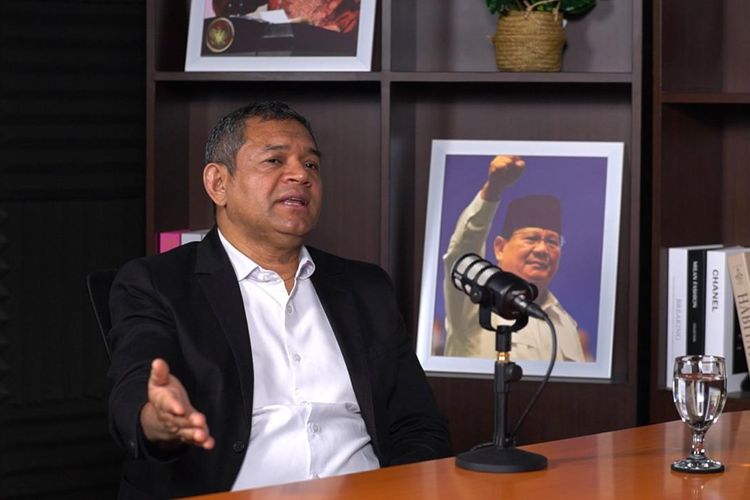 Constitutional Law and Constitutional Expert Fahri Bachmid from Muslim University of Indonesia.
On the other hand, he understands that the MK can indeed provide constitutional interpretations of certain norms. However, this authority must be exercised cautiously to avoid blurring the lines between adjudicating and legislating functions.
"Therefore, the MK must remain consistent in upholding the constitution without transforming into an alternative lawmaker," Fahri stated.
"Re-examining norms that have already been adjudicated must also adhere to procedural legal provisions, including requirements for a constitutional basis or differing arguments as regulated in the MK Law," he added.
Furthermore, Fahri hopes that the ongoing revision of the Election Law in Senayan can serve as a momentum for improvement for Parliament and the Government.
Through this opportunity, both parties can comprehensively reorganize the requirements for nominations, ensuring transparency and public participation. This should not merely respond one by one to petitions at the MK.
Moreover, the repeated challenges to Article 169 of the Election Law indicate that the requirements for presidential and vice-presidential candidates still leave room for debate regarding the balance between citizens' constitutional rights and the lawmakers' authority.
Additionally, MK Decision No. 90/PUU-XXI/2023 has shown that nomination requirements can undergo changes in meaning through constitutional interpretation.
However, this ruling should not be understood as a precedent that every nomination requirement can be altered simply because a party desires it.
"Every challenge must be based on a genuine constitutional issue, not merely a difference of opinion regarding what is deemed the most ideal policy," Fahri emphasized.
Not only that, all parties need to distinguish between age and education issues.
Article 6, paragraph (2) of the 1945 Constitution provides space for lawmakers to determine the qualifications for presidential and vice-presidential candidates.
"The determination of age and educational limits fundamentally falls within the realm of legislative policy. However, such policies must still be rational, fair, and non-discriminatory," Fahri explained.
Fahri also cautioned that in a rule of law state, the requirements to become a national leader must not be designed based on transient interests or to accommodate specific individuals.
Such requirements should be constructed based on constitutional rationality and the interests of the nation.
"For the stakes involved are not just an individual's right to run for office but also the quality of democracy and national leadership legitimacy," Fahri concluded.