

DPR Member Proposes BRIN and Universities Participate in Assessing the Feasibility of Javan Rhinoceros Relocation
-
News
-
8 minutes ago
This article was translated by AI. Read the original article on Kompas.com. See Original
As of May 2026, the agricultural sector employed 42.60 million workers, while self-employed workers reached 31.76 million and unpaid family workers totaled 19.18 million.
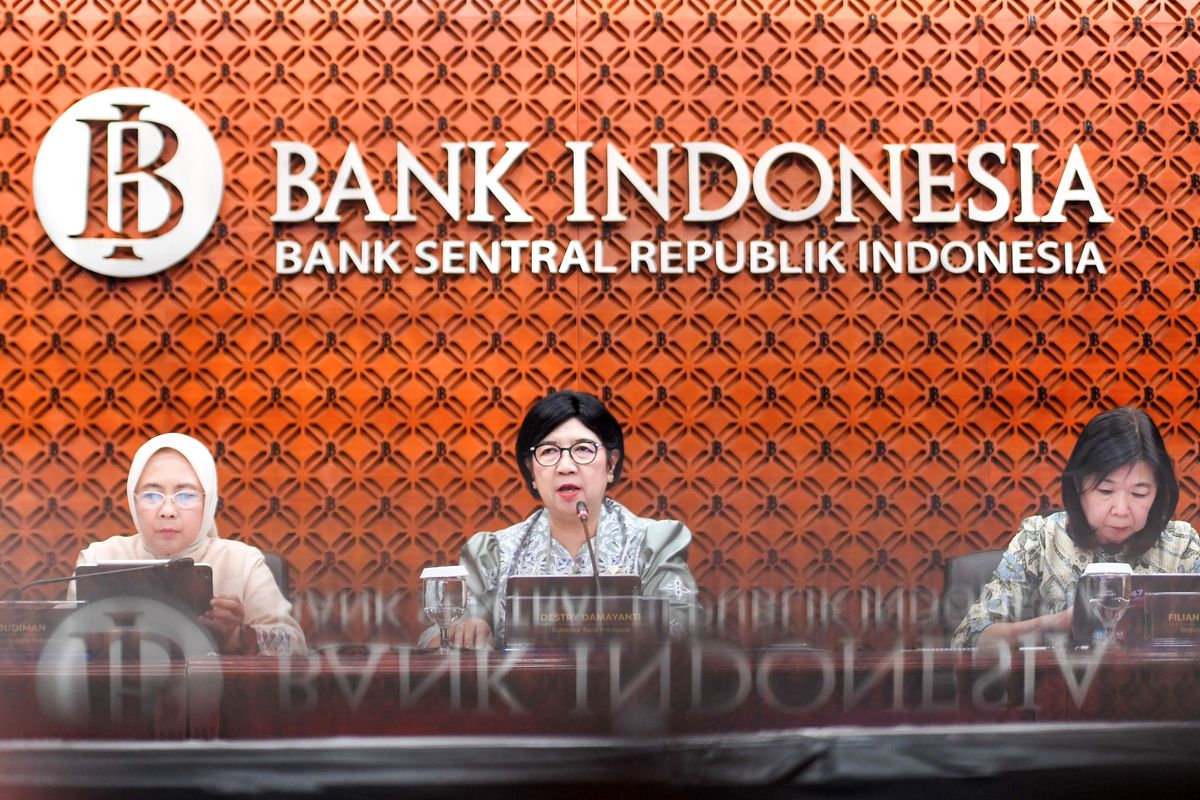
In this context, the increase in the lending rate to 6.75 percent will hit micro, small, and medium enterprises that have already faced stagnant credit growth since 2025.
Cross-agency coordination to curb inflation also faces the challenge of mis-targeting.
Data released by the Central Statistics Agency in October 2026 noted that the overall annual inflation was maintained at 3.28 percent, but food, beverage, and tobacco groups surged by 4.37 percent.
The increase in interest rates effectively dampens aggregate demand, but falls short of addressing food supply disruptions.
As a result, consumers' purchasing power is increasingly vulnerable.
Referring to the World Bank's projections, 64.2 percent of Indonesia's population in 2026 still lives below the poverty line of upper-middle-income countries.
Meanwhile, data from the Deposit Insurance Corporation as of June 2026 shows that 153,282 elite accounts control 57.80 percent of total banking deposits.
The most crucial risk actually lurks over the country's fiscal resilience.
The rise in the benchmark interest rate automatically raises the yield on government securities, further inflating budget financing costs.
According to data from the Ministry of Finance, the fiscal deficit in 2026 is projected to widen to 734.3 trillion IDR, while the ratio of principal and interest debt payments to state revenue in 2027 could reach 45.84 percent.
The interest component alone consumes 18.98 percent of state revenue.
Bond absorption, dominated by the central bank and domestic banking, only masks liquidity risks.
In fact, the International Monetary Fund projected in October 2026 that the current account deficit would exceed 23 billion USD this year, exacerbated by significant payments for foreign capital services.
Criticism of this policy paradox must be addressed through concrete improvements.