

DPR Member Proposes BRIN and Universities Participate in Assessing the Feasibility of Javan Rhinoceros Relocation
-
News
-
8 minutes ago
This article was translated by AI. Read the original article on Kompas.com. See Original
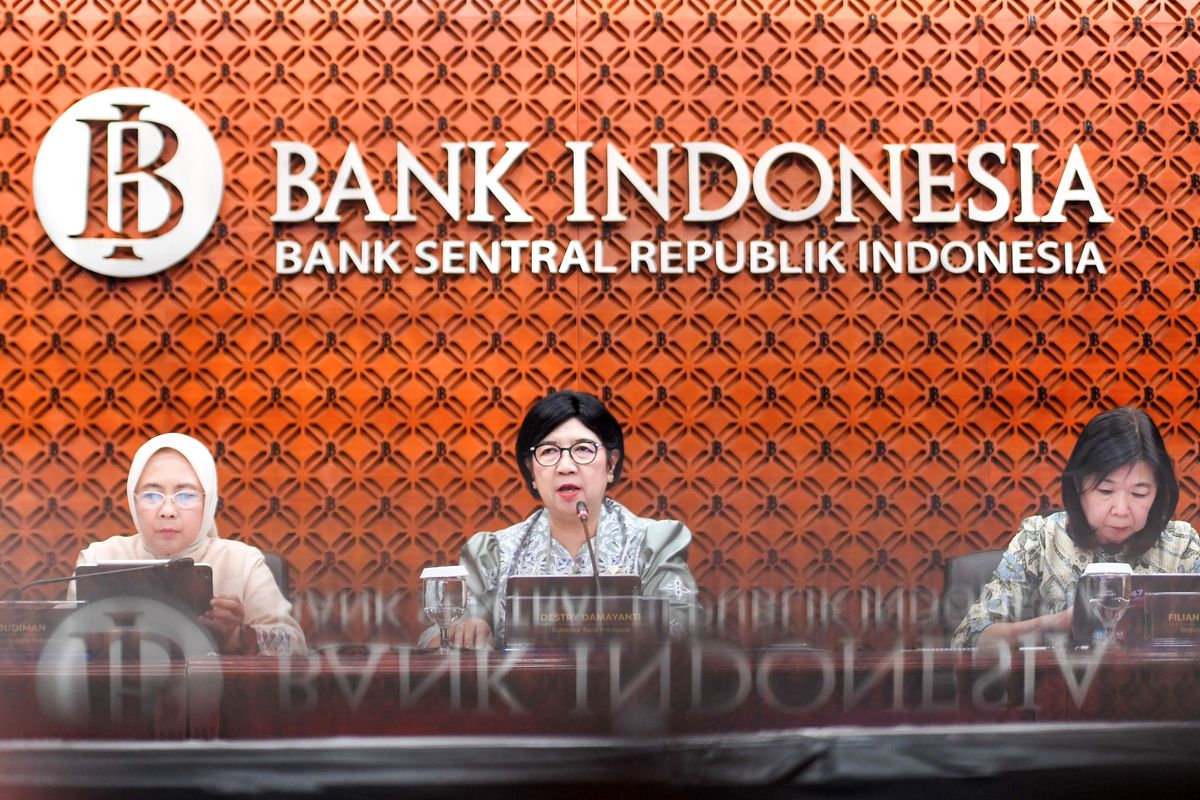
DECISION Bank Indonesia's decision to raise the benchmark interest rate by 25 basis points to 6 percent in mid-November 2026 sends a serious message.
According to Kompas.com, the monetary authority also increased the deposit rate to 5.25 percent and the lending rate to 6.75 percent to stabilize the rupiah and keep inflation in 2026 and 2027 within a target range of 2.5 percent plus or minus 1 percent.
Ironically, on the same day, the government expressed optimism that this move would not disrupt economic momentum.
As cited from Kontan.co.id, the Coordinating Ministry for Economic Affairs is still targeting a 5.4 percent growth rate in the fourth quarter of 2026 by strengthening coordination between ministries and related agencies.
The contrast between monetary tightening and fiscal optimism creates a policy paradox that must be carefully watched.
Referring to a study by an independent economic research institution at a national risk management conference in Yogyakarta in November 2026, the threat of an economic crisis in Indonesia by 2027 is continuing to increase.
External pressures are no longer just rhetoric. Based on data from Bank Indonesia in that study, the national balance of payments recorded a sharp deficit of 10.027 billion USD in the first half of 2026.
At the same time, foreign exchange reserves have significantly declined to 146.32 billion USD as of September 2026.
The increase in the benchmark interest rate also confirms that the central bank's room for maneuver is getting narrower.
So far, the monetary authority has fought hard to stem market volatility by issuing Bank Indonesia Rupiah Securities exceeding 1,000 trillion IDR and the central bank's foreign debt surging to nearly 43 billion USD in August 2026.
When those instruments reached their limits, interest rates had to be raised.
Therefore, the government's confidence in pursuing a 5.4 percent growth rate and even targeting 7.5 to 8 percent from 2028 to 2030 in the 2027 State Budget Financial Note must be sincerely tested against structural realities.
The government's efforts to map out new sources of growth are faced with a significant wall of early deindustrialization.
Quoting data from the Central Statistics Agency, the contribution of the manufacturing industry to gross domestic product shrank from 28.07 percent in 2004 to 19.07 percent in 2025.
The weakness of the manufacturing sector forces the majority of the workforce to remain in the informal sector.
As of May 2026, the agricultural sector employed 42.60 million workers, while self-employed workers reached 31.76 million and unpaid family workers totaled 19.18 million.
In this context, the increase in the lending rate to 6.75 percent will hit micro, small, and medium enterprises that have already faced stagnant credit growth since 2025.
Cross-agency coordination to curb inflation also faces the challenge of mis-targeting.
Data released by the Central Statistics Agency in October 2026 noted that the overall annual inflation was maintained at 3.28 percent, but food, beverage, and tobacco groups surged by 4.37 percent.
The increase in interest rates effectively dampens aggregate demand, but falls short of addressing food supply disruptions.
As a result, consumers' purchasing power is increasingly vulnerable.
Referring to the World Bank's projections, 64.2 percent of Indonesia's population in 2026 still lives below the poverty line of upper-middle-income countries.
Meanwhile, data from the Deposit Insurance Corporation as of June 2026 shows that 153,282 elite accounts control 57.80 percent of total banking deposits.
The most crucial risk actually lurks over the country's fiscal resilience.
The rise in the benchmark interest rate automatically raises the yield on government securities, further inflating budget financing costs.
According to data from the Ministry of Finance, the fiscal deficit in 2026 is projected to widen to 734.3 trillion IDR, while the ratio of principal and interest debt payments to state revenue in 2027 could reach 45.84 percent.
The interest component alone consumes 18.98 percent of state revenue.
Bond absorption, dominated by the central bank and domestic banking, only masks liquidity risks.
In fact, the International Monetary Fund projected in October 2026 that the current account deficit would exceed 23 billion USD this year, exacerbated by significant payments for foreign capital services.
Criticism of this policy paradox must be addressed through concrete improvements.
Firstly, the promised cross-ministerial coordination must be realized through genuine fiscal discipline, rather than merely optimistic rhetoric.
The government needs to cut unproductive bureaucratic spending and postpone high-risk projects to slow down new debt accumulation.
At the same time, the trend of reducing transfers to regions that has occurred from 2024 to 2026 must be evaluated.
Maintaining local budget liquidity is far more effective in stimulating the real economy than concentrating spending at the central level.
When markets see fiscal credibility strengthening, bond yield pressures will ease, and the central bank's burden in stabilizing the rupiah will also lessen.
Secondly, the government along with banking authorities needs to design special buffers for productive sectors amid high-interest regimes.
Directed interest subsidies and credit restructuring relaxation must be prioritized for micro, small, and medium enterprises, as well as labor-intensive manufacturing industries.
On the price control front, the government must structurally address food supply chains through strengthening regional reserves, logistical efficiency, and supporting farmers' production means.
This approach is more precisely aimed at curbing food inflation than relying solely on monetary tightening.
In addition, revitalizing high-value-added manufacturing is the only key to reducing reliance on short-term capital while also strengthening the current account balance.
As we enter 2027, the global economy is moving towards an era of tumultuous competition.
According to a report from the Bank for International Settlements in December 2025, the dominance of non-bank global financial assets surpassing traditional banks increases the risk of financial turmoil spilling over into emerging markets.
In this situation, the old way of thinking for both the government and businesses is clearly inadequate.
The increase in the benchmark interest rate to 6 percent is a critical signal that cannot be ignored with mere paper growth targets.
The government's optimism will only hold meaningful if it rests on an honest reading of data, the courage to discipline budgets, and empathy in protecting the purchasing power of the people.
Collaborative and visionary risk mitigation is an absolute requirement to ensure Indonesia not only survives the threat of a crisis in 2027 but also rebounds with a healthier and sovereign economic foundation.