Succession of the Vice President and the Direction of Power
-
News
-
2 minutes ago
This article was translated by AI. Read the original article on Kompas.com. See Original

EVERY time a high state position becomes vacant, politics swiftly moves to find a replacement.
Public discourse is filled with speculations: who will be chosen, which parties will benefit, who must yield, and how the coalition balance will be rearranged.
All of this is part of political dynamics. However, something feels missing when attention is too long consumed by the struggle for positions: the conversation about the purpose of power itself.
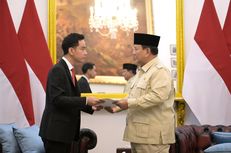
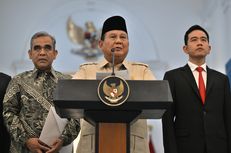
The decision by Gibran Rakabuming Raka to vacate the Vice Presidency on November 12, 2026, tests our political maturity once again.
Public attention is immediately drawn to the puzzle of succession and compromises among political powers.
Yet, this intersection should encourage us to ask a much more essential question: What kind of Vice President do the people genuinely await?
What values, capacities, and responsibilities should uphold this esteemed position?
Constitutionally, the mechanism for filling the Vice Presidential vacancy has indeed been clearly outlined in Article 8 paragraph (2) of the 1945 Constitution.
However, behind this neatly procedural framework lies a far more fundamental and pressing question: will this reshuffling of composition give birth to a new direction for the nation's journey, or will it merely be a ceremony of face changes on a stage whose roles remain the same?
Mature democracy should not stop at the issue of who holds the reins.
Its deepest essence lies in the purpose for which power is dedicated, whose voices and interests are genuinely fought for, and what tangible changes are felt by the grassroots.
Indonesia is not lacking in individuals who aspire to hold positions.
However, a significant task remains to present leaders who can ensure that power leaves a lasting impact, even after their term ends.
A concerning symptom in our politics is the tendency to measure success by proximity to the center of power, the number of positions obtained, or the ability to maintain coalitions.
Such measures keep politics busy managing job distributions, but provide little space for debates about developmental directions.
We know who is negotiating, but we do not always know what ideas are being fought for.
In the process of filling the Vice Presidential position, the public certainly has the right to demand transparency regarding the proposed figures along with the political calculations behind them.
And public debates should not stop at who is close to whom or which party reaps the benefits.
Capacity, integrity, track record, and the depth of national ideas must stand firm as the main benchmarks.
Indonesia needs a far more substantive political conversation that touches on the root issues.
How will national leadership respond to challenges in education, job creation, social inequality, technological independence, and the increasingly urgent ecological crisis?
To what extent can leaders strengthen state institutions while nurturing the breath of democracy?
Public office is not a reward for those who manage to build elite support, but a mandate to advocate for the interests of the people.
When politics is more busy accommodating interests and distributing influence, the aims of power lose their direction.
Democracy ultimately becomes just a mechanism for distributing positions, not a means to enact change.