
Gerindra Concerns Over Potential Sabotage of Prabowo's Policies by Listyo Sigit
-
News
-
2 minutes ago
This article was translated by AI. Read the original article on Kompas.com. See Original
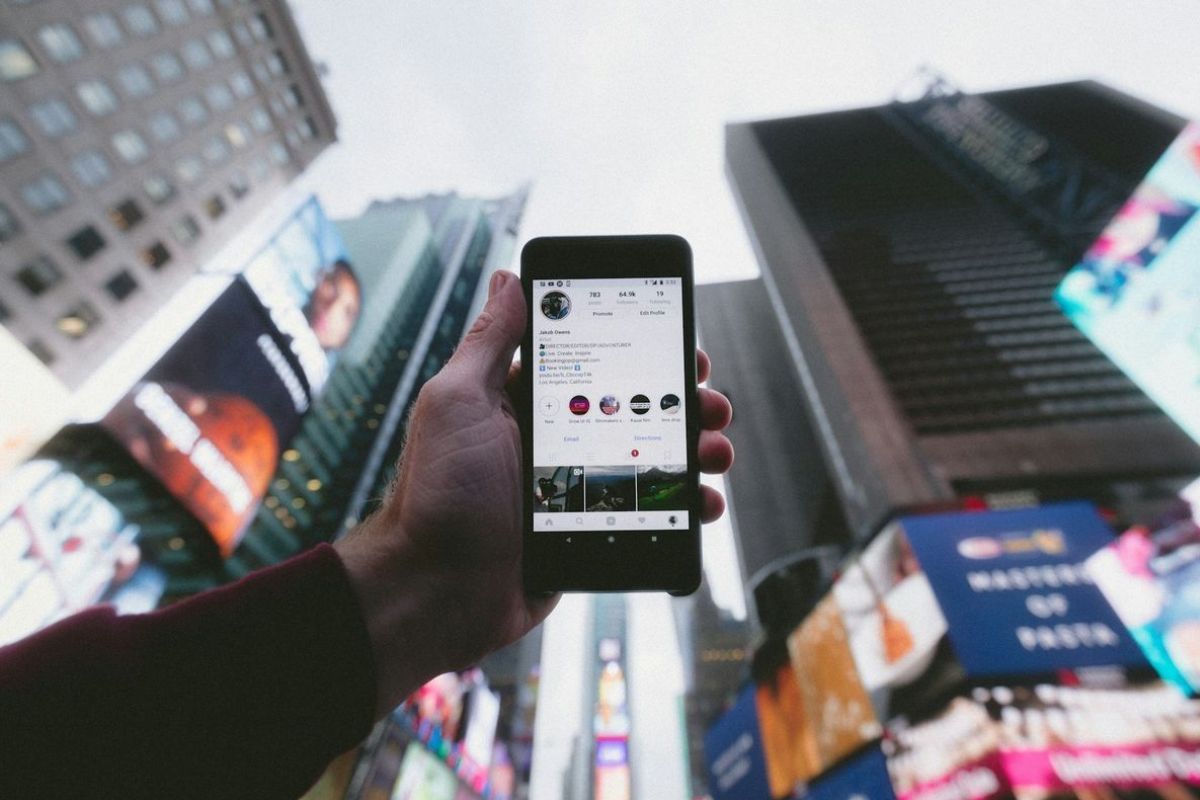
THE word censorship, once feared by the press during the New Order era, has resurfaced in public discourse, especially among netizens, lately.
The censorship in question refers to the take down of specific content posted or published by account holders on social media platforms.
These contents suddenly disappear, leading account holders to wonder: What happened? Why did the content vanish? Who was responsible and for what purpose?
Concerns have risen since wildfires have engulfed several provinces in Sumatra, Kalimantan, and Papua.
In the age of social media, citizens are becoming more aware of their surroundings.
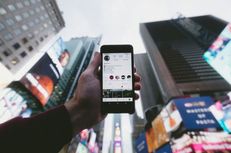
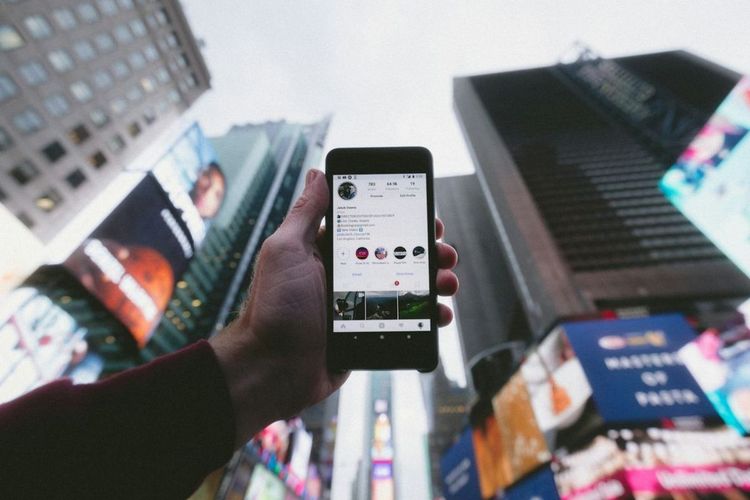
With smartphones in hand, anyone can record events happening around them in real-time—and upload it within seconds or minutes.
Posting photos, information, statements, opinions on social media—collectively referred to as content—has become a societal necessity.
This is a form of concern, solidarity, education, political participation, or simply showing off (flexing).
Freedom of expression is a fundamental human right guaranteed by the constitution. It is inherent to individuals, cannot be taken away, and must be protected by the state.
Article 28E, paragraph (3) of the 1945 Constitution states, “Everyone has the right to freedom of assembly, association, and expressing opinions.”
Censorship of an individual's or citizen's content by taking it down injures individual freedoms and the constitution.
Unless there is a strong legal reason or public interest, such actions should not be arbitrary.
As of November 8, 2026, SAFEnet and Remotivi reported at least 127 contents moderated, or taken down.
Of these, 94 percent were removed at the request of the Ministry of Communication and Digital, while the rest were through social media platform moderation.
The most common topics for deleted or censored content include criticism of the president, criticisms of officials and the government, demonstrations, and forest and land fires.
These four types of content accounted for 73.2 percent (Multatuli Project).
This data is based on complaints. The reality on the ground could be greater than what has been recorded.
Perhaps due to these troubling developments, Remotivi and SAFEnet proposed an open debate with the Ministry led by Meutya Hafid.
On Tuesday, November 17, 2026, they demonstrated at the Ministry of Communication and Digital's office. However, they were not met by any representatives from the Ministry.
The issue remains unresolved. Has the Ministry really engaged in censorship?
Could Meutya Hafid, who previously worked as a television journalist, allow actions that violate the freedom of expression guaranteed by the constitution?
Concerning content moderation or take downs, the Constitutional Court has ruled that Article 40, paragraph (2b) of Law 1/2024 regarding Amendments to Law 11/2008 on Electronic Information and Transactions is contrary to the 1945 Constitution and does not have binding legal force conditionally.
This means the government retains the authority to revoke access and/or order Electronic System Organizers to terminate access to Electronic Information and/or Electronic Documents containing unlawful content.
The condition is that a digital notification or written notice must first be issued.
A unilateral take down policy has been declared unconstitutional.
In April 2025, the Southeast Asia Freedom of Expression Network (SAFEnet), along with the Center for Law and Policy Studies of Indonesia (PSHK), published a report titled “Digital Rights for Democracy and Civic Space: A Study Mapping Internet Regulations in Indonesia.”
The findings serve as a reference to assess the scope of civil society's activities in the digital space.
From seven points of conclusion, the following suggests that the digital space is not as free as one might expect.
In our country, there are 13 laws and 153 articles that govern internet governance in Indonesia.
Of these, 51 norms regulate internet access aspects, 80 provisions govern digital protection and security aspects, and 22 provisions address aspects of freedom (liberty).
Moreover, the implementation of legislation is not sufficient to protect civil society in their digital activities.
Additionally, the existing legal provisions are insufficient to ensure the accountability of social media platforms.
There is yet to be legislation that establishes grounds for responsibility and transparency for social media platforms in setting algorithms and moderating content for social media users (PSHK.or.id).
Accountability and transparency are also called into question by Remotivi and SAFEnet regarding the Ministry of Communication and Digital.
As a government representative, the Ministry should address the 127 contents that were taken down.
For the sake of accountability and transparency, why does the Ministry not simply disclose the details regarding the 127 contents claimed to be missing or taken down?
In the third week of October, the Ministry of Communication and Digital reiterated that it had never asked digital platforms to remove or restrict content concerning forest and land fires. However, this explanation is seen as inadequate since forest and land fire issues represent only a small fraction of the topics or content issues collected by SAFEnet.
Digital technology has undeniably driven the democratic process, marked by increased involvement and inclusiveness of citizens, greater transparency, and accountability from government bodies.
However, International IDEA—a Sweden-based organization that supports sustainable democracy—warns about the double-edged sword of technology.
This is because technology also has the potential to enhance repressive capabilities in the hands of authoritarian regimes, jeopardizing fundamental rights, manipulating access to impartial and reliable electoral information, and reinforcing power hierarchies.
Freedom in the digital space does not serve freedom for its own sake. Regulations are necessary to ensure that the digital realm does not descend into anarchy.
Moreover, the digital space is not free from misinformation, disinformation, hoaxes, or deepfakes.
The latter increasingly undermines human perceptions of what constitutes original (authentic) images versus fake images produced by artificial intelligence.
Furthermore, violent content often surfaces unsupervised on various social media platforms.
Recently, the public was shocked by a video of a person rampaging in a location in Depok.
This individual exhibited brutal violence unedited and accessible for anyone to watch.
Children can also view it. What happens if children are exposed to unedited violence?
On mainstream media like television, scenes of violence cannot simply be aired without editing.
There are broadcasting ethics and journalistic ethics as guidelines.
This is to protect the public from replicating such violence.
In audio-visual editing, this protection is manifested by blurring violent visuals.
In social media, individuals or citizens do not do anything.
Videos containing violent scenes are often aired without regard for ethics and their potential impact.
Who should monitor and moderate violent videos on social media: platform managers or the government?
Or should it be left to individuals on social media, who are presumed to be mature, rational adults?
In relation to content allegedly censored by the Ministry of Communication and Digital, conclusions should not preempt clarification and investigation.
Clarifications and detailed explanations from the Ministry are eagerly anticipated by the public.
Therefore, the invitation (or challenge) from Remotivi and SAFEnet should ideally be addressed. Even if it takes the form of an open discussion accessible to the public.