Gerindra Concerns Over Potential Sabotage of Prabowo's Policies by Listyo Sigit
-
News
-
2 minutes ago
This article was translated by AI. Read the original article on Kompas.com. See Original

JAKARTA, KOMPAS.com - The educational requirements for public officials have become a hot topic following the controversy over the diploma of Vice President Gibran Rakabuming Raka, which led to his resignation.
Moreover, many representatives do not disclose their educational backgrounds.
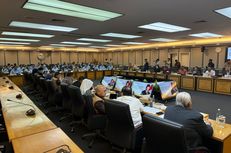
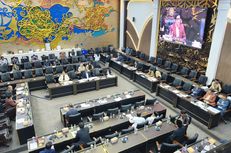
According to data from the Central Statistics Agency (BPS) in 2024, 211 members of the council, equivalent to 36.38 percent, chose not to reveal their educational qualifications.
Meanwhile, 63 others are high school graduates, three have diplomas (D3), 155 are bachelor's degree holders (S1), 119 have master's degrees (S2), and 29 hold doctoral degrees (S3).
The public is calling for greater transparency and a minimum educational requirement for members of the Indonesian House of Representatives (DPR), given that they represent the people.
"Please set the requirement for becoming a member of the DPR: at least an S2 degree from an accredited university, with a GPA of 3.5, fluent in English, and proficiency in Mandarin (as an advantage). No more high school graduates or those with package C diplomas. How can they formulate national regulations correctly if they are indifferent to education?..." wrote an account @i** on social media Threads on Sunday (15/11/2026).
On the other hand, according to a ruling by the Constitutional Court (MK), the minimum educational requirement for members of the DPR is equivalent to high school.
This requirement also applies to presidential (capres) and vice-presidential (cawapres) candidates.
So, what would an ideal educational level be for council members?
Jojo Rohi, a member of the National Committee for Independent Election Monitoring (KIPP) Indonesia, believes that maintaining the minimum educational requirement of high school or equivalent for prospective members of the DPR is still appropriate.
This is because there is a principle of inclusivity in the representative system.
Legislators can come from various backgrounds in society, not only those with access to higher education.
Especially when they possess experience that may not be directly acquired in an academic setting.
For example, a fisherman who has worked for years and understands the issues and challenges faced by coastal residents deserves equal opportunity to represent the local community.
"A farmer with a high school diploma who has fought for the welfare of his village should have the chance," Jojo told Kompas.com on Tuesday (17/11/2026).
Furthermore, higher education does not guarantee a person's integrity.
In 2017, the Corruption Eradication Commission (KPK) stated that S2 graduates were the largest group among the perpetrators of corruption at that time.
The number reached around 200 individuals.
Sunny Ummul Firdaus, a constitutional law lecturer at Sebelas Maret University (UNS), also emphasized the principle of equality in political processes (political equality).
She asserted that constitutional democracy should not use formal educational levels as a source of political legitimacy.
"In the concept of political equality, the opportunity to participate in political processes is a fundamental aspect of democracy," Sunny stated.