
Kupang Regent Accused of Raping Student, Victim Protection Must Be Prioritized
-
News
-
6 minutes ago
This article was translated by AI. Read the original article on Kompas.com. See Original
JAKARTA, KOMPAS.com - The political position of the Indonesian Solidarity Party (PSI) in President Prabowo Subianto's administration is now in question.
The uncertainty surrounding the party's political position arose following the resignation of several PSI elites, coupled with changes in the political landscape after Gibran Rakabuming Raka stepped down from the vice presidency.
Amidst these dynamics, the seventh President of Indonesia, Joko Widodo (Jokowi), has reiterated his reminder for PSI to continue supporting Prabowo's administration until 2029.
However, several analysts believe that the resignation of PSI cadres could potentially alter the relationship between the elephant-emblemed party and the government.
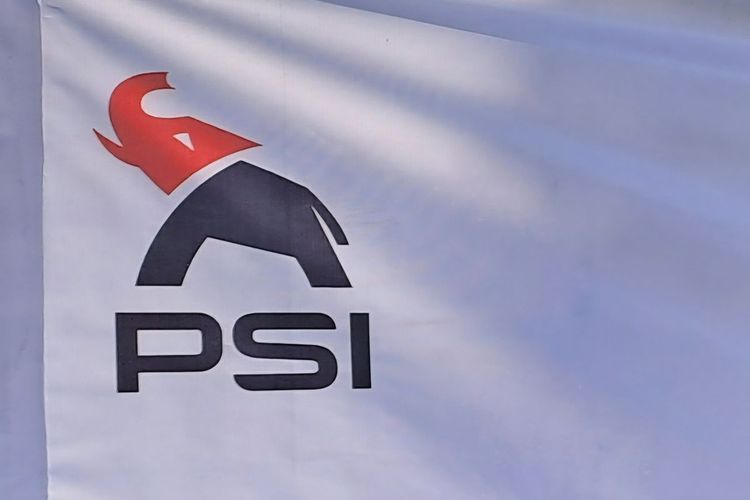
Will PSI remain a supporter of Prabowo, or will it shift to play a balancing role?
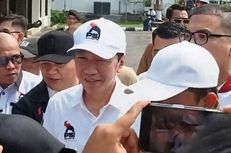
The Deputy Chair for Political Affairs of the Solo City DPD PSI, Wawanto, met with Jokowi in Sumber, Solo, Central Java, on Monday (16/11/2026).
During this meeting, Wawanto stated that he received guidance to ensure that the party's entire structure remains solid.
Jokowi also urged PSI to continue supporting President Prabowo Subianto's government until the end of his term in 2029.
"His direction is to continue supporting Prabowo's administration until 2029. We must continue to support the government's programs," Wawanto stated.
This guidance came after Jokowi had previously affirmed his support for Prabowo's administration, despite his eldest son, Gibran, applying to resign from the vice presidency.
However, PSI's political support for Prabowo's administration is questioned after several party elites, such as Raja Juli Antoni, Giring Ganesha, and Isyana Bagoes Oka, resigned.
Political communication analyst from Esa Unggul University, M Jamiluddin Ritonga, assessed that the resignations of these three founders of PSI weaken the party's position within the government.
He explained that their departures mean PSI no longer has representation in President Prabowo Subianto's cabinet, even though the party still formally expresses its commitment to support the government.
"The resignation of these three elites, who are also founders of PSI, will certainly weaken the party's position in Prabowo's administration," Jamiluddin told Kompas.com on Monday (16/11/2026).
According to him, these resignations can be interpreted as a separation of institutional interests from the responsibilities of public officials within the government.
This situation may also indicate a distancing relationship between PSI and Prabowo's administration.
"At least, there is a weakening of the relationship between PSI and Prabowo," he said.
Jamiluddin added that the resignation of these key figures would have implications for the internal restructuring of the party.
PSI will need to reorganize its leadership and enhance cadre regeneration, especially at the central level.
Despite the resignations of several cadres, PSI continues to express support for Prabowo's administration.
Jamiluddin stated that the resignations of key elites and cadres do not automatically change the party's official political stance.
PSI Chairman Kaesang Pangarep has previously expressed respect for the decisions of the cadres, emphasizing a commitment to serving the nation.
However, according to Jamiluddin, the party's statements do not necessarily reflect the internal political dynamics.
"Although the front stage and back stage in politics often differ. This may also occur within PSI," he noted.
He believes that after several cadres have resigned and Gibran no longer holds the vice presidential position, PSI has greater flexibility to adopt a different stance towards the government.
This change could be reflected in the party’s more assertive criticism of government policies, though not necessarily done overtly.
Similar views were shared by Dedi Kurnia Syah, Executive Director of Indonesia Political Opinion (IPO).
He assessed that the resignations of several PSI cadres mark underlying issues in the party's relationship with Prabowo's administration.
Dedi noted that PSI's reputation, historically tied to the Jokowi family, has been affected by various issues involving them, including controversies around Jokowi's diploma, matters regarding Gibran, and wiretapping cases.
"Even though support statements have been made, it does not mean that the President will automatically accept support and allow PSI cadres to remain in the cabinet," Dedi told Kompas.com on Monday.
He pointed to Raja Juli Antoni's position as Minister of Forestry during a crisis involving forest fires.
According to Dedi, Raja Juli has not been visibly active alongside the President, while other officials received more intensive assignments.
"This quite clearly indicates that the relationship between the President and PSI is not harmonious," he asserted.
Dedi believes that PSI's statement of support for Prabowo does not automatically reflect the party's political relationship with the government continuing as before.
The resignation of several cadres and the absence of PSI representation in the cabinet could alter the political position of the party.
Jamiluddin believes that PSI could take on a role outside the government without formally declaring itself as a formal opposition.
He suggested that PSI could position itself as a balancing party, maintaining support for beneficial government policies while providing criticism and oversight of problematic policies.
He cited the PDI-P's stance as an example, which claims to be a balancing party in its political functions outside the government.
"PSI could act like a party outside the government by scrutinizing policies through criticism and oversight, without declaring itself as a formal opposition," stated Jamiluddin.
According to him, the absence of PSI cadres in the government, as well as Gibran's resignation from the vice presidency, could allow the party to maintain distance from Prabowo's administration.
Jamiluddin even predicted that PSI may reduce its support for the government ahead of the 2029 elections.
He believes that the choice to become a balancing party could serve as an electoral strategy for PSI.
With this position, the party can maintain a proportional relationship with the government, supporting good policies while criticizing problematic ones.
Meanwhile, Dedi perceives the possibility of PSI exiting the government not solely as a political decision but also due to a lack of place within the government.
"It is more plausible that PSI gets ousted from the government, not by choice but through elimination," said Dedi.
He stated that PSI has missed its momentum before advancing further.
He also noted that the party's closeness to Jokowi, once a significant political appeal, has not yielded the expected results.
"PSI lost momentum before developing, the Jokowi gimmick became anti-climactic, and now PSI seems to be facing considerable pressure," he stated.
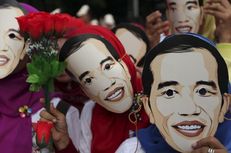
The change in PSI's political position is also related to the diminishing influence of Jokowi.
Historically, closeness to the former president has been a key part of PSI's political identity and a means to attract voter support.
Jamiluddin indicated that the fading of the "Jokowi Effect" impacts PSI's position and strategy ahead of the 2029 elections.
He noted that the weakening influence of Jokowi makes figures within his circle more vulnerable.
Some cadres or party elites are expected to begin considering other political patrons, given that proximity to Jokowi no longer guarantees political advantages or job security.
This situation, according to Jamiluddin, could complicate PSI's ability to meet the parliamentary threshold.
Historically, PSI has relied heavily on Jokowi’s personal appeal to bolster its electability.
As that influence diminishes, the party's targets for significant votes and securing seats in the DPR in 2029 are becoming increasingly challenging.
"For this reason, PSI must transition from relying on personalities to strengthening the party's machinery. Like it or not, PSI can no longer solely depend on the coattail effect from Jokowi," Jamiluddin stated.
He argued that PSI needs to build a more robust grassroots party structure, improve the quality of cadres and prospective legislative candidates in regions, and seek new alliances or figures to maintain its presence in national politics.
Additionally, PSI needs to establish a more independent ideological platform so its political identity is not entirely contingent on Jokowi.
Jamiluddin asserted that this strategy is vital for PSI to retain its political appeal as Jokowi's influence continues to wane.