

Measuring the 'Jokowi Effect' After Gibran Steps Down as Vice President: Will it Still Matter in 2029?
-
News
-
2 minutes ago
This article was translated by AI. Read the original article on Kompas.com. See Original
He does not want illegal wiretapping targeting heads of state and national figures to happen again in the future.
"We must ensure that national security and citizens' rights are not threatened by unlawful wiretapping," said Habiburokhman.
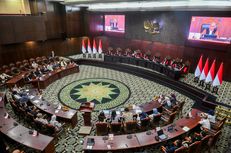
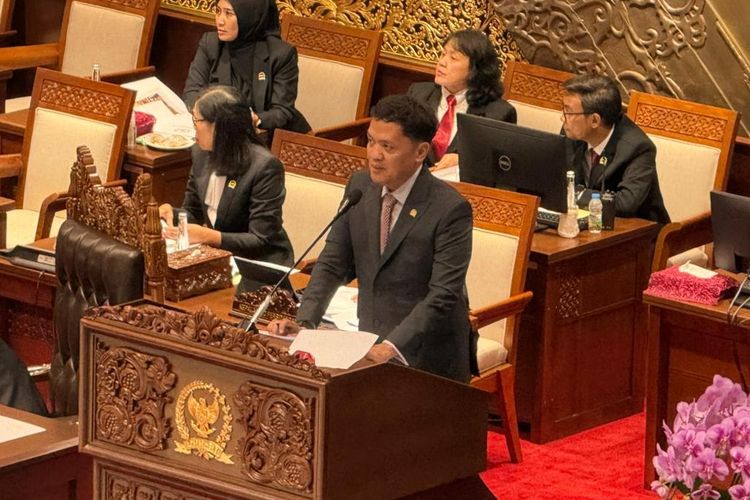 Chairman of Commission III DPR Habiburokhman. Commission III of DPR RI emphasizes that the illegal wiretapping conducted by former National Police Chief Listyo Sigit Prabowo and three other police generals against President Prabowo Subianto falls into the category of treason.
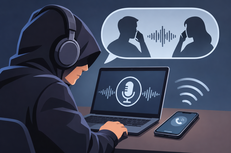
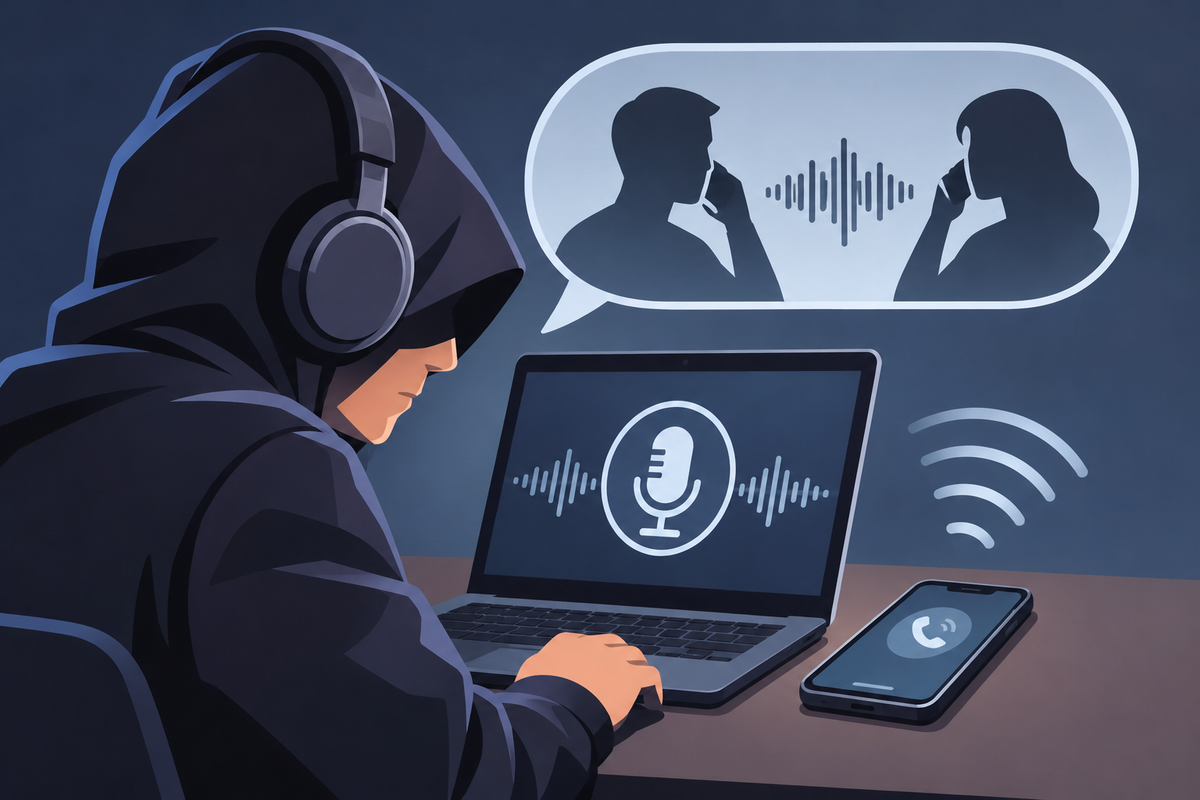
The Wiretapping Bill has become increasingly relevant due to the recent wiretapping case involving former National Police Chief General Listyo Sigit Prabowo and President Prabowo Subianto, an act deemed as trending towards treason.
"Now, this case makes it even more relevant, particularly concerning this treasonous group, the LSP. The demand from society is also growing," said Habiburokhman.
Thus, he noted that Commission III DPR held a meeting with the Head of the National Intelligence and Security Agency (Kabaintelkam) of the Police as a preliminary step.
"We need to push this forward," he added.
Habiburokhman revealed that the current regulations regarding wiretapping authority are fragmented across various laws, including the Criminal Procedure Code, the Corruption Eradication Commission Law, the Intelligence Law, the Police Law, the Prosecutor's Law, and the Narcotics Law.
Commission III highlighted that this piecemeal regulation does not adequately govern wiretapping comprehensively.
Existing procedures are considered very varied, with some agencies requiring court permission to conduct wiretapping, while others can do so without permission, with differing time limits.
This situation leaves gaps due to the absence of a clear, strict mechanism and adequate constitutional constraints to safeguard data and personal information of the public.
With the introduction of the Wiretapping Bill, Commission III hopes this specific regulation will unify and clarify the procedures for conducting wiretapping professionally, accountably, and nondiscriminatorily.
"This special regulation will clarify the mechanisms and procedures for wiretapping activities that must be conducted professionally and accountably, ensuring they are non-discriminatory and beneficial for law enforcement and the protection of human rights or citizens' constitutional rights," he explained.
The Head of the Intelligence and Security Agency (Kabaintelkam) of the Police, Commissioner General Dedy Kusuma Bakti, expressed his support for DPR RI’s initiative to draft the Wiretapping Bill.
"From the outset, the position of the Baintelkam of the Police has been to support the formation of this wiretapping law," Dedy said during the Hearing Meeting (RDP) with Commission III DPR RI.
According to Dedy, the existence of such regulations is projected to provide legal certainty for field officers.
Moreover, he believes this regulation will also offer optimal protection for society.
Dedy hopes the Wiretapping Bill will not only regulate wiretapping for investigation purposes alone.
He elaborated four reasons. First, the tasks of detection and prevention are mandated by the Police Law and the State Intelligence Law, which have specific functions distinct from investigative roles.
Second, prevention precedes law enforcement, where intelligence functions play a strategic role in managing domestic security issues, with law enforcement placed as a last resort when prevention is no longer sufficient.
Third, to guarantee legal certainty and protection for personnel.
"Referring to the Constitutional Court's Decision Number 5 of 2010, wiretapping must be regulated by law so that targets, timeframes, and penalties are clearly defined, protecting personnel while ensuring public guarantees," he stated.
This bill is also deemed important for narrowing the opportunities for abuse through tight limitations regulated by law.
Baintelkam of the Police proposed six mechanisms to prevent the misuse of wiretapping.
"First is related to limited targets. In this, we previously explained that wiretapping should only be done for preventing disturbances to domestic security, including high-threat crimes," Dedy stated.
The second mechanism is the need for strict prohibitions to ensure wiretapping is not conducted outside the established targets.
Third, the wiretapping mechanism must be based on written orders from superiors, with a set timeframe, and detailed records from the target proposer, approver, and technical executor.
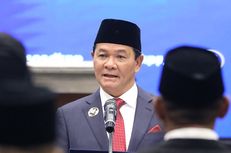
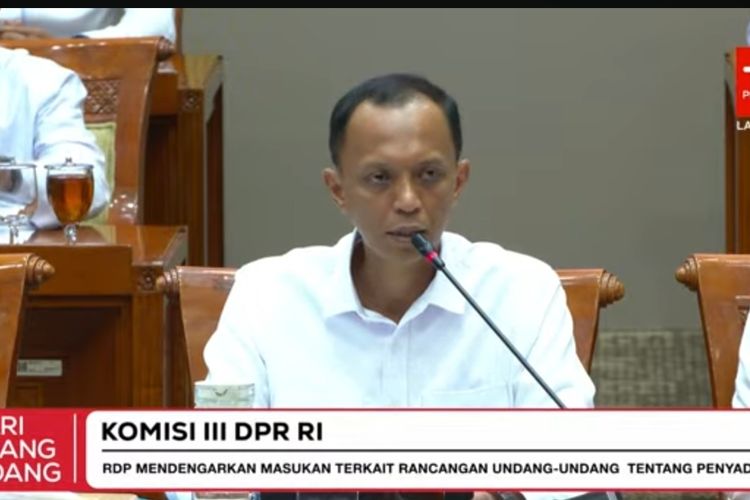 Head of the National Intelligence and Security Agency (Kabaintelkam) Inspector General Dedy Kusuma Bakti during the RDP with Commission III DPR RI, Monday (16/11/2026).
The fourth involves documenting wiretapping usage, which must be audited periodically and should not be amendable or deletable.
"Fifth, oversight through strict supervision by Kabaintelkam of the Police and by the inspectorate and Propam functions as per Article 19 of the Police Law," Dedy said. Lastly, he proposed strict disciplinary and criminal penalties for wiretapping abuse.
"For abuse, criminal charges will be pursued through the general court based on Article 258 of the Criminal Code and Government Regulation Number 3 of 2023 regarding Police Professional Ethics Code. Based on Police Regulation Number 7 of 2022, the heaviest penalty is up to the termination without honor (PTDH)," Dedy added.
Digital communication expert Rulli Nasrullah proposed the establishment of an independent institution to oversee wiretapping to protect the national data ecosystem.
"It is essential to promote the establishment of an independent wiretapping oversight body," Rulli told Kompas.com on Wednesday (4/11/2026).
According to Rulli, the wiretapping case involving President Prabowo Subianto reflects vulnerabilities in cybersecurity oversight and wiretapping procedures.
"Legitimate wiretapping requires permission, procedures, and auditable records. When all those can be bypassed, or the traces can be erased as indicated in the investigation, it means internal control and external oversight are not sufficiently strong," he said.
 Digital communication observer, Rulli Nasrullah.
Furthermore, he suggested that regulations demand periodic system audits and recording data access.
He also emphasized the importance of consistent law enforcement concerning Law Number 27 of 2022 on Personal Data Protection (PDP).
"So regarding whether our cybersecurity is weak, the answer is not simply 'yes, it can be breached'; what's more accurate to highlight is the weakness in oversight," Rulli concluded.