Gibran, PDI-P, and Old Wounds from the 2024 Presidential Election
-
News
-
1 minute ago
This article was translated by AI. Read the original article on Kompas.com. See Original

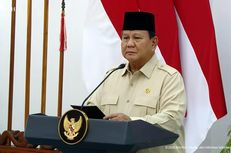
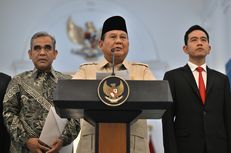
TWO years in, Prabowo Subianto's administration should serve as a crucial moment to evaluate how political promises have been translated into policies and tangible changes for the public.
Since taking office on October 20, 2024, Prabowo has introduced several major agendas, including improving nutritional quality through the Free Nutritious Meal (MBG) program, strengthening the economy, ensuring food security, and enhancing social protection.
However, the two-year journey of this administration has also revealed various issues worthy of attention.
Ironically, some of these issues stem from the President's flagship programs and those within his immediate circle of power.
The MBG program is facing allegations of corruption relating to the management of the National Nutrition Agency (BGN).
Amidst numerous natural disasters and forest and land fires, procurement within the National Disaster Management Agency (BNPB) is also entangled in corruption scandals.
These problems become even more sensitive with allegations of wiretapping targeting the President that implicate former National Police Chief General Listyo Sigit Prabowo.
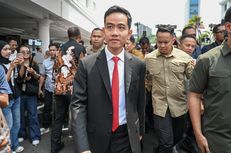
Meanwhile, Gibran Rakabuming Raka's decision to step down as Vice President reignited debates regarding presidential candidate nomination processes and political legitimacy.
Each of these events has distinct characteristics, actors, and legal processes. It is inaccurate to consider them part of a single conspiracy or as evidence of systemic governmental issues.
Nonetheless, one pattern is noteworthy: these problems do not merely arise at the peripheries of governance but directly impact key programs and the power dynamics closely associated with the President.
From a political communication perspective, this series of events presents deeper issues than mere negative news coverage. There is potential for a reputation crisis to expand into a legitimacy crisis and a loss of public trust.
The question is, how will Prabowo's administration manage this situation? Is clarifying matters, controlling news coverage, and highlighting program successes sufficient?
Or is a more fundamental overhaul of governance, official integrity, and government-public relations required?
In the study of Political Public Relations, political communication is not merely understood as building an image, managing news, or conveying government successes.
Communication is part of managing relationships between political actors and the public, including how power builds trust and maintains legitimacy.
Jesper Strömbäck of Mid Sweden University and Spiro Kiousis of the University of Florida, in their book Political Public Relations: Principles and Applications (2011), define political PR as a management process conducted by political actors through communication and actions to build and maintain relationships and reputation with key publics.
One crucial point from this thinking is that communication and action are inseparable elements.
This means that the success of government communication cannot merely be gauged by the number of positive messages conveyed, the media reach, or the President's popularity.
Communication must be grounded in accountable political behavior and institutional performance.
This brings us to Prabowo's governance challenge. When priority programs and those in power face integrity issues, it is insufficient for the government to merely state that each case is an individual responsibility.
The President retains political responsibility to ensure oversight systems and accountability mechanisms function properly.
This issue relates to the concept of political legitimacy. Jesper Falkheimer of Lund University, in his study Legitimacy Strategies and Crisis Communication (2021), published by the Oxford Research Encyclopedia of Politics, explains the close relationship between crisis communication and legitimacy.
A crisis can test public acceptance of an institution's authority and right to govern.
In other words, legitimacy is not solely obtained through formal procedures or electoral victories.
Legitimacy is also maintained through institutional behavior, quality decision-making, official integrity, and the government’s ability to account for its authority.
An administration with electoral legitimacy still requires performance legitimacy and moral legitimacy in exercising its power.
One relevant concept for understanding this situation is reputational spillover, which refers to the spreading impact of one entity's reputation to another related or associated entity.
Shari R. Veil of the University of Nebraska-Lincoln and Lindsay L. Dillingham of Lipscomb University, in the chapter Reputational Interdependence and Spillover: Exploring the Contextual Challenges of Spillover Crisis (2020), explain that a crisis in one organization can create concerns, uncertainty, and perceptions of loss for another organization that has ties to it.