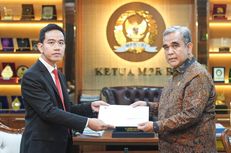

Full Text of Gibran's Resignation Letter Read by MPR Chairman
-
News
-
Just now
This article was translated by AI. Read the original article on Kompas.com. See Original
IN the centralized power structure practiced by President Prabowo over the past two years, the absence of PDI-P from the government ship raises significant concerns.
This concern is heightened when contrasted with the current socio-political situation.
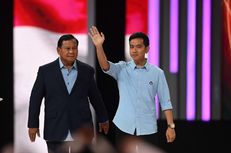
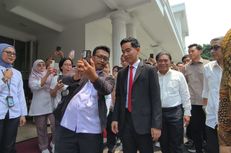
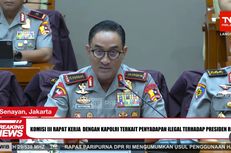
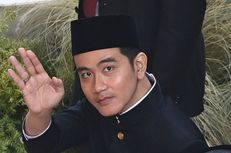
The dismantling of Jokowi's political strength, evident in the uncovering of illegal wiretapping scandals against the president and the gradual ousting of Gibran Rakabuming Raka from his vice-presidential seat, will undoubtedly pose serious challenges for President Prabowo's administration moving forward.
Thus, it is not surprising that many assume there will be a political outreach to PDI-P to join the power circle.
PDI-P, a party that is, in its very lineage, designed not only for electoral victories but fundamentally as a party willing to fight against regimes.
PDI-P is considered a highly “attractive” political force in the eyes of President Prabowo. The term “attractive” here does not merely refer to PDI-P’s seat count in the House of Representatives during the 2024 elections, where it secured 110 seats (18.97 percent)—the highest in parliament.
Rather, what draws attention to this party is its steadfastness in political principles—if it loses an election, it won't seek power through pragmatism or by begging.
In that context, PDI-P stands grand in the eyes of President Prabowo.
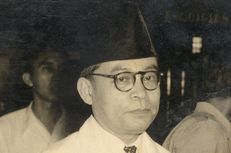
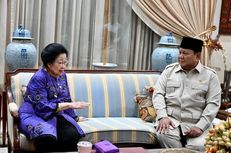
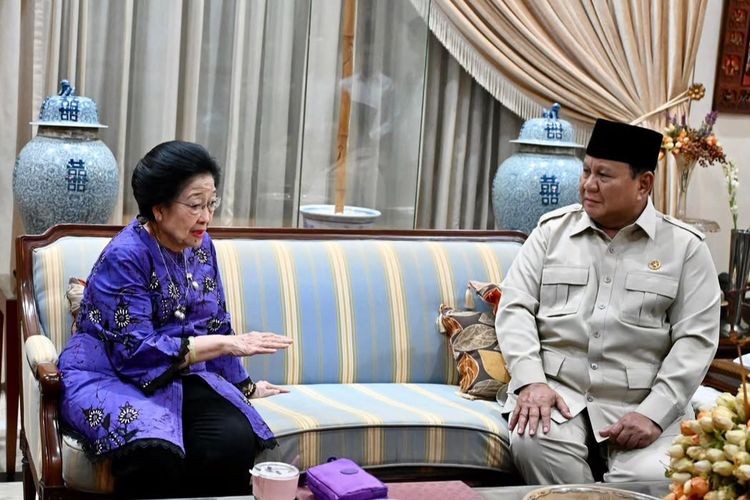
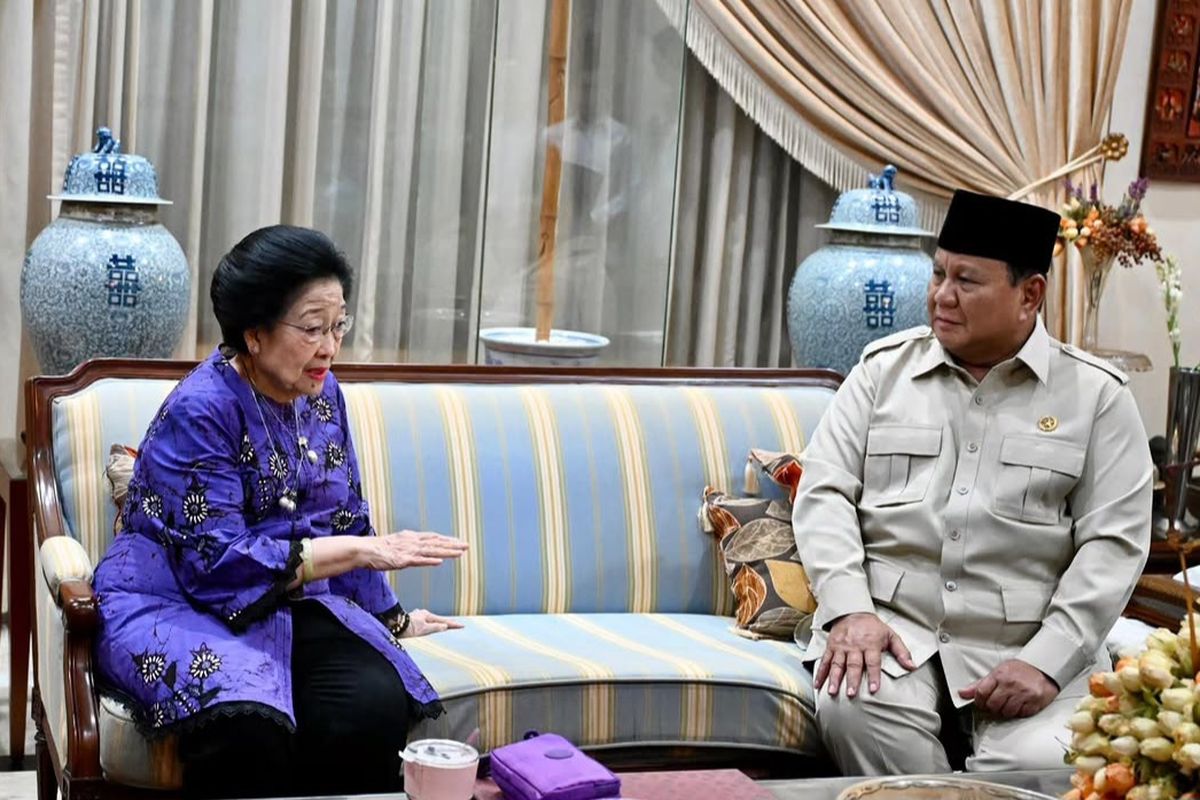
This is particularly so when we consider the romantic elements of the past when Prabowo and Megawati—the PDI-P chairperson—partnered in the 2009 presidential election, along with the undeniable fact that President Prabowo greatly admires Sukarno, Megawati’s father.
In political mathematics, it is crucial for President Prabowo to embrace PDI-P within the regime he leads.
The exit of Gibran from his position of power and the weakening of PSI through the resignation of several party officials is not a static phenomenon.
It will sharply evolve forward, resulting in political retaliation—which should be viewed as a potential risk and threat by the existing power.
Other political forces still within power and having political debts with the Jokowi dynasty deserve attention.
President Prabowo is not entirely insulated; he is not completely secure. Thus, exploring opportunities for cooperation with the White-Eared Bull party is very much a possibility for President Prabowo and Gerindra.
The issue remains how this option can be realized to provide political resilience for the current power.