
Police Chief Suyudi: Wiretapping Cannot Be the Basis for Concluding Treason
-
News
-
2 minutes ago
This article was translated by AI. Read the original article on Kompas.com. See Original
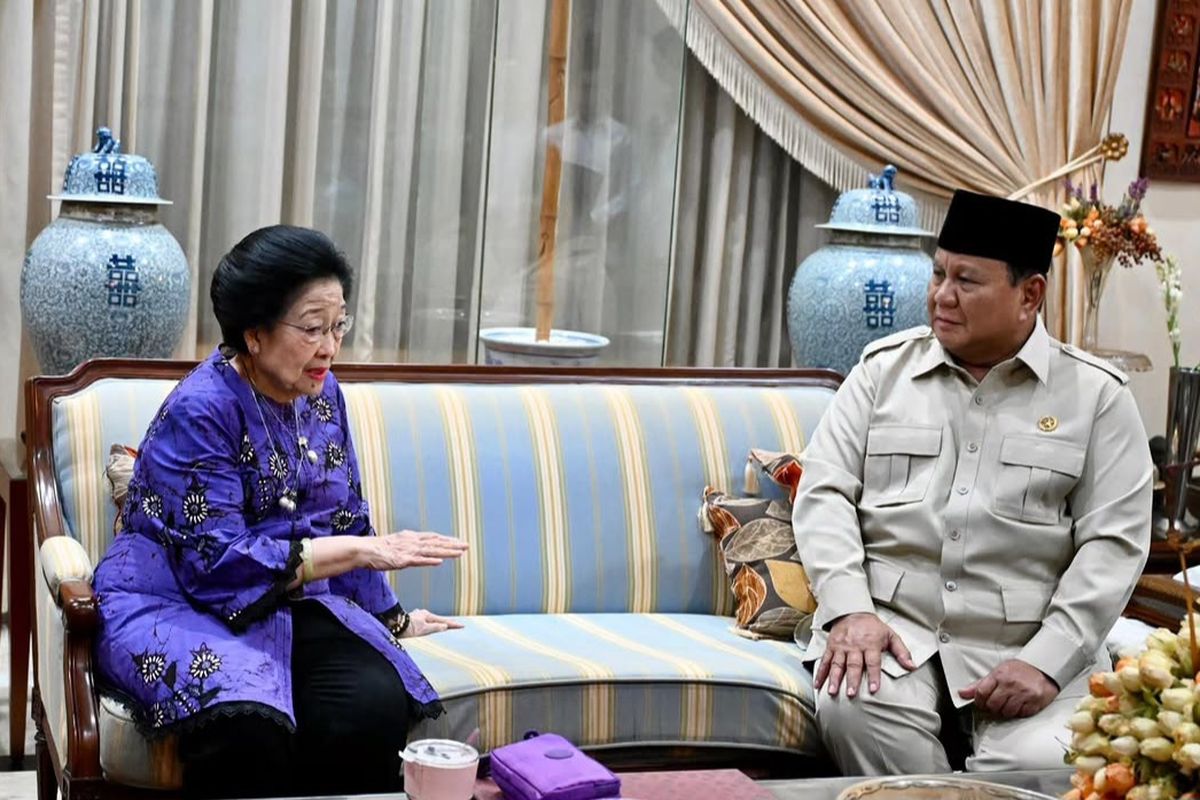
IN the centralized power structure practiced by President Prabowo over the past two years, the absence of PDI-P from the government ship raises significant concerns.
This concern is heightened when contrasted with the current socio-political situation.
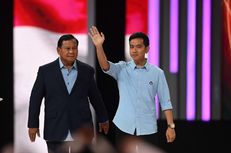
The dismantling of Jokowi's political strength, evident in the uncovering of illegal wiretapping scandals against the president and the gradual ousting of Gibran Rakabuming Raka from his vice-presidential seat, will undoubtedly pose serious challenges for President Prabowo's administration moving forward.
Thus, it is not surprising that many assume there will be a political outreach to PDI-P to join the power circle.
PDI-P, a party that is, in its very lineage, designed not only for electoral victories but fundamentally as a party willing to fight against regimes.
PDI-P is considered a highly “attractive” political force in the eyes of President Prabowo. The term “attractive” here does not merely refer to PDI-P’s seat count in the House of Representatives during the 2024 elections, where it secured 110 seats (18.97 percent)—the highest in parliament.
Rather, what draws attention to this party is its steadfastness in political principles—if it loses an election, it won't seek power through pragmatism or by begging.
In that context, PDI-P stands grand in the eyes of President Prabowo.
This is particularly so when we consider the romantic elements of the past when Prabowo and Megawati—the PDI-P chairperson—partnered in the 2009 presidential election, along with the undeniable fact that President Prabowo greatly admires Sukarno, Megawati’s father.
In political mathematics, it is crucial for President Prabowo to embrace PDI-P within the regime he leads.
The exit of Gibran from his position of power and the weakening of PSI through the resignation of several party officials is not a static phenomenon.
It will sharply evolve forward, resulting in political retaliation—which should be viewed as a potential risk and threat by the existing power.
Other political forces still within power and having political debts with the Jokowi dynasty deserve attention.
President Prabowo is not entirely insulated; he is not completely secure. Thus, exploring opportunities for cooperation with the White-Eared Bull party is very much a possibility for President Prabowo and Gerindra.
The issue remains how this option can be realized to provide political resilience for the current power.
Following the revelation of the illegal wiretapping scandal against President Prabowo and Gibran's ousting from his vice-presidential role, PDI-P appears to be stirring.
This was evident during the PDI-P Party School event held on November 9.
During the occasion, Megawati stated that she had previously requested President Jokowi to replace Listyo Sigit according to the prevailing regulations, not for personal motives.
She also recalled her past experiences with wiretapping that led her to opt not to use mobile phones until today.
These statements, within the framework of political communication, are political signals indirectly aimed at President Prabowo.
The message is simple: PDI-P and Megawati are beginning to open avenues for cooperation with President Prabowo, even space for further exploration.
Let’s Not Go Too Far
It may be excessive for the public to frame the potential collaboration between President Prabowo and PDI-P with the prospect of proposing Puan Maharani as a vice-presidential candidate alongside President Prabowo.
However, what makes the most sense and is rational for President Prabowo is to support the power both in parliament and the cabinet to ensure the government runs robustly and swiftly to fulfill campaign promises.
If PDI-P enters, the legitimacy of government policies can advance more rapidly, owing to the majority seat control.
If PDI-P enters the cabinet, then the cabinet seats currently held by less-than-sterile political factions can be cleared.
President Prabowo certainly understands the basic political concepts like this. The real issue now is timing: whether to execute quickly or maintain a cooling-down mode to dampen any larger agitation.
As with discussions on vice-presidential candidates, it might be a bit too swift for the public to directly steer today’s issue towards political succession in 2029.
The crucial point lies in the impending change of the vice president's position.
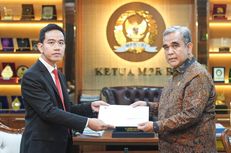
If President Prabowo suggests a vice-presidential candidate from a political party to MPR RI, that choice would significantly recomposition the cabinet structure.
For instance, if Puan Maharani’s name is put forward from PDI-P, this would undoubtedly lead to political bargaining for further ministerial positions between the powers and PDI-P.
Proposing Puan Maharani as a vice-presidential candidate would also influence ministerial roles of other large political parties, such as Golkar.
Especially if those political parties are branded as “less than sterile” and affiliated with Jokowi.
President Prabowo will have a daunting post-political turmoil task ahead, following the upheaval that has gripped the republic in the past month.
This task is named consolidation of strength and power. In reality, the process of consolidation currently unfolding is far more complex than the previous mechanisms employed.
However, perhaps this moment will serve as a stepping stone for long-term continuity.
Five-year cycles teach us that the third year is the final opportunity for the ruling regime to meet its political promises, or at least to demonstrate that achievements meet satisfactory indices for presentation in future electoral contests.
Consequently, consolidating power at the parliamentary and cabinet levels is non-negotiable for President Prabowo today.
The consolidation of power and strength is projected to operate on two fronts—parliamentary and executive.
At the parliamentary level, framing PDI-P within the power map would be a strategic move for President Prabowo to garner support and legitimize policies.
Non-sterile elements can be eliminated through the inclusion of a new force that holds the most seats in parliament.
At the cabinet level, power consolidation will be executed through a thorough cleansing process.
Only political forces that are sterile and loyal will be permitted to stand alongside the ruling regime today.
Additionally, there are two footnotes that must not escape President Prabowo's attention.
First, normalizing the National Police by reducing the number of ministers from law enforcement backgrounds in the cabinet for the future professionalism of the police.
Second, implementing political meritocracy for the supporting parties that have remained loyal to the ruling powers and have never caused disturbance.