
70 Years Ago, Mohammad Hatta Resigned from the Vice Presidency
-
News
-
10 minutes ago
This article was translated by AI. Read the original article on Kompas.com. See Original
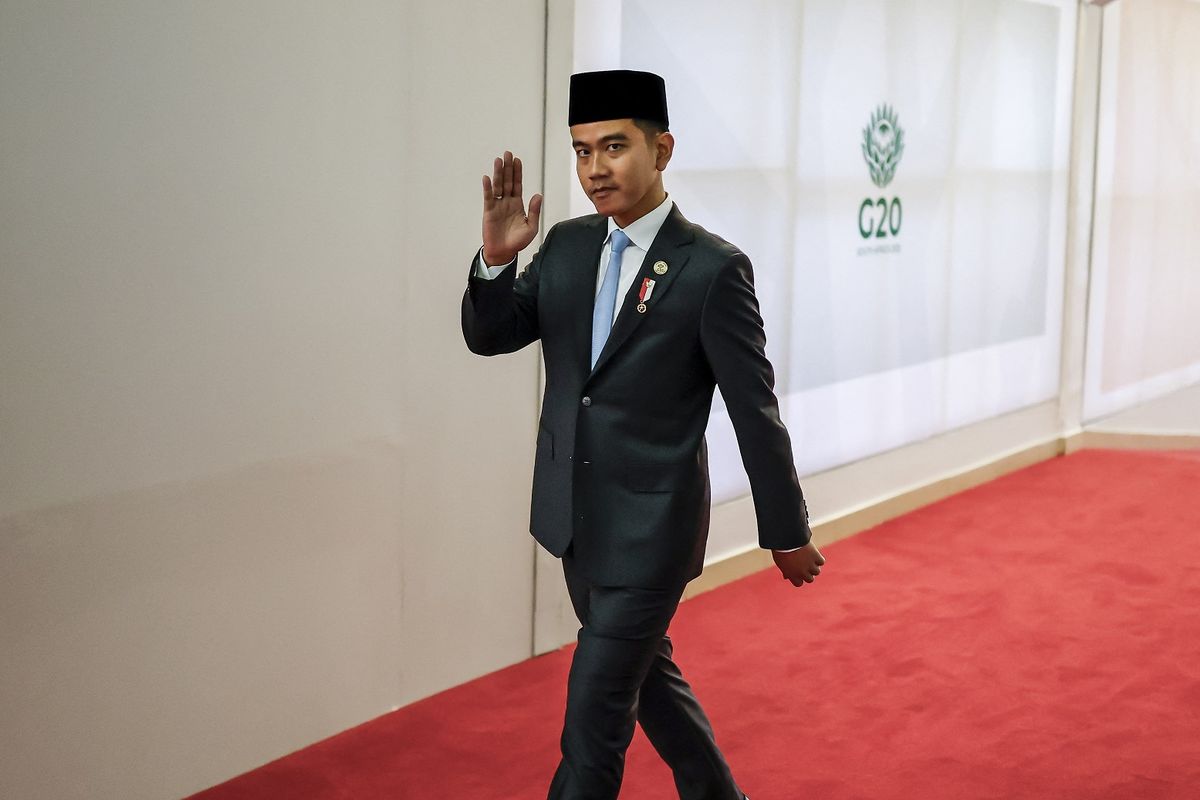
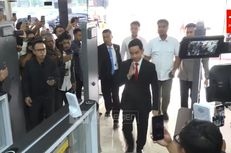
ON Wednesday (11/11/2026) afternoon, a letter was reported to change hands at Halim Perdanakusuma.
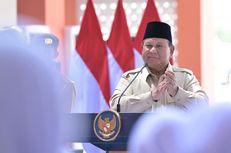
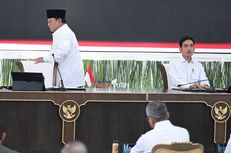
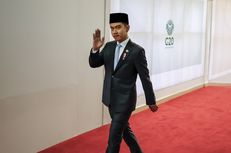
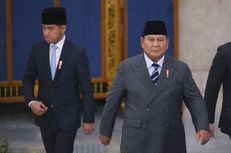
According to CNN Indonesia, Gibran Rakabuming Raka submitted his resignation letter to President Prabowo Subianto.
Budi Arie Setiadi and two sources in the parliament confirmed Gibran's resignation news to Reuters.
By that evening, it was still uncertain whether the vice president's position was officially vacant (CNN Indonesia, Reuters, and Media Indonesia, November 11, 2026).
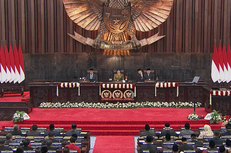
In Senayan, 120 members of the House of Representatives from eight factions signed a proposal for an Opinion Statement regarding the controversy surrounding Gibran's educational documents.
The proposal is scheduled to be included in the plenary agenda on November 12 (Parlementaria, November 11, 2026).
Among the signatories were 11 members from Gerindra and 11 from Golkar.
Their stance does not necessarily reflect the position of all factions. If the resignation takes effect sooner, individuals from the same party may face new questions.
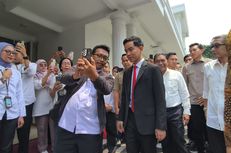
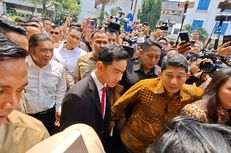
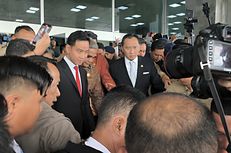
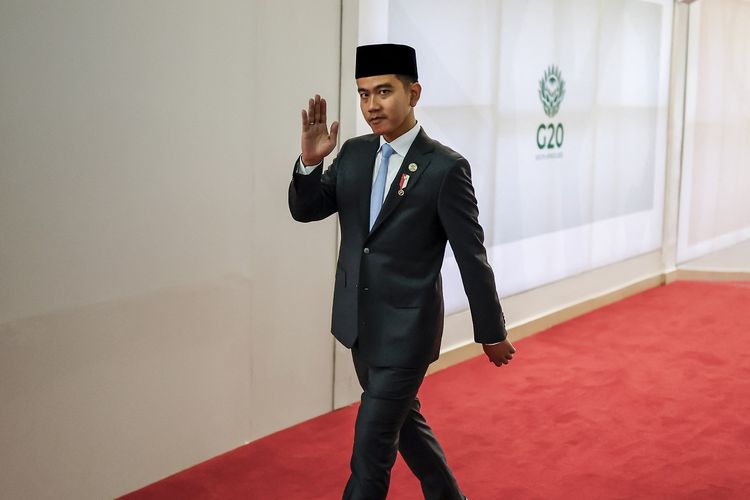
On Thursday (12/11/2025) around 11:00 AM WIB, Vice President Gibran Rakabuming Raka officially submitted his resignation letter to the People's Consultative Assembly (MPR).
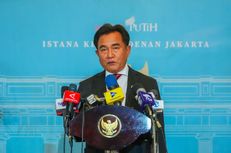
Gibran delivered his resignation letter, and MPR Chairman Ahmad Muzani stated that Gibran had handed over the letter to him.
"He submitted a letter of resignation from his position as Vice President of the Republic of Indonesia," Muzani said.
So, who will fill the vacancy left by Gibran?
Since the position is now empty, the MPR has a maximum of 60 days to convene and select a replacement.
The president must submit two names along with the necessary documentation to the leadership of the MPR no later than 14 days before the session.
If the names and reasons for the nominations are made public, citizens will have time to evaluate both candidates. The candidate with the most votes will be elected.
If there is a tie, the election will be repeated once. If it remains tied, the president will select one of them (1945 Constitution, Article 8 paragraph (2), and Law No. 17 of 2014, Article 46).
Gerindra holds 86 seats in the House, while Golkar has 102. If PKB, PAN, and Demokrat support the same name along with the two, their combined total reaches 348 seats.
For comparison, 367 is the absolute majority out of the 732 MPR members at the beginning of the period.
In the session, the outcome will be determined by a majority vote. If the faction support is split, the choice of 152 DPD members, representing diverse regional interests, could determine the result (KPU Decision No. 1205, August 25, 2024, and Ministry of PANRB, October 1, 2024).
If Prabowo wishes to maintain the coalition's structure, Bahlil Lahadalia holds one of the strongest bargaining positions. The 102 Golkar seats provide the President ample reason to consider its chairman.
This same strength prompts coalition partners to calculate their positions. A chairman of a large party sitting next to the President brings its own leverage ahead of 2029.
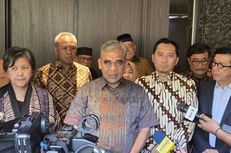
Sufmi Dasco Ahmad, as the Deputy Chairman of the House, has experience in inter-faction negotiations.
If the presidential and vice-presidential seats are both occupied by Gerindra cadres, coalition partners will reassess their room in the government (JPNN, November 10, 2026, and Alinea, November 11, 2026).
The nomination of Puan Maharani could change the negotiation dynamics if Prabowo wants to open a new agreement with the PDI-P, which holds 110 House seats.
Agus Harimurti Yudhoyono finds himself with a narrower path. Demokrat has 44 seats.
AHY's chances may open if the larger parties fail to agree on a primary candidate and are willing to support him.
Stronger cues will come from the factions' stance outside their own parties (JPNN, November 10, 2026, Alinea, November 11, 2026, and KPU Decision No. 1205, August 25, 2024).
Then, why not Anies Baswedan?
The rules give Prabowo room to propose him. In 2024, Anies and Muhaimin Iskandar garnered 40,971,906 votes or 24.95% of the valid national votes.
Nominating Anies could be a way for Prabowo to reach voters who previously stood across the divide.
In Senayan, NasDem, PKB, and PKS, the three parties that backed that pair, hold a total of 190 House seats.
This number would only carry weight for Anies if they are willing to support him again.
Prabowo must also weigh whether he wants to share power with a former opponent who has his own voter base ahead of 2029.
Senayan has previously shown how quickly calculations can change. In July 2001, after Megawati became president, Hamzah Haz from PPP defeated Akbar Tandjung from Golkar, 340 to 237 votes in the third round.
The mechanisms then were different. The lesson still holds. Party strength provides a starting point.
Support from outside the party can determine who reaches that seat (Hukumonline, July 26, 2001).
Once the seat is counted, both candidates need to be questioned about the work they will undertake. What is their track record when holding authority?
Can they work with the President and dare to voice objections when decisions need to be corrected?
Montesquieu reminds us that power must be limited to prevent abuse.
Here, the President needs to explain why these two names are being proposed.
The MPR must independently evaluate both candidates and explain their choice to the public (Montesquieu, De l'esprit des lois, 1748, and 1945 Constitution, Article 8 paragraph (2)).
The United States and the Philippines require approval from both chambers of Congress for a single candidate.
Gerald Ford, who replaced Spiro Agnew, received 92 votes to 3 in the Senate and 387 to 35 in the House.
In the Philippines, candidates must come from Congress. Under that rule, Senator Teofisto Guingona filled the vice-presidential seat after Gloria Macapagal-Arroyo became President (U.S. Constitution, 25th Amendment, February 1967, Ford Presidential Library, November-December 1973, Philippine Constitution, 1987, and Supreme Court of the Philippines, January 21, 2004).
When taking the oath as President after Nixon's resignation, Ford said, “I am fully aware that you did not elect me as President through your ballot.”
He said this to the American people in his first speech as President (Gerald R. Ford, August 9, 1974, translation).
From Halim, news of a letter reaches homes. If the position becomes officially vacant, two names will arrive at Senayan.
Far from there, someone might still remember how they rose early to head to the polling station, queued, and carefully folded their ballot. They entrusted their hopes for five years.
Once, in the polling booth, they had the right to secrecy in their choice. Now, those voting in Senayan owe an answer. Why that name?