
Impeachment, Resignation, and the Right to Re-nominate the Vice President
-
News
-
12 minutes ago
This article was translated by AI. Read the original article on Kompas.com. See Original
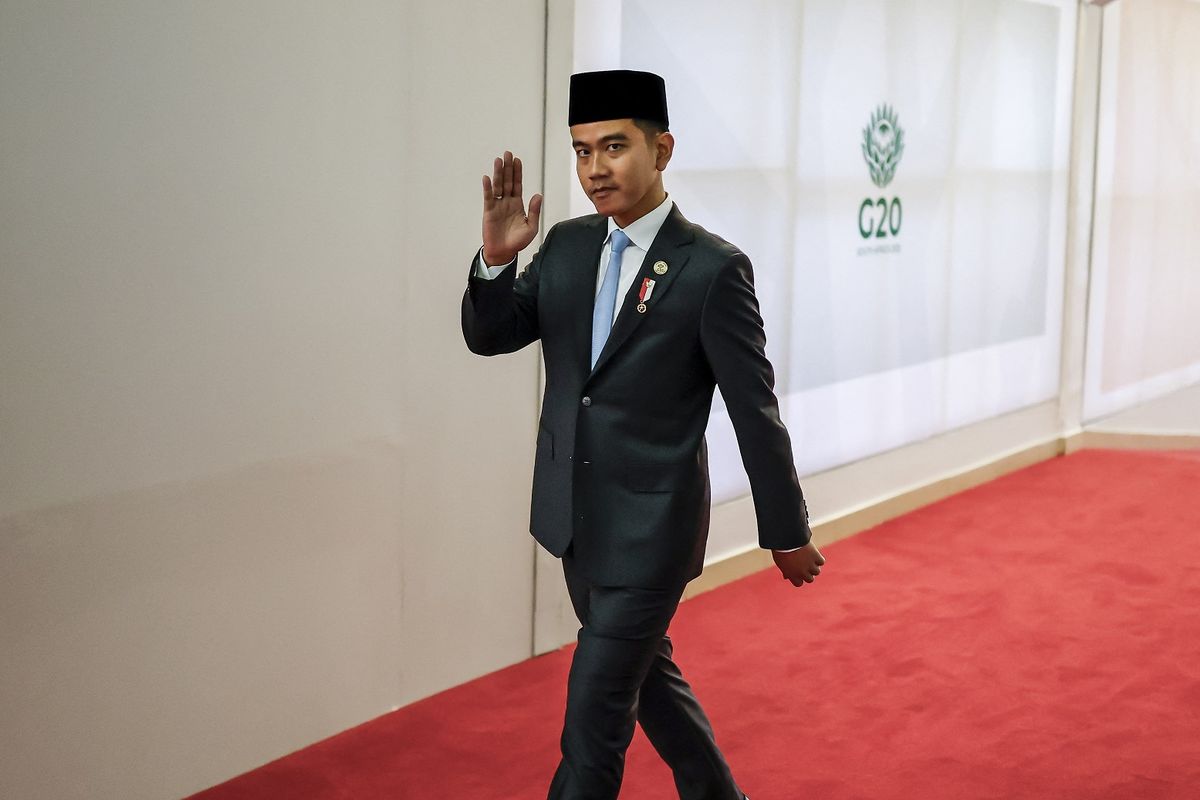
WEDNESDAY, November 11, 2026, will be remembered as a difficult day to forget in our nation's governance history.
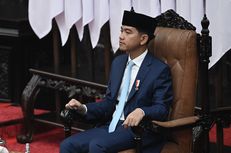
In the afternoon, eight factions in the House of Representatives, without exception, officially proposed a statement of opinion against Vice President Gibran Rakabuming Raka.
A total of 120 members signed the proposal, including eleven members from the Gerindra faction, the party led by President Prabowo Subianto himself. That evening, more shocking news followed.
Gibran was reported to have submitted his resignation letter to the President at Halim Perdanakusuma Air Force Base, with Projo Chairman Budi Arie Setiadi confirming this with a single word: "correct" (CNBC Indonesia, 11/11/2026).
The basis for this pressure was two court rulings. In early October, the Constitutional Court stated that there was no convincing evidence regarding Gibran’s educational equivalency.
At the end of October, the Supreme Court, through a cassation ruling, declared the equivalency certificate used as a requirement for the 2024 presidential election candidacy invalid.
Just a day prior, Gibran had expressed his intention to prove the validity of his documents through administrative legal proceedings.
However, Coordinating Minister for Law and Human Rights Yusril Ihza Mahendra considered that move pointless as the Supreme Court's ruling was final (Kompas.com, 10/11/2026).
With all factions united and legal avenues closed off, impeachment became unavoidable. The resignation letter was the only remaining exit strategy.
The world watched this event closely. Reuters, citing three political sources, promptly reported that Indonesia's Vice President had resigned, after previously linking the document dispute to the deteriorating relationship between Prabowo and Joko Widodo.
Bloomberg published a headline about Gibran’s resignation following the credential dispute, while Nikkei Asia provided commentary on the resignation plan and impeachment threats for its audience in the region.
For foreign media, this was not just a change of officials but a test for democratic institutions in the world's third-largest democracy.
Interestingly, the stock market remained relatively calm throughout the tumultuous days. The market seemed to read that this crisis would be resolved through constitutional means, not the streets.
The most striking aspect of this episode is the loneliness. The throngs of volunteers who once rallied to support his victory were almost silent, except to confirm the resignation news.
Coalition parties that supported him two years ago now also signed the impeachment proposal.
Former President Joko Widodo, his father, merely urged all parties to respect the legal process and constitutional rights. He appeared resigned to the ongoing political process.
Gerindra’s stance should be read closely. The President's party is nearly impossible to move without the approval of its chairman.
The last protective door has closed, not with a bang, but with a polite silence.
The wiretapping case involving the President, which implicated the former Chief of Police—an individual known to be close to Jokowi—only expedited everything.
Legally, that matter is unrelated to Gibran's education document, and the presumption of innocence still applies.
Politically, allegations of “betrayal” from old circles have turned every closeness to the Jokowi family into a burden.
It's hard to guess Gibran’s mood when he submitted that letter. The man who two years ago was hailed as a symbol of the youth at the height of power now finds his phone silent and friends choosing to remain mute.
Perhaps there is disappointment, perhaps there is a sense of abandonment, and perhaps there is unvoiced regret.
A more troubling question: did he and his father ever contemplate such consequences when the candidacy pathway was opened in 2023?
At that time, all doors appeared open, all friends seemed loyal, and rules seemed malleable.
No one imagined that a mere certificate could topple everything.
Why has someone who once stood at the peak, once approached by many, now been abandoned one by one?
Historian Barbara Tuchman in The March of Folly (1984) illustrated a recurring pattern in the history of power.
Rulers embark on paths that harm themselves, despite warnings heard from the outset and alternative choices available.
Those warnings emerged as early as 2023, from professors to civil society. Alternative choices were also present.
Had Gibran not been pushed to run for vice president, even though it was Prabowo who nominated him, he could have pursued a career as a governor or minister.
Scrutiny over his educational documents may still have arisen, but it wouldn't have transformed into a constitutional issue shaking the second seat in the Republic. The rice is now porridge.
What is the most fitting term for such a bitter end? Aristotle called it tragedy.
A tragic figure is not an evil person, but someone who once stood tall and falls due to a misjudgment, hamartia.
In Greek drama, that misjudgment often stems from hubris, an overstepping, which is ultimately punished by nemesis.
Javanese wisdom features a more grounded expression, ngunduh wohing pakarti, which means reaping the fruits of one’s own actions.
Both are not meant to pass judgment but to remind us that every choice of power carries its own consequences, sooner or later.
So, do the people mourn this event? Some supporters may feel sadness, and that is human.
However, the broader public reaction seems not to be tears, but reflection.
The people should not cheer at anyone's downfall. Gibran’s decision to resign, rather than clinging to power until impeachment, is also worthy of respect as a step saving the country from prolonged polemics.
For millions of young people who once saw him as a symbol of hope, the lesson is even more personal.
A shortcut can take someone to the peak quickly, but only the straight path can keep them there.
The most important lesson is simple yet costly. Power in a republic is a trust, not an inheritance.
It can be temporarily lent by the people, but cannot be inherited through shortcuts.
Every attempt to bend the rules for close individuals will demand a price, and that price is often paid by those who are most loved.
Will the next holders of power learn from this tragedy before repeating it?