KPK Examines Former Seskab During SBY Era as Witness in Gratuity Case Involving Former Tax Official
-
News
-
9 minutes ago
This article was translated by AI. Read the original article on Kompas.com. See Original

JAKARTA, KOMPAS.com - Agung Pamungkas, Government Affairs & Public Policy Manager for Google Indonesia, outlined four crucial issues in the Draft Copyright Law that require further discussion.
First, the ability to find, access, and share information on the web.
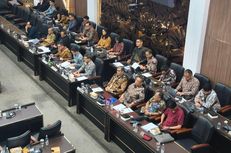
"We believe this is fundamental. Limiting platforms from freely sharing links or snippets risks creating significant barriers," Agung stated during a Public Hearing Session with the Legislative Body of the Indonesian Parliament at the Parliament Complex, Senayan, Jakarta, on Wednesday (11/11/2026).
Agung explained that implementing charges on links would leave Google with no option but to halt indexing, re-indexing, and distributing Indonesian news to local users.
The second crucial issue is the protection of creator autonomy and market mechanisms.
Google urges the parliament to protect voluntary agreements based on market mechanisms.
"Forcing rights holders in music and news to contract through a single collective body risks disrupting market efficiency, limiting creators' income potential, and hindering global investment," Agung noted.
Third, Google Indonesia emphasized the platform's role as an Intermediary.
Both legally and technically, platforms act as intermediaries and are not in a position to determine the individual rights attached to each piece of content or replace the role of a court.
Google stressed the importance of maintaining legal protections based on the globally recognized notice and action mechanism, to ensure that copyright holders retain control to express objections.
The fourth point addresses promoting balanced AI innovation.
Agung mentioned that cutting-edge AI models require large-scale multimodal datasets that include billions of indexed web pages on the internet.
According to Google, the implementation of mandatory licenses is technically unfeasible, and restrictions on training AI with local data would lower the fluency in Indonesian and create barriers for local developers.
"Therefore, we strongly encourage the implementation of clear exceptions for text and data mining, along with standard capabilities to refuse training like TXT robots," Agung stated.