

Misconception Behind the Welfare of Healthcare Workers
-
News
-
8 minutes ago
This article was translated by AI. Read the original article on Kompas.com. See Original
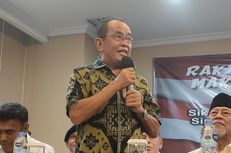
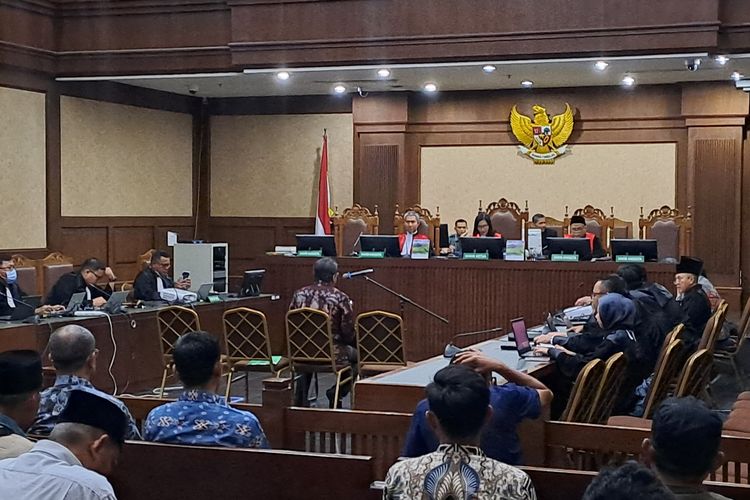
JAKARTA, KOMPAS.com - Former Chairman of the Audit Board of Indonesia (BPK) for the 2019-2022 term, Agung Firman Sampurna, presented several perspectives favorable to former Minister of Religious Affairs Yaqut Cholil Qoumas. What insights did Agung provide?
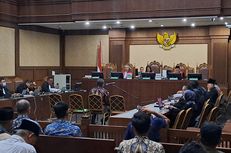
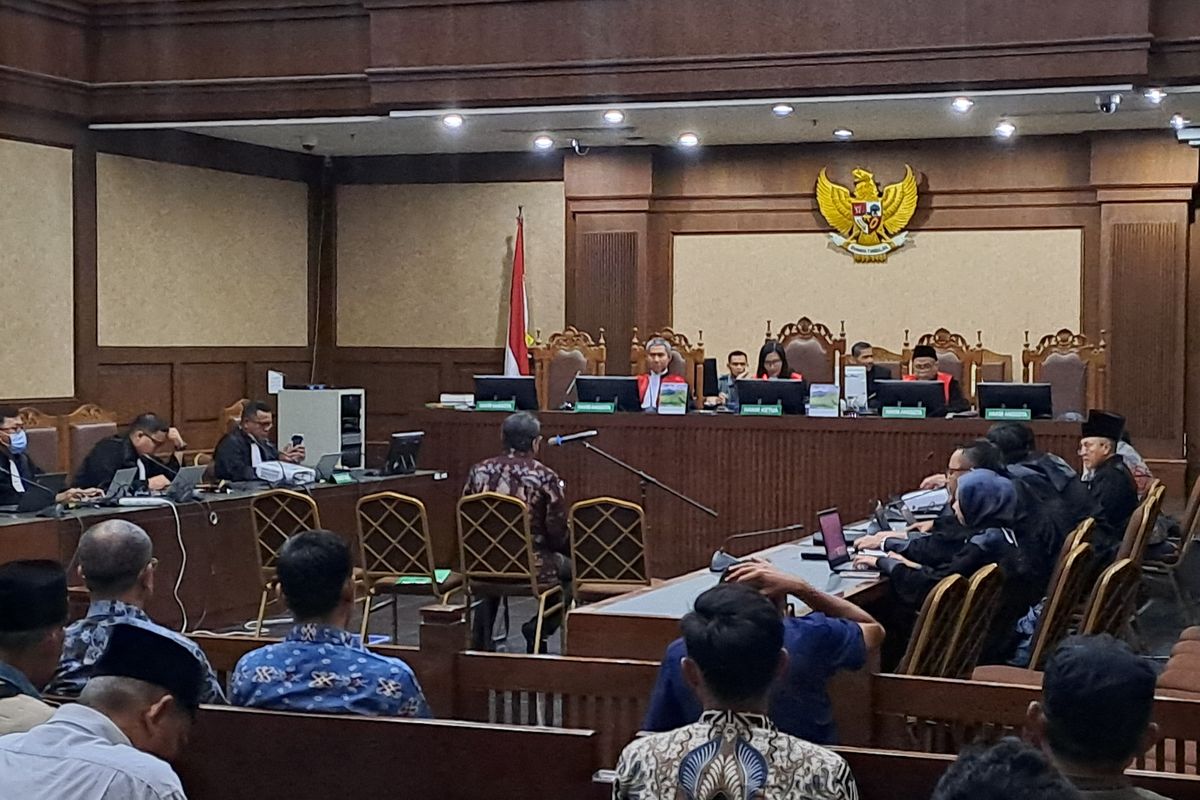
Agung appeared in court for the trial regarding the alleged corruption in the management of additional hajj quotas for 2023-2024.
He was called as an expert witness by Yaqut's legal team at the Central Jakarta Corruption Court on Tuesday (10/11/2026).
Agung emphasized that hajj quotas are not state assets or wealth.
According to Agung, discrepancies in hajj quota allocations are merely administrative matters related to the distribution of opportunities for pilgrims to depart.
He stated that such discrepancies do not automatically result in financial losses to the state.
"Discrepancies in hajj allocation are a legal issue. The use of administrative authority does not constitute financial loss to the state," Agung said.
He referenced Article 1 number 22 of Law Number 1 of 2004 concerning State Treasury, which outlines the definition of state losses.
Agung explained that state losses must involve deficiencies in funds, securities, and tangible assets with a definite quantity resulting from unlawful acts.
Thus, he argued, administrative discrepancies in the allocation of hajj quotas do not meet the criteria for state loss if they do not lead to a decrease in state wealth.
However, Agung did not deny that alleged unlawful acts in the allocation of hajj quotas must still be accounted for.
He reminded that any assertion of state loss must be substantiated, not merely assumed.
Agung clarified that the hajj quotas are administrative allocations provided by the Saudi Arabian government to Indonesia based on agreements between the two countries.
The Indonesian government indeed has the authority to regulate the distribution of these quotas. However, this authority does not render hajj quotas as state assets.
"Hajj quotas are not assets or property of the state. I repeat, hajj quotas are not assets or property of the state," Agung asserted.
He referred to Article 1 number 10 of Law Number 1 of 2004 concerning State Treasury.
This provision defines state property as items purchased or acquired at the expense of the State Budget or from other legitimate sources.
According to Agung, hajj quotas are not obtained through economic transactions and are not recorded as assets in the government's financial reports.
"The government's authority to establish and distribute quotas is an aspect of governance, not proof of asset ownership," he stated.
Agung also distinguished between hajj quotas and the organization of the hajj pilgrimage itself.
He noted that the activities related to the organization of the hajj pilgrimage fall within state finances, but not the quotas.
"It's not the hajj quotas, but the activities related to the hajj pilgrimage that come under state finances," Agung explained.
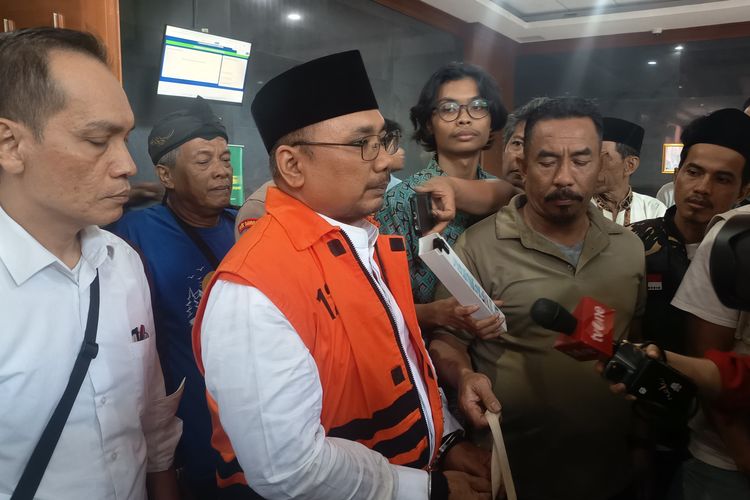 Former Minister of Religious Affairs Yaqut Cholil Qoumas providing statements to the media regarding the alleged corruption case involving hajj quotas at the Jakarta Corruption Court on Wednesday (4/11/2026).
Apart from the quota issues, Agung also clarified regarding the status of the hajj deposit funds managed by the Hajj Financial Management Agency (BPKH).
He emphasized that these deposit funds are the pilgrims' funds, not state revenue.
"The hajj deposit funds are entrusted funds. Yes, entrusted funds belonging to the pilgrims managed by BPKH. This is very important, this is not state revenue," Agung remarked.
He referenced Articles 6 paragraph 1 and 7 paragraph 1 of Law Number 34 of 2014 concerning Hajj Financial Management.
According to Agung, these provisions affirm that the funds for the costs of hajj organization come from the pilgrims and are classified as entrusted funds.
The ownership of these funds, he noted, does not shift to the state even though they are managed by BPKH.
Agung explained that the deposit funds from the pilgrims are recorded as liabilities in BPKH's financial reports, not as an addition to state wealth.
"To clarify, when these funds are received, they are recorded as liabilities. This financial report will track it as liabilities, not as an increase in wealth," he disclosed.
Agung's statements focused on differentiating between the government's authority in managing quotas, the ownership of pilgrims' deposit funds, and the elements involving financial losses to the state.
He stated that allegations of violations in hajj quota allocations must be evaluated based on the legal provisions violated.
However, these issues do not automatically prove there are financial losses to the state.
Thus, Agung's testimony contributes to Yaqut's legal team's argument against the claim of state losses in the alleged corruption case regarding the management of additional hajj quotas for 2023-2024.
In this case, the KPK has charged four individuals, namely former Minister of Religious Affairs Yaqut Cholil Qoumas, former Special Staff to the Minister of Religious Affairs Isfah Abidal Aziz alias Gus Alex, Operational Director of PT Makassar Toraja (Maktour) Ismail Adham, and the General Chairperson of Kesthuri, who is also Commissioner of PT Raudhah Eksati Utama, Asrul Azis Taba.
The KPK alleges that the management of additional hajj quotas for 2023-2024 resulted in state losses of at least IDR 622.09 billion.
This loss value is based on the Investigative Examination Report of the BPK RI to calculate state losses related to Indonesia's hajj quotas during the Hajj pilgrimage 2023-2024 at the Ministry of Religious Affairs.
The state losses consist of three components.
First, the difference between income and expenses for the Special Hajj Organizer (PIHK) in organizing the hajj pilgrimage in 2024, amounting to IDR 438.2 billion.
Second, income from PIHK from the sale of quotas for special hajj officers in 2024 at IDR 39.95 billion.
Third, fees for expedited filling of additional hajj quotas for 2023 and 2024, totaling IDR 143.92 billion.
For their actions, the defendants are charged with violating Article 3 in conjunction with Article 18 of Law Number 31 of 1999 concerning the Eradication of Corruption, as amended by Law Number 20 of 2001, in conjunction with Article 20 letter c of Law Number 1 of 2023 concerning the Criminal Code.