
Febrie Adriansyah's Camp: Playing Gaple and Owning Money Changer Do Not Prove Extortion
-
News
-
5 minutes ago
This article was translated by AI. Read the original article on Kompas.com. See Original
THERE is something unusual when an institution that is supposed to safeguard national security is itself suspected of engaging in actions that threaten the very principles of security.
The allegations of illegal wiretapping against President Prabowo Subianto and several government officials, which have implicated three senior police officers as suspects, go beyond mere procedural violations regarding the use of intelligence technology.
This incident raises the question: who really oversees the authorities when they are suspected of abusing their power?
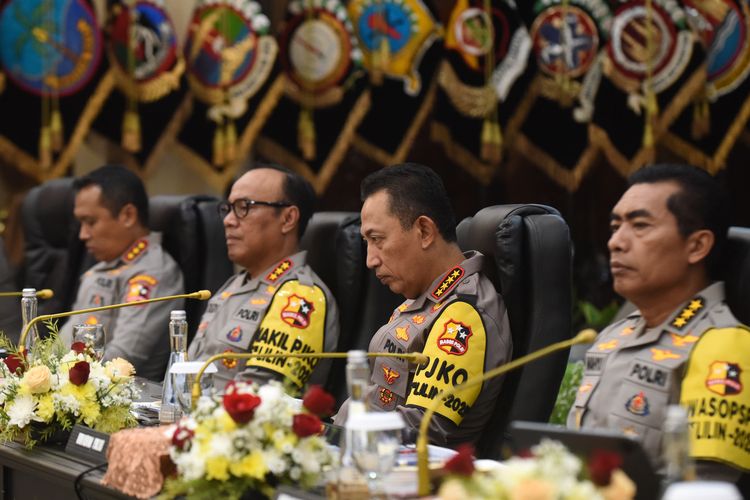
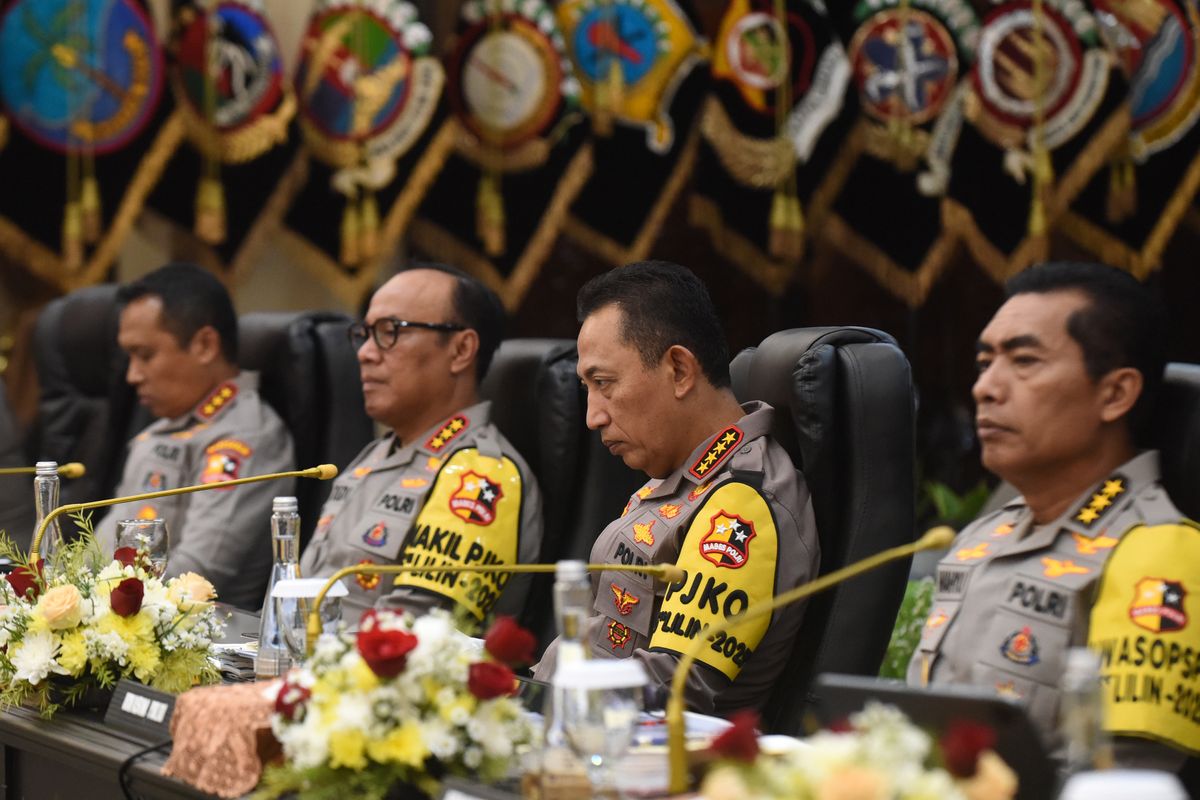
On November 3, 2026, the Criminal Investigation Unit of the National Police announced the designation of three officers as suspects in the case of alleged illegal wiretapping, illegal access, and actions involving electronic data.
The wiretapping is said to have targeted the President, government officials, political figures, the media, civil society organizations, NGOs, and entrepreneurs.
The matter became more serious when, on November 4, 2026, the government stated that the case could potentially lead to charges of treason.
This statement certainly warrants attention. However, from a legal perspective, one vital aspect cannot be overlooked: illegal wiretapping, abuse of authority, and treason are legal actions with distinct criminal elements.
These three should not be conflated merely because the case involves the safety of a head of state.
In my view, this case is a test of the state’s consistency in upholding the rule of law.
We must not allow the law to become excessively stringent when power feels threatened but loses its firmness when that power itself is allegedly abused.
Article 1, paragraph (3) of the 1945 Constitution explicitly states that Indonesia is a state governed by law. Consequently, every action taken by state officials must have a legal basis, a legitimate purpose, and a mechanism for accountability.
No institution is above the law. Even institutions endowed with significant authority in the field of security and law enforcement must undergo stricter supervision.
In the context of wiretapping, Article 28G, paragraph (1) of the 1945 Constitution guarantees protection for individual privacy, family, honor, dignity, and a sense of security. This protection is closely connected with the right to privacy and the confidentiality of communications.
Article 28J of the 1945 Constitution also stipulates that limitations on human rights can only be made by law and for legitimate purposes.
Thus, wiretapping is not a power that can be exercised arbitrarily. Even if done in the name of national security, such actions must have legal legitimacy and adhere to established procedures.
More specifically, Article 258 of Law No. 1 of 2023 on the Criminal Code prohibits illegally listening to, recording, altering, obstructing, or documenting the transmission of electronic information or electronic documents that are not public. This regulation provides a criminal basis against illegal wiretapping.
Meanwhile, Law No. 11 of 2008 on Electronic Information and Transactions, as last amended by Law No. 1 of 2024, also provides regulations through Article 30 regarding illegal access, Article 31 regarding interception, and Article 32 regarding unlawful actions against electronic information or documents.
This means that if the allegations of wiretapping are proven true, the case cannot be viewed merely as an internal administrative violation of the police. There is a dimension of criminal accountability that must be seriously scrutinized.
However, there is a more significant issue than just who the targets of the wiretap are.
If indeed institutional equipment and authority were misused to access communications of various officials, journalists, entrepreneurs, and civil society members without legal basis, the public has the right to know who issued the orders, for what purposes, and who controlled the operations.
Article 65 and Article 67 of Law No. 27 of 2022 on Personal Data Protection are also relevant if the actions meet the elements of illegal acquisition, disclosure, or use of personal data.