
Prabowo Orders Total Transformation of Garuda Indonesia to Restore Its Golden Age
-
News
-
4 minutes ago
This article was translated by AI. Read the original article on Kompas.com. See Original

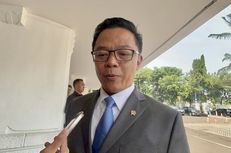
JAKARTA, KOMPAS.com - The Chairman of Commission III of the Indonesian House of Representatives, Habiburokhman, stated that the draft law on asset seizure will also emphasize the death penalty for corrupt individuals.
"Yes, there will also be a clarification that this law will assert that in cases of corruption under certain conditions, the death penalty will indeed be applied," said Habiburokhman at the Parliamentary Complex in Jakarta on Thursday (5/1/2026).
According to Habiburokhman, the regulation regarding the death penalty remains applicable in Indonesia to this day.
"Don't assume that the death penalty is non-existent. It is still in effect based on the Criminal Code number 1 of 2023, which only comes into force in 2026," he said.
He mentioned that the assertion regarding the death penalty in the asset seizure bill will adhere to existing legal regulations.
Furthermore, he indicated that there will be criteria for applying the death penalty in the asset seizure law.
"Yes, it will pertain to situations such as disasters and so on," he mentioned.
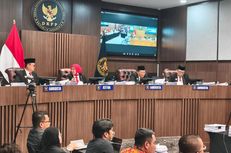
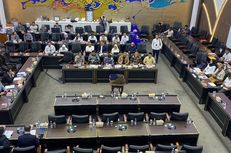
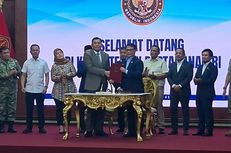
It is known that the government has submitted an inventory of issues (DIM) related to the asset seizure bill to Commission III of the House of Representatives at the Parliamentary Complex in Jakarta on Thursday (5/10/2026).
Government representatives present during the DIM submission included Deputy Minister of State Secretary Bambang Eko Suhariyanto, Deputy Minister of Law Edward Omar Sharif Hiariej, Deputy Minister of Administrative Reform and Bureaucratic Oversight Purwadi Arianto, and Deputy Minister of Finance Juda Agung.
"In relation to the content of this bill, the government welcomes it and is willing to engage in more profound and comprehensive discussions with the House of Representatives in accordance with the mechanisms outlined in the laws regarding bill deliberation," stated the Deputy Minister of Law.
Here are 8 points in the DIM of the asset seizure bill submitted by the government:
1. Clarification of the scope of asset seizure in cases of corruption and other criminal offenses;
2. Alignment of asset seizure mechanisms based on criminal rulings that have obtained permanent legal force against offenders and mechanisms for asset seizure not based on criminal rulings with clear and measurable criteria;
3. Strengthening legal processes that include tracing, blocking, confiscation, documentation, application submission, summons, court hearing, verdicts, execution of verdicts, and legal appeals while upholding the principle of caution;
4. Protection of human rights and the rights of third parties acting in good faith, including mechanisms for objections and compensation;
5. Structuring the management of criminal assets by an agency appointed by the president in a professional, transparent, and accountable manner;
6. Strengthening oversight of asset seizure implementation through the Asset Seizure Oversight Agency;
7. Implementation of an asset management system based on integrated information technology with relevant stakeholders to support transparency, accountability, and effectiveness at every stage of asset seizure; and
8. Readiness of funding, implementing regulations, and the establishment of necessary institutions before this law takes effect.