

The Listyo Sigit Case: Toppling or Protecting the President?
-
News
-
2 minutes ago
This article was translated by AI. Read the original article on Kompas.com. See Original

JAKARTA, KOMPAS.com - Floods and landslides have seemingly become an annual agenda. Observers of regional autonomy argue that disaster mitigation has yet to become a priority.
“Disaster management tends to receive substantial attention only after incidents have occurred, while pre-disaster activities, especially mitigation and risk reduction, often lack prioritization,” said Djohermansyah Djohan, Professor at the Institute of Domestic Administration (IPDN), to Kompas.com on Tuesday (3/11/2026).
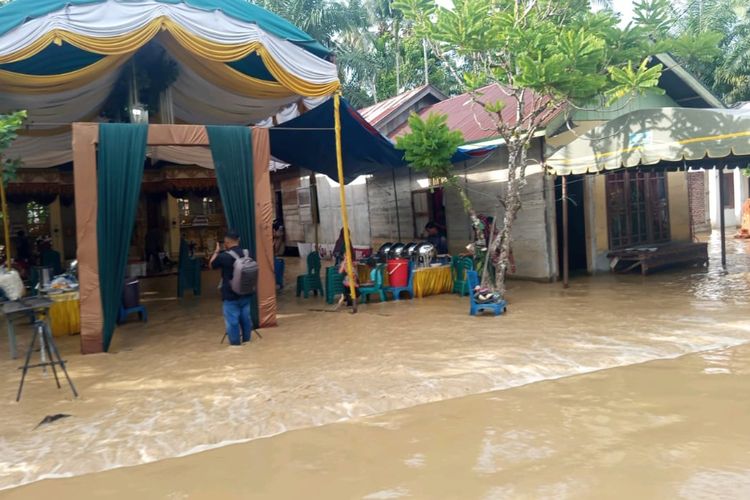
According to data from the National Disaster Management Agency (BNPB), flooding has returned to various regions at the start of this rainy season.
BNPB reported four flood events in Deli Serdang Regency, North Sumatra; Lumajang and Malang Regencies, East Java; and Pidie Jaya Regency, Aceh as of November 2, 2026.
Last year, floods were the most prevalent disaster, occurring 2,009 times out of a total of 4,727 disasters.
Such hydrometeorological disasters should be preventable.
Djohermansyah Djohan stated that the recurring floods across various regions indicate that mitigation has not yet become a priority for local governments.
The recurrence of such cases should serve as an important lesson. Unfortunately, the government only appears to be active after the waters overflow, homes are submerged, infrastructure is damaged, and casualties occur.
“In reality, disaster mitigation is still often treated as a secondary concern. When a disaster strikes, everyone is mobilized. Once the situation returns to normal, vigilance slowly fades,” Djohermansyah explained.
He noted that this pattern demonstrates that disaster management continues to focus more on responding to disasters than on preventing risks.
In disaster management, mitigation is the most fundamental step to reduce potential losses, including human casualties and economic and social damage.
The former Director General of Regional Autonomy at the Ministry of Home Affairs revealed that local governments bear the primary responsibility for reducing disaster risks in their regions.
This role is explicitly outlined in Law No. 24 of 2007 concerning Disaster Management.
Article 8 of the law states that local governments are responsible for protecting communities from the impacts of disasters, reducing disaster risks, and integrating risk reduction efforts into development programs.
Additionally, local governments are mandated to allocate a disaster management budget through their regional budgets (APBD).