

DKPP Highlights KPU's Inconsistent Statements Regarding 'Gibran's Education Article'
-
News
-
6 hours ago
This article was translated by AI. Read the original article on Kompas.com. See Original
The controversy surrounding her personal life post-divorce provoked criticism from some netizens, pushing for her to be excluded from both social media and television.
The petition reported in July 2026 even amassed 137,445 signatures.
This event illustrates how a personal issue of a public figure can develop into a collective movement aimed at impacting reputation and commercial opportunities.
In this context, cancel culture does not only function as a means to express dissent but also as a mechanism for social sanctions based on societal moral judgments.
In July 2026, a similar phenomenon appeared in the marketing collaboration controversy between Teazzi and Nagita Slavina.
Choosing Nagita as a campaign figure for a special edition beverage product triggered rejection from some netizens, who linked her figure with perceptions of political and business affiliations. The consequent boycott calls against Teazzi then developed.
Although the debated issue wasn't primarily about product quality, but rather the identities and associations of figures used in promotional activities.
This incident reflects a tendency of “judgment based on associations,” namely when a company or brand faces social pressure because of its ties to individuals undergoing controversy.
Consequently, business decisions and marketing strategies are increasingly vulnerable to the influences of public perceptions and sentiments in the digital realm.
In October 2026, the phenomenon of cancel culture further exhibited cross-border dimensions through a controversy involving Kahf, a men's personal care product brand.
A meme post stating “Hati-hati Beda Level” following Indonesia's victory in the FIFA ASEAN Cup elicited reactions from some Malaysian people as it was perceived as belittling another country.
This controversy developed into calls for product boycotts, the use of the hashtag #BoikotKahf, and circulated videos of consumers discarding the product.
Kahf then deleted the post and issued an apology. The boycott calls even extended to other brands within the same corporate group, including Wardah.
This case illustrates that brand communication can no longer be viewed solely as marketing activity, but also holds social and diplomatic consequences, particularly when it touches on issues of nationalism, identity, and inter-state sensitivities.
In the same month, Le Minerale was also dragged into the controversy surrounding the Youth Pledge Declaration at Bundaran HI after the brand logo appeared on the traffic barrier facilities around the event location.
The presence of the logo sparked suspicions on social media that the company had also sponsored the criticized event.
The company subsequently denied any involvement as a sponsor or support for the event.
They clarified that the logo was on previously existing barriers.
This incident highlights the risks of association-based cancel culture, where a company can come under fire not due to proven direct involvement, but because of public perceptions regarding its association with a controversial event.
This case also underscores the importance of information verification before the public judges or imposes social sanctions on any party.
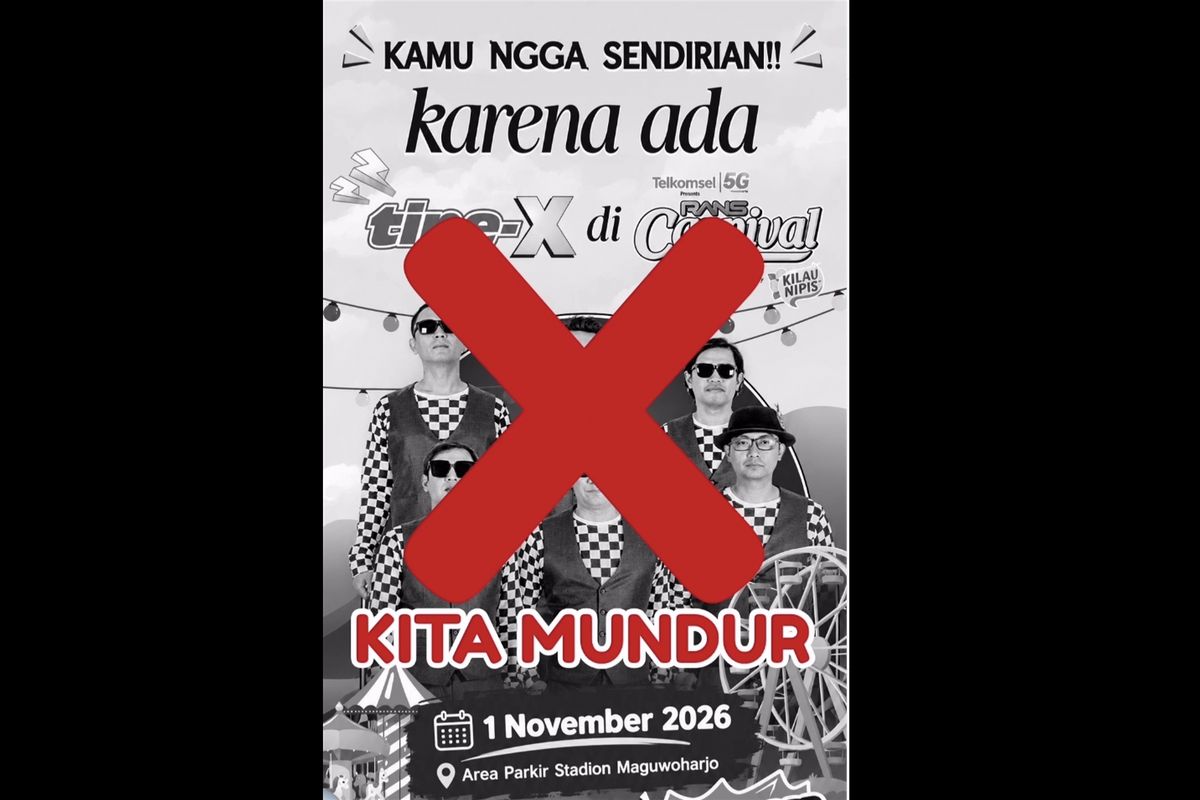
As October drew to a close and into early November 2026, one of the most notable phenomena involved Raffi Ahmad and the RANS Carnival event. The controversy began with Raffi Ahmad's attendance at the Indonesian Student Promise Declaration organized by Polda Metro Jaya on October 29, 2026, just a day after student demonstrations.
This event attracted criticism, particularly regarding issues of participant identity authenticity and perceptions that the event did not reflect the true aspirations of students.
Raffi Ahmad’s position as the President's Special Envoy for Youth Development and Artists made this issue even more significant as his actions were scrutinized in the context of public official responsibilities.
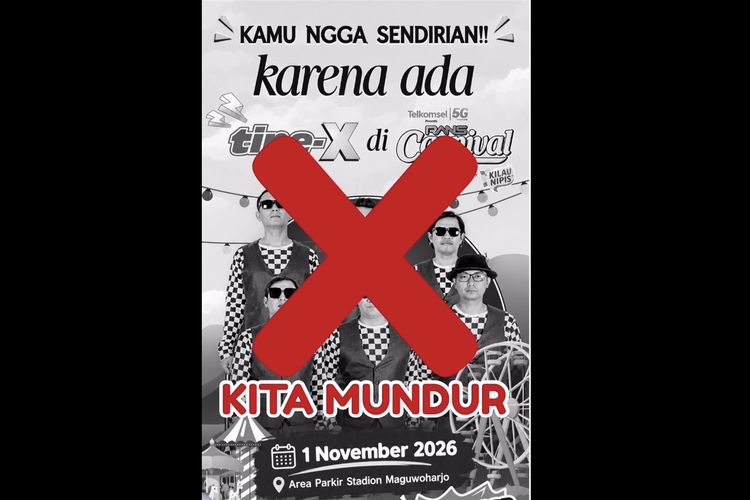
The pressure subsequently escalated into calls for boycotts against him and the RANS Carnival event in Sleman.
Reports indicated that at least 12 small and medium-sized enterprises withdrew, while several musicians, including Tipe-X, Guyon Waton, OM Wawes, and Masdddho, canceled their performances.
This incident indicates that cancel culture can extend beyond its initial target and generate consequences for other parties economically or professionally related to the questioned figure.
If all these events are viewed as part of a broader social development, it becomes evident that as of late 2026, there are at least seven occurrences related to cancel culture and digital social pressure in Indonesia.
The triggers for these phenomena are highly diverse, from conflicts of professional reputation, dissatisfaction with government policies, moral judgments concerning public figures’ behaviors, rejection of business and political affiliations, marketing communication controversies, to issues of accountability for public officials.
Nonetheless, these seven events cannot all be regarded as cancel culture in the same sense. Some demonstrated real mechanisms of withdrawing support and boycotting.
While others remain within the realm of reputation controversy, policy protests, or unverified allegations of association.
The cancel culture phenomenon throughout 2026 sheds light on the changes in the participation patterns of Indonesian civil society.
Resistance to injustice and public dissatisfaction is no longer always manifested through physical demonstrations, street actions, or mass mobilizations in the public space.
Society now possesses alternative instruments such as digital petitions, hashtag campaigns, consumer boycotts, commercial withdrawal of support, information dissemination, as well as pressures on the reputation of individuals and institutions.
The digital space has evolved into a new arena for society to articulate aspirations, build solidarity, and demand accountability from those in power or with social influence.
This shift also relates to the evolution of civil society movements that no longer rely solely on formal organizations or conventional mass mobilization.
Historically, civil society movements have been associated with demonstrations, policy advocacy, petitions, public campaigns, and mass organizing.
However, advancements in communication technology have altered the structures of political participation.
The digital space allows someone without an organization, financial resources, or access to decision-makers to express dissent openly.
Evidently, social media finds its political function. It is not merely a place for sharing personal activities, but also an arena for opinion formation, solidarity mobilization, power oversight, and information distribution.
This phenomenon connects with the concept of networked social movements.
Manuel Castells in his book, Networks of Outrage and Hope, elaborates on how digital communication networks can serve as spaces for collective outrage and social movements.
People do not have to wait for a large organization to instruct them to act. They can spontaneously form solidarity through interconnected networks.
When someone shares an experience of discrimination, harassment, injustice in service, or abuse of power, that post can evoke similar experiences from others.
Individual experiences then become collective issues. At this juncture, personal outrage gains a political dimension.
Cancel culture can serve as one instrument of this process. It functions through the withdrawal of social legitimacy: people stop buying products, attending events, showing support, following accounts, or giving space to parties deemed to have committed ethical violations.
No demonstrations need to be held, nor buildings visited, but social pressure continues.
In such situations, collective power is no longer solely measured by the number of people gathered in one location, but also by society’s ability to exert pressure through communication networks.
Beneath the emergence of cancel culture lies a more fundamental issue: a lack of public trust in institutions’ ability to deliver justice.
When reports go unaddressed, ethical violations are resolved merely through formal statements, power holders enjoy special treatment, or victims are blamed, the public starts looking for alternative mechanisms to gain attention.
In such conditions, cancel culture can function as a mechanism of social pressure.
The withdrawal of support becomes a way to show that society no longer accepts the behavior or actions of parties deemed responsible for the injustice.
People utilize the power of reputation as a tool of control. Those who previously wielded significant influence can lose public trust, while institutions that were relatively closed are compelled to provide explanations.
Companies that ignore consumer complaints may face boycotts, while public figures who are considered to have made discriminatory statements can lose support. This is referred to as the social sanction imposed by society against behaviors deemed to violate shared norms.
However, there is a crucial difference between traditional social sanctions and digital social sanctions.
Traditional social sanctions typically operate within relatively confined community settings, whereas digital sanctions can cross geographical, group, and even national boundaries.
An individual’s reputation can be questioned before clarification and verification processes have concluded.
Herein lies the paradox: society gains the power to correct injustices, yet at the same time has the capacity to create new injustices.
Injustice does not always manifest as easily provable legal violations.
It can also appear through discrimination, unequal treatment, indignities toward vulnerable groups, misuse of position, suppression of critique, or institutional choices that overlook societal interests.
When these issues recur without convincing resolutions, public outrage can accumulate.
In such conditions, cancel culture serves as a kind of social valve that provides room for society to express dissatisfaction that has long gone unaddressed.
Digital campaigns concerning sexual violence, discrimination, injustice toward workers, environmental issues, and unethical behavior of public figures highlight how individual experiences can evolve into collective pressure.
The #MeToo movement, for instance, shows how individual testimonies regarding violence and sexual harassment can develop into a global movement challenging power relations and cultures of impunity.
That movement cannot be simplified as merely cancel culture.