

DKPP Highlights KPU's Inconsistent Statements Regarding 'Gibran's Education Article'
-
News
-
6 hours ago
This article was translated by AI. Read the original article on Kompas.com. See Original
DEMOSTRATION doesn’t always have to take place on the streets.
When public trust in institutions wanes, resistance can take on different forms: withdrawing support, exposing misconduct, sharing testimonies, and questioning the moral legitimacy of parties deemed unjust.
In this context, cancel culture represents a new face of civil society resistance.
There is a shift in how society voices dissatisfaction. In the past, public outrage was more recognizable through crowds gathered in front of government buildings, protest banners, political speeches, or demonstrations filling the streets.
Now, resistance no longer always requires loudspeakers, command vehicles, or a line of demonstrators. It can start with a post, a short video, a screenshot of a conversation, or the testimony of someone who has not had the chance to be heard.
In a matter of hours, issues that were previously hidden can transform into national discussions.
Names of individuals, institutions, companies, public officials, or even organizations can suddenly become the center of attention. Information spreads, behaviors are questioned, integrity is tested, and calls for boycotts emerge.
Support that was once given is gradually withdrawn, while public trust begins to be challenged. This phenomenon is known as cancel culture.
The term might sound relatively new, especially as its popularity has surged with the rise of social media.
However, the underlying social practices have existed long before Facebook, Twitter, Instagram, Threads, and TikTok became integral to daily life.
Simply put, cancel culture is a phenomenon where an individual, group, public figure, organization, or institution faces widespread social rejection due to actions, statements, or behaviors considered contrary to societal values.
This rejection can take various forms: open condemnation, withdrawal of support, boycotts, and social ostracism.
No single figure can be credited with coining the term cancel culture.
The term has grown from the evolution of language and popular culture, particularly within the African American community in the United States.
The word cancel is used to describe the act of ending relationships, withdrawing support, or no longer providing space for someone deemed unacceptable.
From expressions within social culture, the term evolved into a component of social and political debate.
Its popularity began to rise around 2014-2015 through a community known as Black Twitter, a network of conversations among Twitter users within the black community in the United States.
In that digital space, the word cancel is used to express rejection against individuals, celebrities, or specific parties deemed discriminative, racist, sexist, or engaging in other harmful behaviors against society.
What initially might have only been conversations among certain groups can evolve into collective condemnation with much broader reach.
This development cannot be separated from the experiences of communities that have felt unheard for years. Social media opened avenues for those with limited access to power, mainstream media, or formal institutions to express criticism openly.
Complaints that previously remained personal experiences can transform into public issues when many start sharing similar testimonies and evidence.
In such situations, social media serves not just as a communication tool but as a space to build solidarity and demand accountability.
This phenomenon has also attracted academic attention. Meredith D. Clark, a media and communication scholar, published a paper in 2020 titled DRAG THEM: A Brief Etymology of So-Called Cancel Culture.
In her study, Clark traces the roots of the term within the communication traditions of the African American community.
She demonstrates that practices of exposing, critiquing, and withdrawing support are linked to the experiences of communities utilizing social solidarity to confront injustices.
This perspective provides understanding that cancel culture is not merely an internet behavior but also has historical roots in the struggles of groups facing power imbalances.
Journalist Aja Romano, through her 2020 article in Vox titled What Is Cancel Culture? Why We Keep Fighting About Canceling People, also reflects on the journey of the term from popular culture to social and political debate.
Romano illustrates how the meaning of cancel culture has transcended personal rejection.
As it has developed, the term has come to describe collective actions by society to withdraw support from individuals or institutions deemed to violate public norms and values.
From this historical overview, the novelty of cancel culture is not the act of rejecting, boycotting, or withdrawing support.
Such practices have long been recognized in various social movements. The most fundamental change lies in the medium, speed, and reach of resistance.
Whereas society once needed organizations, physical meetings, networks of solidarity, and mass mobilization to voice their dissent, now a testimony posted on social media can reach millions in a short time.
Individuals who previously held no political power or media access can build public attention and force institutions to provide explanations.
However, cancel culture is not a problem-free phenomenon. On one hand, it can become an instrument of social control when formal mechanisms are deemed slow, non-transparent, or fail to deliver justice.
Society gains the chance to expose abuses of power, discrimination, corruption, and unethical behavior that have remained hidden.
The withdrawal of public support can even exert pressure on those who have long felt secure behind their positions, power, or influence.
On the other hand, the power of public opinion can morph into mob judgment. Unverified information may spread faster than the processes of proof, while accusations that may not be true bear the potential to destroy someone’s reputation.
As a result, an individual may lose their job, professional opportunities, or even social relationships before getting a chance to explain what truly transpired.
In such circumstances, the digital space has the potential to shift from a place for fighting for justice into a venue for judgment without a fair process.
Clarifications that come later often become mere arenas for self-defense, while public opinion has already shaped conclusions and delivered social verdicts.
Even when actual facts start to emerge, damage to reputation and loss of trust may not always be recoverable.
At this point, the issue is no longer just right or wrong, but how someone can regain justice after being judged by public opinion.
Thus, cancel culture must be critically examined. It is not inherently a manifestation of society’s courage to fight back against injustice, but it also cannot simply be dismissed as digital persecution.
The central issue lies in the truth of the information, the strength of the evidence, the proportionality of public response, and the goals intended to be achieved.
Criticism of injustice should always be based on the principle of justice itself, that is, providing space to be heard, respecting the right of clarifications, and upholding human dignity.
The rights of clarification, verification, and protection of human dignity must always be safeguarded.
Not to weaken the resistance, but to ensure that the struggle does not lose its moral legitimacy.
In the Indonesian context, this phenomenon is compelling to observe as a new development in civil society’s resistance practices.
When society feels it does not receive adequate responses from formal institutions, the digital space can become a venue for expressing dissatisfaction, building solidarity, uncovering issues, and questioning the legitimacy of those deemed responsible.
Resistance does not have to manifest through street demonstrations, but can occur through digital campaigns, fact revelations, boycotts, withdrawal of support, and the formation of collective opinions.
From January to early November 2026, the phenomenon of cancel culture in Indonesia has shown a developing complexity.
This phenomenon is no longer limited to condemnation of the behavior of celebrities or public figures, but has expanded into an instrument of social pressure against the government, public officials, business actors, commercial brands, and individuals involved in professional controversies.
Social media has become the main space for the public to express dissatisfaction, withdraw support, conduct boycotts, build petitions, and exert both reputational and economic pressure on entities regarded as problematic.
In this context, cancel culture can be viewed as one form of civil society’s expression of power in the digital realm, although not all forms of protests and boycotting can be strictly categorized as cancel culture.
From February to April 2026, one event related to public reputation conflict involved Codeblu or William Anderson, a food vlogger known for critical reviews of food products and restaurants.
His dispute with PT Prima Hidup Lestari, the owner of the Clairmont brand, escalated into a legal issue after the company reported him to Bareskrim Polri.
This case illustrates how critical activities in the digital space can develop into reputation conflicts between reviewers and business players.
While not yet fully classified as cancel culture, this event shows that an individual's credibility in the digital space can become an object of competing interests, especially when public criticism comes in conflict with economic interests and corporate reputation.
In this dynamic, Codeblu also leveraged public attention and social media reach to build influence and personal interests, thus the criticism expressed cannot fully be detached from personal motives.
Entering June to July 2026, public attention was also directed at the discourse surrounding tax boycotts that arisen amidst dissatisfaction over corruption, officials’ lavish lifestyles, and perceptions of injustice in financial management.
This discourse sparked debate after Mahfud MD raised the issue in a public lecture at Lirboyo on June 8, 2026.
Calls to cease tax payments were then interpreted by some as a form of civil disobedience against a state perceived to not fully uphold the principles of justice and accountability.
Though more accurately described as a policy protest movement and civil disobedience rather than cancel culture, this phenomenon indicates that public distrust of the government can be expressed by withdrawing social legitimacy, even against state institutions.
During a similar timeframe, Sarwendah became a public figure facing social pressure through digital petitions and calls for boycotts.
The controversy surrounding her personal life post-divorce provoked criticism from some netizens, pushing for her to be excluded from both social media and television.
The petition reported in July 2026 even amassed 137,445 signatures.
This event illustrates how a personal issue of a public figure can develop into a collective movement aimed at impacting reputation and commercial opportunities.
In this context, cancel culture does not only function as a means to express dissent but also as a mechanism for social sanctions based on societal moral judgments.
In July 2026, a similar phenomenon appeared in the marketing collaboration controversy between Teazzi and Nagita Slavina.
Choosing Nagita as a campaign figure for a special edition beverage product triggered rejection from some netizens, who linked her figure with perceptions of political and business affiliations. The consequent boycott calls against Teazzi then developed.
Although the debated issue wasn't primarily about product quality, but rather the identities and associations of figures used in promotional activities.
This incident reflects a tendency of “judgment based on associations,” namely when a company or brand faces social pressure because of its ties to individuals undergoing controversy.
Consequently, business decisions and marketing strategies are increasingly vulnerable to the influences of public perceptions and sentiments in the digital realm.
In October 2026, the phenomenon of cancel culture further exhibited cross-border dimensions through a controversy involving Kahf, a men's personal care product brand.
A meme post stating “Hati-hati Beda Level” following Indonesia's victory in the FIFA ASEAN Cup elicited reactions from some Malaysian people as it was perceived as belittling another country.
This controversy developed into calls for product boycotts, the use of the hashtag #BoikotKahf, and circulated videos of consumers discarding the product.
Kahf then deleted the post and issued an apology. The boycott calls even extended to other brands within the same corporate group, including Wardah.
This case illustrates that brand communication can no longer be viewed solely as marketing activity, but also holds social and diplomatic consequences, particularly when it touches on issues of nationalism, identity, and inter-state sensitivities.
In the same month, Le Minerale was also dragged into the controversy surrounding the Youth Pledge Declaration at Bundaran HI after the brand logo appeared on the traffic barrier facilities around the event location.
The presence of the logo sparked suspicions on social media that the company had also sponsored the criticized event.
The company subsequently denied any involvement as a sponsor or support for the event.
They clarified that the logo was on previously existing barriers.
This incident highlights the risks of association-based cancel culture, where a company can come under fire not due to proven direct involvement, but because of public perceptions regarding its association with a controversial event.
This case also underscores the importance of information verification before the public judges or imposes social sanctions on any party.
As October drew to a close and into early November 2026, one of the most notable phenomena involved Raffi Ahmad and the RANS Carnival event. The controversy began with Raffi Ahmad's attendance at the Indonesian Student Promise Declaration organized by Polda Metro Jaya on October 29, 2026, just a day after student demonstrations.
This event attracted criticism, particularly regarding issues of participant identity authenticity and perceptions that the event did not reflect the true aspirations of students.
Raffi Ahmad’s position as the President's Special Envoy for Youth Development and Artists made this issue even more significant as his actions were scrutinized in the context of public official responsibilities.
The pressure subsequently escalated into calls for boycotts against him and the RANS Carnival event in Sleman.
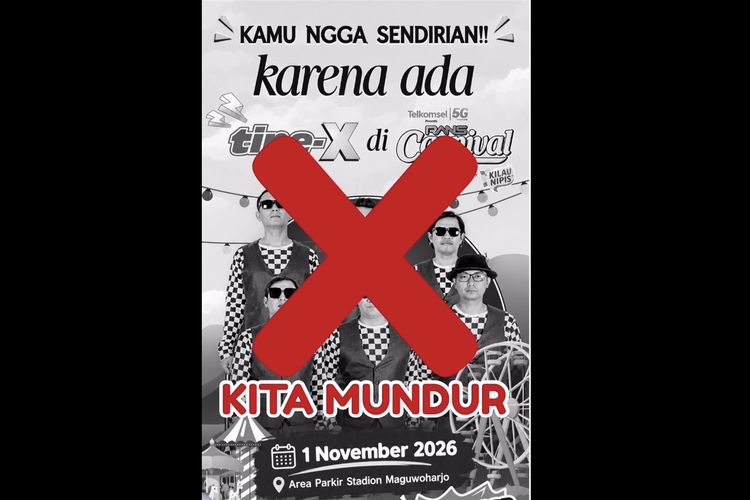
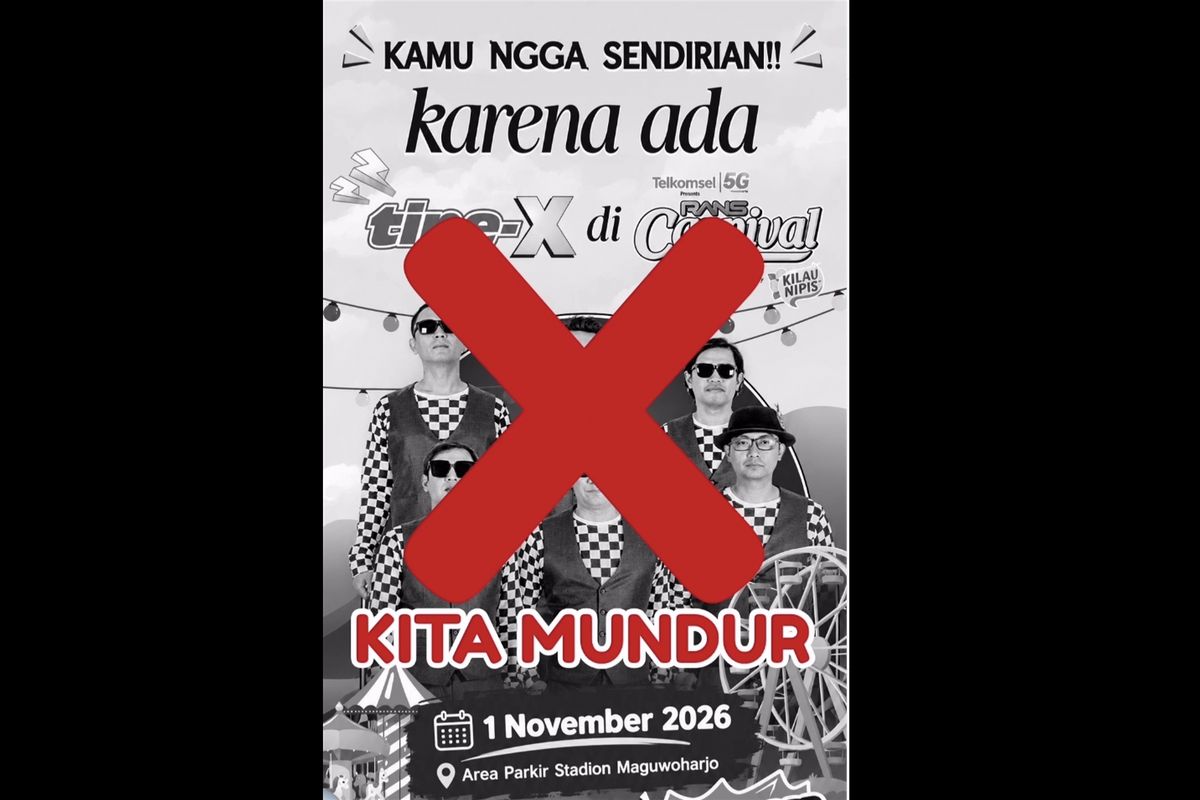
Reports indicated that at least 12 small and medium-sized enterprises withdrew, while several musicians, including Tipe-X, Guyon Waton, OM Wawes, and Masdddho, canceled their performances.
This incident indicates that cancel culture can extend beyond its initial target and generate consequences for other parties economically or professionally related to the questioned figure.
If all these events are viewed as part of a broader social development, it becomes evident that as of late 2026, there are at least seven occurrences related to cancel culture and digital social pressure in Indonesia.
The triggers for these phenomena are highly diverse, from conflicts of professional reputation, dissatisfaction with government policies, moral judgments concerning public figures’ behaviors, rejection of business and political affiliations, marketing communication controversies, to issues of accountability for public officials.
Nonetheless, these seven events cannot all be regarded as cancel culture in the same sense. Some demonstrated real mechanisms of withdrawing support and boycotting.
While others remain within the realm of reputation controversy, policy protests, or unverified allegations of association.
The cancel culture phenomenon throughout 2026 sheds light on the changes in the participation patterns of Indonesian civil society.
Resistance to injustice and public dissatisfaction is no longer always manifested through physical demonstrations, street actions, or mass mobilizations in the public space.
Society now possesses alternative instruments such as digital petitions, hashtag campaigns, consumer boycotts, commercial withdrawal of support, information dissemination, as well as pressures on the reputation of individuals and institutions.
The digital space has evolved into a new arena for society to articulate aspirations, build solidarity, and demand accountability from those in power or with social influence.
This shift also relates to the evolution of civil society movements that no longer rely solely on formal organizations or conventional mass mobilization.
Historically, civil society movements have been associated with demonstrations, policy advocacy, petitions, public campaigns, and mass organizing.
However, advancements in communication technology have altered the structures of political participation.
The digital space allows someone without an organization, financial resources, or access to decision-makers to express dissent openly.
Evidently, social media finds its political function. It is not merely a place for sharing personal activities, but also an arena for opinion formation, solidarity mobilization, power oversight, and information distribution.
This phenomenon connects with the concept of networked social movements.
Manuel Castells in his book, Networks of Outrage and Hope, elaborates on how digital communication networks can serve as spaces for collective outrage and social movements.
People do not have to wait for a large organization to instruct them to act. They can spontaneously form solidarity through interconnected networks.
When someone shares an experience of discrimination, harassment, injustice in service, or abuse of power, that post can evoke similar experiences from others.
Individual experiences then become collective issues. At this juncture, personal outrage gains a political dimension.
Cancel culture can serve as one instrument of this process. It functions through the withdrawal of social legitimacy: people stop buying products, attending events, showing support, following accounts, or giving space to parties deemed to have committed ethical violations.
No demonstrations need to be held, nor buildings visited, but social pressure continues.
In such situations, collective power is no longer solely measured by the number of people gathered in one location, but also by society’s ability to exert pressure through communication networks.
Beneath the emergence of cancel culture lies a more fundamental issue: a lack of public trust in institutions’ ability to deliver justice.
When reports go unaddressed, ethical violations are resolved merely through formal statements, power holders enjoy special treatment, or victims are blamed, the public starts looking for alternative mechanisms to gain attention.
In such conditions, cancel culture can function as a mechanism of social pressure.
The withdrawal of support becomes a way to show that society no longer accepts the behavior or actions of parties deemed responsible for the injustice.
People utilize the power of reputation as a tool of control. Those who previously wielded significant influence can lose public trust, while institutions that were relatively closed are compelled to provide explanations.
Companies that ignore consumer complaints may face boycotts, while public figures who are considered to have made discriminatory statements can lose support. This is referred to as the social sanction imposed by society against behaviors deemed to violate shared norms.
However, there is a crucial difference between traditional social sanctions and digital social sanctions.
Traditional social sanctions typically operate within relatively confined community settings, whereas digital sanctions can cross geographical, group, and even national boundaries.
An individual’s reputation can be questioned before clarification and verification processes have concluded.
Herein lies the paradox: society gains the power to correct injustices, yet at the same time has the capacity to create new injustices.
Injustice does not always manifest as easily provable legal violations.
It can also appear through discrimination, unequal treatment, indignities toward vulnerable groups, misuse of position, suppression of critique, or institutional choices that overlook societal interests.
When these issues recur without convincing resolutions, public outrage can accumulate.
In such conditions, cancel culture serves as a kind of social valve that provides room for society to express dissatisfaction that has long gone unaddressed.
Digital campaigns concerning sexual violence, discrimination, injustice toward workers, environmental issues, and unethical behavior of public figures highlight how individual experiences can evolve into collective pressure.
The #MeToo movement, for instance, shows how individual testimonies regarding violence and sexual harassment can develop into a global movement challenging power relations and cultures of impunity.
That movement cannot be simplified as merely cancel culture.
However, it illustrates one important mechanism in digital resistance: uncovering experiences that were previously silenced, building solidarity, and demanding accountability.
Similar dynamics are visible in digital campaigns addressing racial discrimination and structural injustice.
The internet has become a space for marginalized groups to share experiences and build collective strength.
Through these networks, issues once viewed as individual problems can gain widespread societal attention.
However, another critical question arises: does every public outrage stem from a demand for justice? The answer is not always.
Beneath the strength of cancel culture lie threats that must not be overlooked — the risk of criticism transforming into punishment without a fair process.
A video clip can spread out of context, personal conversations can be published without verification, and allegations can evolve into conclusions.
Someone might lose their job, social relationships, and reputation before receiving a chance to explain what really happened.
A society initially seeking justice may inadvertently build a court without procedure.
In this scenario, cancel culture can morph into digital vigilantism, an individual or group’s unilateral act of punishment or norm enforcement within the digital space.
Another danger is the emergence of a mob mentality. Individuals no longer evaluate issues based on facts, but rather follow the majority flow.
Criticism turns into insults, dissent is perceived as defending the accused, while those requesting clarification are suspected of being part of the problem.
Yet, the principles of justice must not depend on the scale of public outrage.
Everyone retains the right to be heard, to have a chance to clarify, and to be treated proportionally.
Even when society has strong reasons to condemn an action, the processes of proof and accountability must still be respected.
Democracy requires not only the courage to criticize, but also the maturity to ensure that such criticism does not slip into persecution.
There’s another intriguing dimension making cancel culture even more engaging to dissect: the relationship between power, reputation, and the economy of attention.
In the ecosystem of social media, attention is a resource with value. Content that provokes outrage, controversy, and opposition often garners high levels of interaction.
This results in issues of injustice being commodified; situations that initially call for deep investigation get simplified into a battle between those seen as right and those deemed wrong.
Algorithms do not always differentiate between evidence-based criticism and outrage driven by misleading information.
Both can achieve wide distribution. This situation creates manipulation risks, as injustice issues can be exploited to take down political opponents, damage business competitors’ reputations, or divert public attention from more substantial issues.
Consequently, not all movements using the language of justice are automatically justice movements.
There remains a possibility that behind a digital campaign lie economic interests, political rivalries, personal conflicts, or opinion-manipulating operations.
Therefore, the questions that should be asked are not just who is being canceled, but who initiates the campaign, what information is employed, who benefits from it, and whether the public's demands are grounded in fact.
These inquiries are crucial for distinguishing genuine movements advocating justice from campaigns merely leveraging public anger.
Without critical attitudes and verification, society risks becoming part of manipulation that runs counter to the original goals of resistance.
One of the most fascinating strengths of cancel culture is its ability to transform consumption behaviors and support into political instruments.
People do not always have to confront those they view as unjust directly.
They can choose to stop buying, using, following, attending, or supporting particular entities.
This phenomenon relates to the use of consumption decisions as expressions of political and moral stances.
Boycotts against companies viewed as committing ethical violations, withdrawing support for public figures, and campaigning to terminate collaborations with certain institutions demonstrate that economic power and reputation can serve as tools of social pressure.
In this context, consumers do not solely act as buyers but also as citizens exercising economic choices to convey their stance.
Decisions to buy or not buy can articulate the values and principles they wish to advocate.
Of course, boycotts and cancel culture are not synonymous. Boycotts refer more specifically to the refusal of transactions or support, while cancel culture can encompass a broader withdrawal of social legitimacy.
Nonetheless, they share a fundamental commonality: society realizes that their support constitutes one of the sources of power for those who have long enjoyed public legitimacy.
When that support is withdrawn, the affected parties must confront the social and economic consequences.
So, is cancel culture a threat to democracy? The answer is not as simple as a yes or no.
On one hand, this phenomenon can expand public participation in overseeing power.
It opens space for groups lacking access to mainstream media, strengthens the voices of victims, and encourages closed institutions to provide accountability.
On the other hand, cancel culture can threaten freedom of speech principles if criticism shifts into intimidation, suppression, and mass punishment.
Democracy requires room for differing opinions. Even individuals with unpopular views still have the right to express their opinions as long as they do not contravene the law.
Criticism of public officials, institutions, government policies, and community figures constitutes part of citizen oversight.
Not every critique must be appreciated, and not every controversial statement can justify stripping someone’s right to speak.
However, freedom of speech does not mean individuals are free from criticism and social consequences for their actions.
Here lies the boundary that must be maintained: society has the right to demand accountability, but those demands must be based on verifiable information, proportionality, and respect for everyone’s rights.
A strong civil society movement is not the one that punishes the harshest but rather the one that most consistently fights for justice.
The phenomenon of cancel culture illustrates significant changes in the relationships among society, power, and public space.
Society no longer fully waits for formal institutions to determine which issues merit attention.
They now have the capacity to build their own agendas, gather support, and apply pressure on parties regarded as responsible.
However, one question must be continuously posed: are we fighting for justice, or merely seeking someone to punish?
The difference between these two is fundamental. The justice struggle demands proof, transparency, accountability, victim recovery, and systems improvement.
In contrast, social punishment driven solely by anger often concludes when an individual loses their reputation.
Yet, the issues of injustice are much larger than a single name that becomes the target of public anger.
If an official abuses their power, the issue is not only their reputation but also the oversight system that has failed.
If a company engages in discrimination, the issue extends beyond its leadership to the organizational culture that allowed such discrimination to persist.
If victims fail to receive justice, the problem is not solely with the perpetrator, but also with the institutions that failed to provide protection. Therefore, civil society needs to move beyond simply canceling someone.
Society must encourage institutional reform, policy changes, law enforcement, and the restoration of victims' rights.
Because justice is not accomplished when someone loses popularity. Justice only begins to find meaning when injustices are rectified, victims receive reparation, and the systems that allow violations to occur are no longer tolerated.
This may be the new face of civil society resistance: not always taking to the streets, but present through collective awareness; not always carrying banners, but bearing evidence; not always shouting in front of power edifices, but building pressure through digital public spaces.
Such resistance demonstrates that society has new methods for questioning power and demanding accountability.
However, dignified resistance must maintain the principles it upholds.
For fighting injustice in an unjust manner will only give rise to a different form of injustice.























