

DKPP Highlights KPU's Inconsistent Statements Regarding 'Gibran's Education Article'
-
News
-
6 hours ago
This article was translated by AI. Read the original article on Kompas.com. See Original
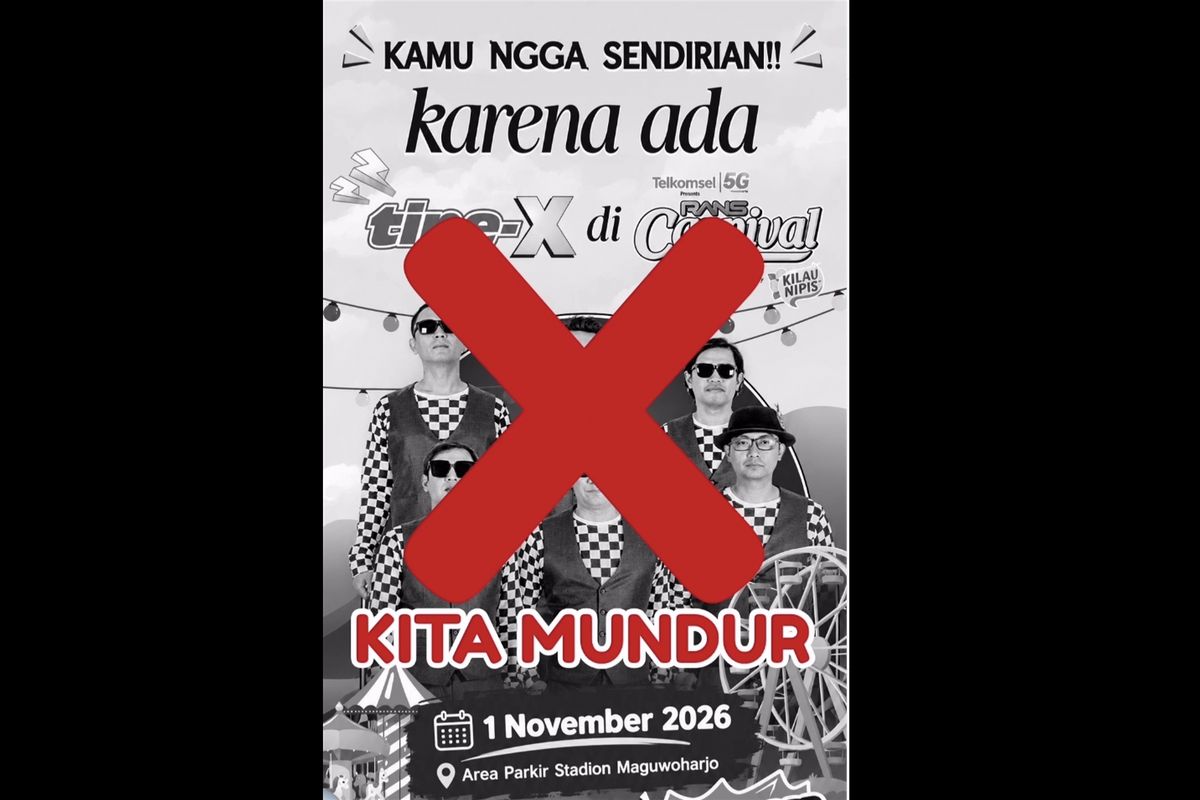
DEMOSTRATION doesn’t always have to take place on the streets.
When public trust in institutions wanes, resistance can take on different forms: withdrawing support, exposing misconduct, sharing testimonies, and questioning the moral legitimacy of parties deemed unjust.
In this context, cancel culture represents a new face of civil society resistance.
There is a shift in how society voices dissatisfaction. In the past, public outrage was more recognizable through crowds gathered in front of government buildings, protest banners, political speeches, or demonstrations filling the streets.
Now, resistance no longer always requires loudspeakers, command vehicles, or a line of demonstrators. It can start with a post, a short video, a screenshot of a conversation, or the testimony of someone who has not had the chance to be heard.
In a matter of hours, issues that were previously hidden can transform into national discussions.
Names of individuals, institutions, companies, public officials, or even organizations can suddenly become the center of attention. Information spreads, behaviors are questioned, integrity is tested, and calls for boycotts emerge.
Support that was once given is gradually withdrawn, while public trust begins to be challenged. This phenomenon is known as cancel culture.
The term might sound relatively new, especially as its popularity has surged with the rise of social media.
However, the underlying social practices have existed long before Facebook, Twitter, Instagram, Threads, and TikTok became integral to daily life.
Simply put, cancel culture is a phenomenon where an individual, group, public figure, organization, or institution faces widespread social rejection due to actions, statements, or behaviors considered contrary to societal values.
This rejection can take various forms: open condemnation, withdrawal of support, boycotts, and social ostracism.
No single figure can be credited with coining the term cancel culture.
The term has grown from the evolution of language and popular culture, particularly within the African American community in the United States.
The word cancel is used to describe the act of ending relationships, withdrawing support, or no longer providing space for someone deemed unacceptable.
From expressions within social culture, the term evolved into a component of social and political debate.
Its popularity began to rise around 2014-2015 through a community known as Black Twitter, a network of conversations among Twitter users within the black community in the United States.
In that digital space, the word cancel is used to express rejection against individuals, celebrities, or specific parties deemed discriminative, racist, sexist, or engaging in other harmful behaviors against society.
What initially might have only been conversations among certain groups can evolve into collective condemnation with much broader reach.
This development cannot be separated from the experiences of communities that have felt unheard for years. Social media opened avenues for those with limited access to power, mainstream media, or formal institutions to express criticism openly.
Complaints that previously remained personal experiences can transform into public issues when many start sharing similar testimonies and evidence.
In such situations, social media serves not just as a communication tool but as a space to build solidarity and demand accountability.
This phenomenon has also attracted academic attention. Meredith D. Clark, a media and communication scholar, published a paper in 2020 titled DRAG THEM: A Brief Etymology of So-Called Cancel Culture.
In her study, Clark traces the roots of the term within the communication traditions of the African American community.
She demonstrates that practices of exposing, critiquing, and withdrawing support are linked to the experiences of communities utilizing social solidarity to confront injustices.
This perspective provides understanding that cancel culture is not merely an internet behavior but also has historical roots in the struggles of groups facing power imbalances.
Journalist Aja Romano, through her 2020 article in Vox titled What Is Cancel Culture? Why We Keep Fighting About Canceling People, also reflects on the journey of the term from popular culture to social and political debate.
Romano illustrates how the meaning of cancel culture has transcended personal rejection.
As it has developed, the term has come to describe collective actions by society to withdraw support from individuals or institutions deemed to violate public norms and values.
From this historical overview, the novelty of cancel culture is not the act of rejecting, boycotting, or withdrawing support.
Such practices have long been recognized in various social movements. The most fundamental change lies in the medium, speed, and reach of resistance.
Whereas society once needed organizations, physical meetings, networks of solidarity, and mass mobilization to voice their dissent, now a testimony posted on social media can reach millions in a short time.
Individuals who previously held no political power or media access can build public attention and force institutions to provide explanations.
However, cancel culture is not a problem-free phenomenon. On one hand, it can become an instrument of social control when formal mechanisms are deemed slow, non-transparent, or fail to deliver justice.
Society gains the chance to expose abuses of power, discrimination, corruption, and unethical behavior that have remained hidden.
The withdrawal of public support can even exert pressure on those who have long felt secure behind their positions, power, or influence.
On the other hand, the power of public opinion can morph into mob judgment. Unverified information may spread faster than the processes of proof, while accusations that may not be true bear the potential to destroy someone’s reputation.
As a result, an individual may lose their job, professional opportunities, or even social relationships before getting a chance to explain what truly transpired.
In such circumstances, the digital space has the potential to shift from a place for fighting for justice into a venue for judgment without a fair process.
Clarifications that come later often become mere arenas for self-defense, while public opinion has already shaped conclusions and delivered social verdicts.
Even when actual facts start to emerge, damage to reputation and loss of trust may not always be recoverable.
At this point, the issue is no longer just right or wrong, but how someone can regain justice after being judged by public opinion.
Thus, cancel culture must be critically examined. It is not inherently a manifestation of society’s courage to fight back against injustice, but it also cannot simply be dismissed as digital persecution.
The central issue lies in the truth of the information, the strength of the evidence, the proportionality of public response, and the goals intended to be achieved.
Criticism of injustice should always be based on the principle of justice itself, that is, providing space to be heard, respecting the right of clarifications, and upholding human dignity.
The rights of clarification, verification, and protection of human dignity must always be safeguarded.
Not to weaken the resistance, but to ensure that the struggle does not lose its moral legitimacy.
In the Indonesian context, this phenomenon is compelling to observe as a new development in civil society’s resistance practices.
When society feels it does not receive adequate responses from formal institutions, the digital space can become a venue for expressing dissatisfaction, building solidarity, uncovering issues, and questioning the legitimacy of those deemed responsible.
Resistance does not have to manifest through street demonstrations, but can occur through digital campaigns, fact revelations, boycotts, withdrawal of support, and the formation of collective opinions.
From January to early November 2026, the phenomenon of cancel culture in Indonesia has shown a developing complexity.
This phenomenon is no longer limited to condemnation of the behavior of celebrities or public figures, but has expanded into an instrument of social pressure against the government, public officials, business actors, commercial brands, and individuals involved in professional controversies.
Social media has become the main space for the public to express dissatisfaction, withdraw support, conduct boycotts, build petitions, and exert both reputational and economic pressure on entities regarded as problematic.
In this context, cancel culture can be viewed as one form of civil society’s expression of power in the digital realm, although not all forms of protests and boycotting can be strictly categorized as cancel culture.
From February to April 2026, one event related to public reputation conflict involved Codeblu or William Anderson, a food vlogger known for critical reviews of food products and restaurants.
His dispute with PT Prima Hidup Lestari, the owner of the Clairmont brand, escalated into a legal issue after the company reported him to Bareskrim Polri.
This case illustrates how critical activities in the digital space can develop into reputation conflicts between reviewers and business players.
While not yet fully classified as cancel culture, this event shows that an individual's credibility in the digital space can become an object of competing interests, especially when public criticism comes in conflict with economic interests and corporate reputation.
In this dynamic, Codeblu also leveraged public attention and social media reach to build influence and personal interests, thus the criticism expressed cannot fully be detached from personal motives.
Entering June to July 2026, public attention was also directed at the discourse surrounding tax boycotts that arisen amidst dissatisfaction over corruption, officials’ lavish lifestyles, and perceptions of injustice in financial management.
This discourse sparked debate after Mahfud MD raised the issue in a public lecture at Lirboyo on June 8, 2026.
Calls to cease tax payments were then interpreted by some as a form of civil disobedience against a state perceived to not fully uphold the principles of justice and accountability.
Though more accurately described as a policy protest movement and civil disobedience rather than cancel culture, this phenomenon indicates that public distrust of the government can be expressed by withdrawing social legitimacy, even against state institutions.
During a similar timeframe, Sarwendah became a public figure facing social pressure through digital petitions and calls for boycotts.























