

Prabowo's Request: MPR Agrees to Postpone New Vice President's Inauguration to December 9
-
News
-
5 minutes ago
This article was translated by AI. Read the original article on Kompas.com. See Original
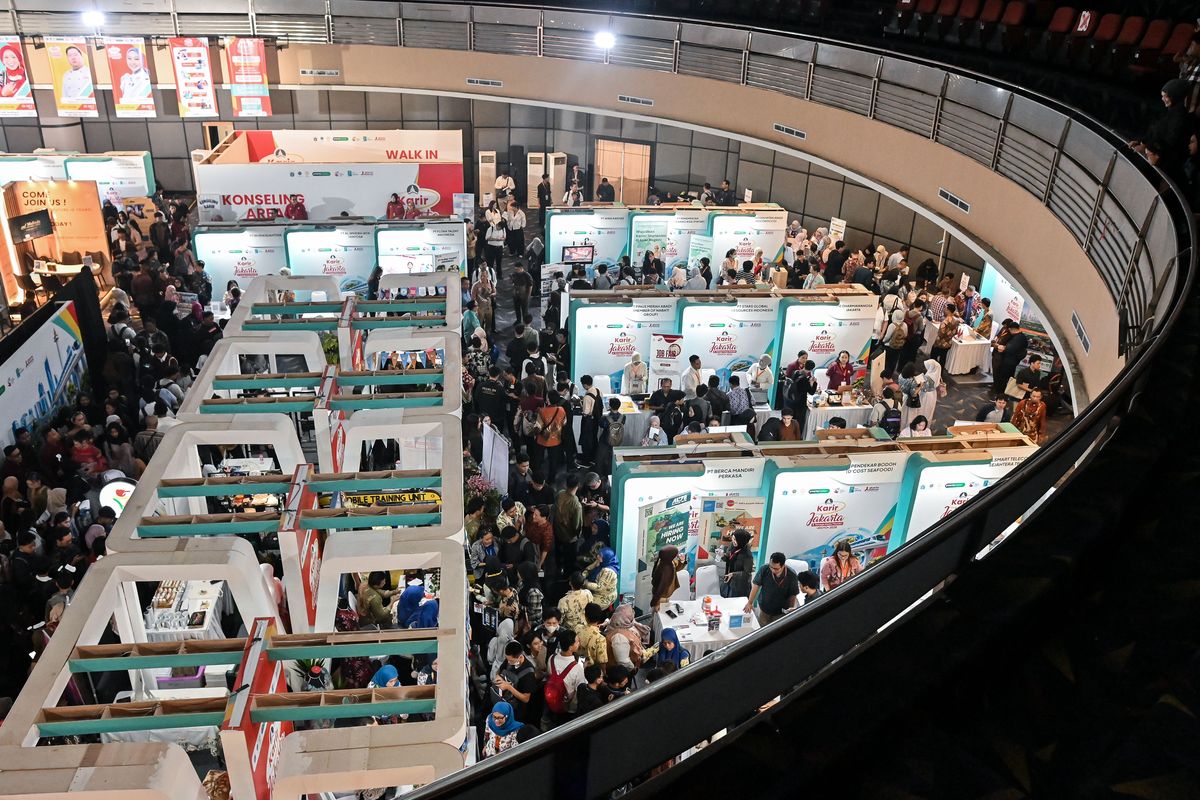
MILLIONS of young Indonesians are knocking at the door of the job market. They are finishing their education, lining up for interviews, and pinning their hopes on jobs that may not be available.
At the same time, robots are becoming more skilled and artificial intelligence is increasingly capable of taking over human tasks.
Indonesia faces a peculiar race. As the working-age population swells and seeks employment, technology enables many economic activities to produce more with fewer workers.
Will Indonesia reap the demographic bonus before machines alter the available job landscape?
The theory of the demographic dividend explains that a large proportion of the working-age population can open opportunities to increase production, savings, investment, and per capita income.
However, a favorable age structure is merely potential. Its economic benefits depend on the quality of human resources, available job opportunities, and the economy's ability to absorb productive workers.
According to the 2025 Inter-Census Population Survey (SUPAS), Indonesia's dependency ratio reached 45.05, an increase from 44.33 in the Long Form SP2020.
This means that for every 100 people of working age, there are about 45 non-working-age individuals.
At the same time, the proportion of the population aged 60 and over has reached 11.97 percent.
Indonesia is beginning to face the reality of an increasingly large elderly population.
The demographic bonus is like a harvest season. Fertile land and supportive weather provide opportunities, but do not guarantee results if the seeds are sown too late.
Similarly, a large working-age population does not automatically translate into prosperity if job opportunities and productivity fall behind.
The demographic window does not close on a specific date.
However, the rising dependency ratio and the aging process remind us that this opportunity will not last forever.
Indonesia must increase human productivity before more people enter old age with limited savings and retirement protections.
The Central Statistics Agency (BPS) recorded 148.19 million people employed in May 2026, with an open unemployment rate of 4.65 percent.
This figure highlights the extent of labor absorption.
However, the demographic bonus cannot solely be evaluated by the number of people employed.
What matters more is whether those jobs are productive and provide a decent living.
The fundamental issue actually lies with the younger generation. BPS reports that 19.44 percent of the population aged 15–24 in 2025 are classified as NEET (Not in Education, Employment, or Training).
Almost one in five young people is outside of these three activities, although the reasons are varied.
As technology demands new skills, not all young people start from the same baseline.
A demographic bonus unsupported by quality human resources risks becoming a missed opportunity.
Moreover, technological disruption has changed the face of the labor market across various parts of the world.