PSI and the Political Paradox: Close to Power, Far from Parliamentary Mandate
-
News
-
2 minutes ago
This article was translated by AI. Read the original article on Kompas.com. See Original
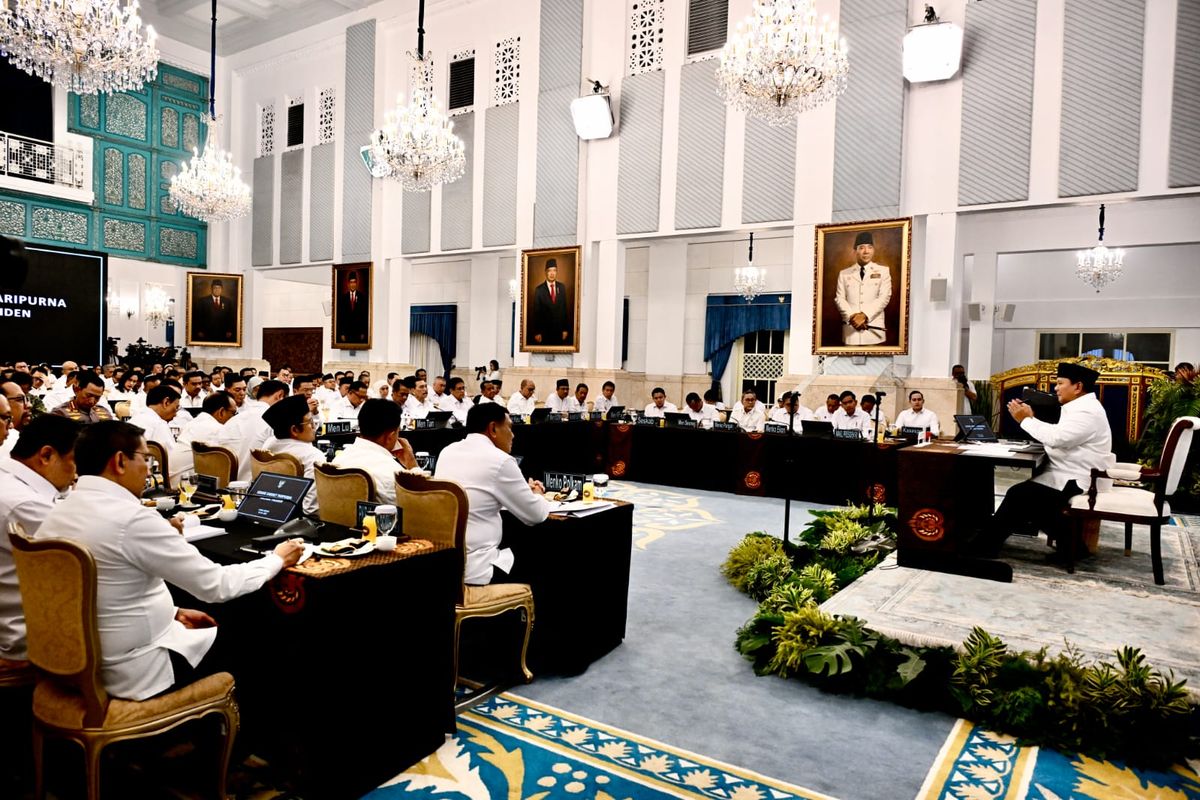
NETIZEN is very familiar with the phrase “I received a report.” This is undoubtedly a speech by President Prabowo Subianto. Now, this phrase is being used as a meme.
They often comment, tagging the president's account, whenever an official holds a press conference, saying, “Don’t believe it, Sir!”, “That’s a lie, Sir!” and similar comments.
The crux of the problem is that the reports presented to the president always carry a positive tone, while some realities are different.
For example, the economic growth for the first semester is claimed to be the highest in 13 years, reaching 5.45 percent (16/8). Then, the current economic conditions are stated to be stable by the Minister of Finance and the Coordinating Minister for Economic Affairs (19/10).
Positive-sounding reports also emerge in other sectors like MBG, KDMP, and even in dealing with forest fires.
Observers have repeatedly warned that it seems ministers provide reports based on the “Asal Bapak Senang” (ABS) principle to President Prabowo. This was confirmed in the story by Purbaya Yudhi Sadewa when he was the Chairman of the LPS Commissioner Council.
In a podcast in August 2025, he stated, “Officials when reporting to the President, it’s always positive. I was once called in, and I said things are not good. He didn't like me for that.”
That fragment of the podcast is now going viral again, showing how likely the president is often given ABS reports.
The question is, why does the president like to refer to these reports? And, does the president not verify them, for instance, through Bappisus or by checking the field directly?
I was curious, so I googled “presidential visits to traditional markets.” Interestingly, the news displayed pertains to visits by President Joko Widodo.
I adjusted the keywords by adding the name “Prabowo Subianto,” and the results were minimal. Some even displayed Prabowo during his tenure as Minister of Defense accompanying President Joko Widodo on visits.
Almost three decades ago, Morrison and Milliken (2000) wrote about the phenomenon of organizational silence within private companies. They argued that this culture becomes a barrier to change and development within the company. The question is, why does this happen?
Morrison and Milliken identified two root causes. First, leaders fear negative feedback. Second, they believe that leaders know best what is good.
As a result, criticism is seen as a threat, while agreement is viewed as a sign of success. Consequently, organizations value obedience more than openness.
A culture of silence forms when people learn that reporting issues is risky for them. Subordinates eventually choose to filter information, conceal failures, or only report good news to their superiors.
Over time, silence becomes not just an individual choice but a normative organization.
In government bureaucracy, similar mechanisms risk creating a gap between the information that reaches the president and the realities experienced by the public.
Therefore, the issue is not just whether the president receives reports, but whether the work culture allows bad news to be shared without fear.
Perhaps it’s difficult to achieve this in cabinet meetings. For example, the Coordinating Minister for Food openly stated, “We admit MBG has failed” during a seminar (4/9).