

The Opening of Talent Transfer Market
-
News
-
Just now
This article was translated by AI. Read the original article on Kompas.com. See Original
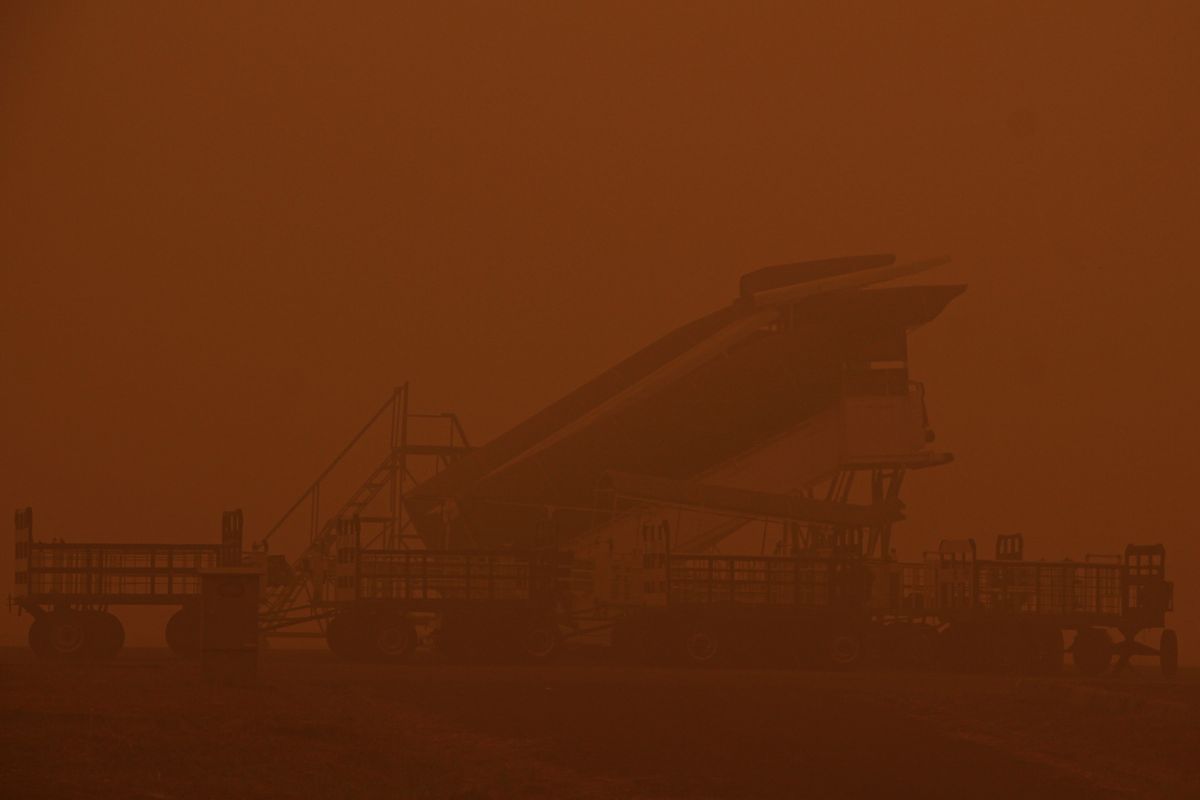
Article 65 paragraph (1) of the Environmental Protection and Management Law emphasizes everyone’s right to a good and healthy environment as part of human rights.
Meanwhile, Government Regulation No. 22 of 2021 provides instruments for environmental approval, air quality management, oversight, and administrative sanctions.
The problem lies in the consistency of using these instruments to control fire risks and protect the public.
The government needs to explain how oversight is conducted, violations are addressed, and recovery is ensured until environmental functions are restored.
Protecting peatland ecosystems is a crucial part of fulfilling this obligation as it relates to fire prevention and emissions control.
Government Regulation No. 71 of 2014, as amended by Government Regulation No. 57 of 2016, provides legal foundations for the protection and management of peatland ecosystems.
The ratification of the Paris Agreement through Law No. 16 of 2016 also places domestic policies within the framework of climate change commitment.
The relationship between the two demands consistency between land protection policies, business activity supervision, and emission reduction efforts.
Climate commitments need to be translated into actions that can be assessed, including protecting carbon-storing ecosystems from repeated damage.
The actions of West Kalimantan citizens suing the government show that protection from smoke haze has become a matter of legal accountability.
Mongabay reported on October 14, 2026, about a lawsuit filed by a group represented by the Nafas Kalbar Legal Team at the Pontianak District Court on September 17, 2026, against several government officials.
This case brings allegations of failure in forest fire management and public protection into the courtroom for examination.
The plaintiff's arguments will still need to be tested through evidence and the defendants' opportunities to explain their actions.
However, this lawsuit raises an important question: to what extent has the government used its powers to prevent recurring risks and alleviate citizen suffering?
Government accountability must be pursued alongside corporate accountability.
The same Mongabay report mentions that Walhi South Kalimantan has reported four palm oil plantation companies to the police for suspected criminal acts related to forest fires based on studies and monitoring from January to September 2026.
Findings of fires in concession areas must be followed up with investigations into causes, compliance with prevention obligations, and remediation measures.
Companies must be held accountable according to their roles and legal obligations, while government oversight actions are examined separately.
This differentiation is important so that the costs of damage do not continue to fall on the public and the public budget.
Henry Shue’s thoughts in Basic Rights (1980) help clarify this measure of state responsibility.
Shue outlines three obligations attached to basic rights: to avoid rights violations, to protect against violations by others, and to assist those whose rights have been violated.
Applied to forest fires, this framework directs attention to government policies that may increase risk, business activity oversight, and assistance for smoke victims.
Allegations of negligence may then be examined through gaps between known threats and actions that should have been taken based on legal authority.
Deploying personnel to extinguish fires is a vital part of that responsibility, which must also include prevention and public health protection.

























