

The Opening of Talent Transfer Market
-
News
-
Just now
This article was translated by AI. Read the original article on Kompas.com. See Original
THE AIR threatening citizens' health highlights the fundamental responsibility of the state to protect life.
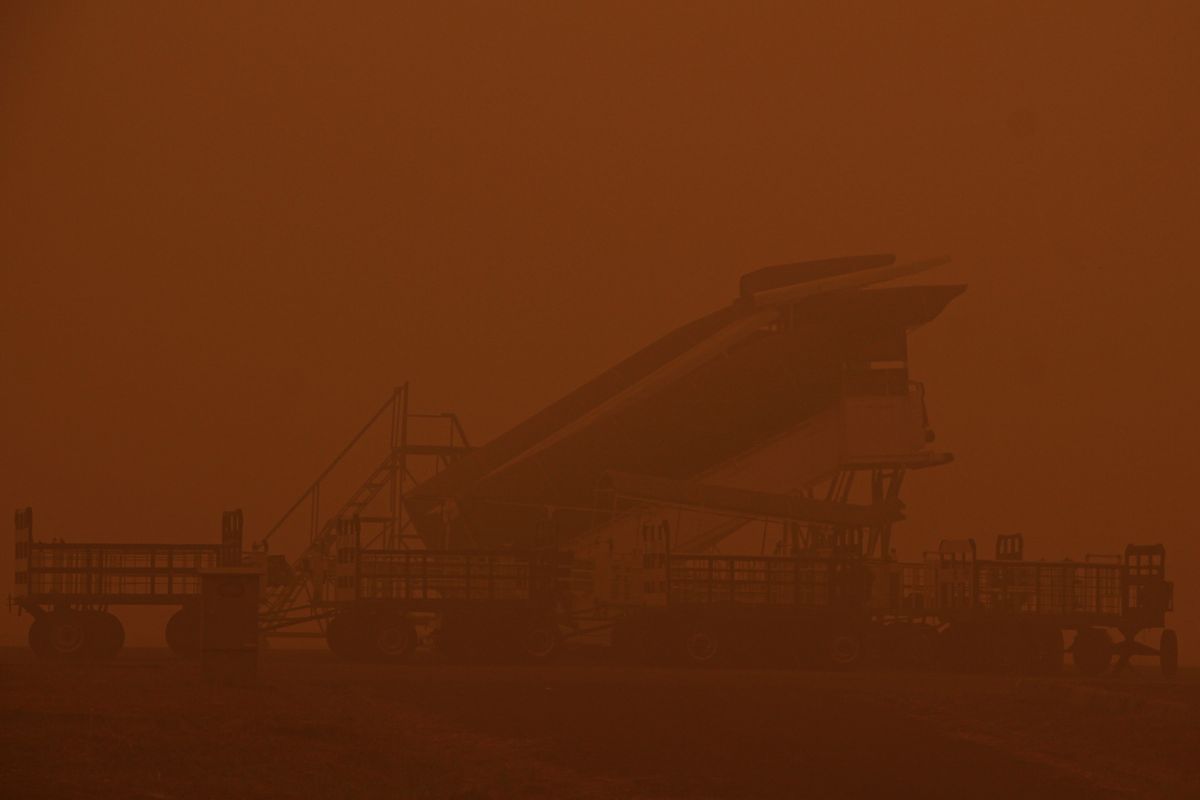
Smoke from forest and land fires enters homes, restricts work, and causes parents to worry about the safety of their children.
The Ministry of Forestry on October 10, 2026, reported that there are still areas with unhealthy to very unhealthy air quality, even pockets classified as hazardous in parts of Kalimantan and Papua.
This situation tests the government's ability to fulfill the right to a good and healthy living environment through protection that is tangible to the community.
The repeated experiences of facing forest fires should enhance the state's capacity to anticipate threats and protect the populace.
The government has deployed resources to address the fires, including continuing efforts in six provinces, as reported by the State Secretariat on October 12.
The work of teams and volunteers deserves recognition, but the scale of resource mobilization raises questions about the effectiveness of prevention before the fires spread.
Government success should be measured by reduced exposure for citizens, accessibility to health services, and lowered fire risks in subsequent seasons.
Without these measures, emergency response risks becoming an expensive routine that continually follows disasters.
Evaluations of forest fire management must be based on clear and verifiable data.
A press release from the Ministry of Forestry on October 10 noted 437 high-confidence hotspots nationwide based on monitoring conducted the day before, with 122 hotspots located in Central Kalimantan.
However, hotspots are indicators of temperature anomalies that still require on-the-ground verification; their number cannot be directly equated with the number of fire incidents or the extent of land burned.
This precision determines the accuracy of government responses while preventing hasty legal conclusions.
The public requires information that links monitoring results to verified fire locations, impacts on settlements, and actions taken.
The fires in Tanjung Puting National Park illustrate the vast threats to the safety of ecosystems and surrounding life.
On October 14, the Ministry of Forestry reported four priority response locations, including the Besalat area, which is close to an orangutan feeding ground.
Support from six firefighting helicopters in Central Kalimantan also faced visibility challenges due to thick smoke.
This situation demonstrates that fires can destroy habitats while limiting responders' ability to control them.
Assessing damage, therefore, must include the disrupted functions of ecosystems and the lives dependent on them, in addition to the area burned.
The constitution provides measures for assessing the state's responsibilities in facing these threats. Article 28H paragraph (1) of the 1945 Constitution guarantees every person the right to a good and healthy environment and access to health services.
Such guarantees must be realized through easily accessible danger information, protection from exposure, and affordable medical assistance.
Forest fire management policies need to pay special attention to children, the elderly, and communities without alternatives to leaving affected areas.
The gap between guaranteed rights and the protection received by citizens is an important reason to bring the government's obligations into the courtroom.
These constitutional guarantees have been elaborated through legal frameworks that provide both authority and obligations to the government.
Article 65 paragraph (1) of the Environmental Protection and Management Law emphasizes everyone’s right to a good and healthy environment as part of human rights.
Meanwhile, Government Regulation No. 22 of 2021 provides instruments for environmental approval, air quality management, oversight, and administrative sanctions.
The problem lies in the consistency of using these instruments to control fire risks and protect the public.
The government needs to explain how oversight is conducted, violations are addressed, and recovery is ensured until environmental functions are restored.
Protecting peatland ecosystems is a crucial part of fulfilling this obligation as it relates to fire prevention and emissions control.
Government Regulation No. 71 of 2014, as amended by Government Regulation No. 57 of 2016, provides legal foundations for the protection and management of peatland ecosystems.
The ratification of the Paris Agreement through Law No. 16 of 2016 also places domestic policies within the framework of climate change commitment.
The relationship between the two demands consistency between land protection policies, business activity supervision, and emission reduction efforts.
Climate commitments need to be translated into actions that can be assessed, including protecting carbon-storing ecosystems from repeated damage.
The actions of West Kalimantan citizens suing the government show that protection from smoke haze has become a matter of legal accountability.
Mongabay reported on October 14, 2026, about a lawsuit filed by a group represented by the Nafas Kalbar Legal Team at the Pontianak District Court on September 17, 2026, against several government officials.
This case brings allegations of failure in forest fire management and public protection into the courtroom for examination.
The plaintiff's arguments will still need to be tested through evidence and the defendants' opportunities to explain their actions.
However, this lawsuit raises an important question: to what extent has the government used its powers to prevent recurring risks and alleviate citizen suffering?
Government accountability must be pursued alongside corporate accountability.
The same Mongabay report mentions that Walhi South Kalimantan has reported four palm oil plantation companies to the police for suspected criminal acts related to forest fires based on studies and monitoring from January to September 2026.
Findings of fires in concession areas must be followed up with investigations into causes, compliance with prevention obligations, and remediation measures.
Companies must be held accountable according to their roles and legal obligations, while government oversight actions are examined separately.
This differentiation is important so that the costs of damage do not continue to fall on the public and the public budget.
Henry Shue’s thoughts in Basic Rights (1980) help clarify this measure of state responsibility.
Shue outlines three obligations attached to basic rights: to avoid rights violations, to protect against violations by others, and to assist those whose rights have been violated.
Applied to forest fires, this framework directs attention to government policies that may increase risk, business activity oversight, and assistance for smoke victims.
Allegations of negligence may then be examined through gaps between known threats and actions that should have been taken based on legal authority.
Deploying personnel to extinguish fires is a vital part of that responsibility, which must also include prevention and public health protection.
This responsibility has intergenerational dimensions, as described by Edith Brown Weiss through the theory of intergenerational justice in In Fairness to Future Generations (1989).
Weiss emphasizes the duty of each generation to preserve a diversity of choices, environmental quality, and equitable access to resources for the next generations.
In the context of forest fires, this thinking directs attention to emissions releases and damage to carbon-storing ecosystems, impacts of which may extend beyond emergency response periods.
Today's losses for citizens must be considered alongside the ecological risks inherited by their children. Therefore, the restoration of forests and peatlands is part of the responsibility to ensure the viability of future generations.
An intergenerational perspective opens space for climate litigation development, but its legal demands must be supported by adequate evidence.
The health damages due to smoke exposure, ecosystem destruction, and losses related to climate change have distinct characteristics and evidentiary needs.
Plaintiffs need to explain the obligations breached, the questioned actions or omissions, and how they relate to the losses being sought for recovery.
Data on fires, land characteristics, emission estimates, monitoring history, and expert testimonies become essential to build this relationship.
Thus, the direction of climate litigation in forest fire cases needs to be framed by clear arguments and demands, without preempting the ongoing substantive examination of the lawsuit.
The appropriateness of the legal path also determines whether citizens' demands can yield effective protection.
Class action lawsuits, citizen lawsuits, and administrative action disputes have procedural requirements and consequences that must be considered.
The Supreme Court Regulation No. 2 of 2019 regarding administrative action disputes and unlawful acts by government bodies or officials serves as a reference in determining the authority to adjudicate based on the objects of the dispute.
Restoration demands must also be formulated concretely, from health services for victims and data transparency to ecosystem restoration and oversight improvements.
Clarity on responsible parties, implementation timelines, and monitoring mechanisms will determine the benefits of decisions for the community.
The lawsuit over smoke haze ultimately tests the quality of state protection for its citizens' lives.
The state's obligations must be assessed along the spectrum of prevention, management, and recovery, while still examining the roles and contributions of each party to the damages.
Henry Shue's basic rights theory (1980) clarifies the obligation to protect and assist victims, while Edith Brown Weiss’s intergenerational justice (1989) broadens the focus on the future of the environment.
Both perspectives reinforce the rationale for prioritizing citizens' safety and ecosystem sustainability as measures of forest fire policies.
Determining fault and imposing legal responsibility still require careful evidence examination.
The government must use citizens' demands as impetus to enhance protection in measurable ways.
Priorities include accessible health services, open air quality information, business compliance audits in vulnerable areas, and peatland restoration with publicly monitorable targets.
Law enforcement against proven responsible parties should be accompanied by policy evaluations and oversight that allow fires to repeatedly occur.
The court can play a role in ensuring these obligations are fulfilled through clear and enforceable decisions.
The right to clean air should be present in daily life, before citizens are forced to fight for it in court.

























