

Assessing the High Logistics Costs of the Archipelago
-
News
-
39 minutes ago
This article was translated by AI. Read the original article on Kompas.com. See Original
THE AIR threatening citizens' health highlights the fundamental responsibility of the state to protect life.
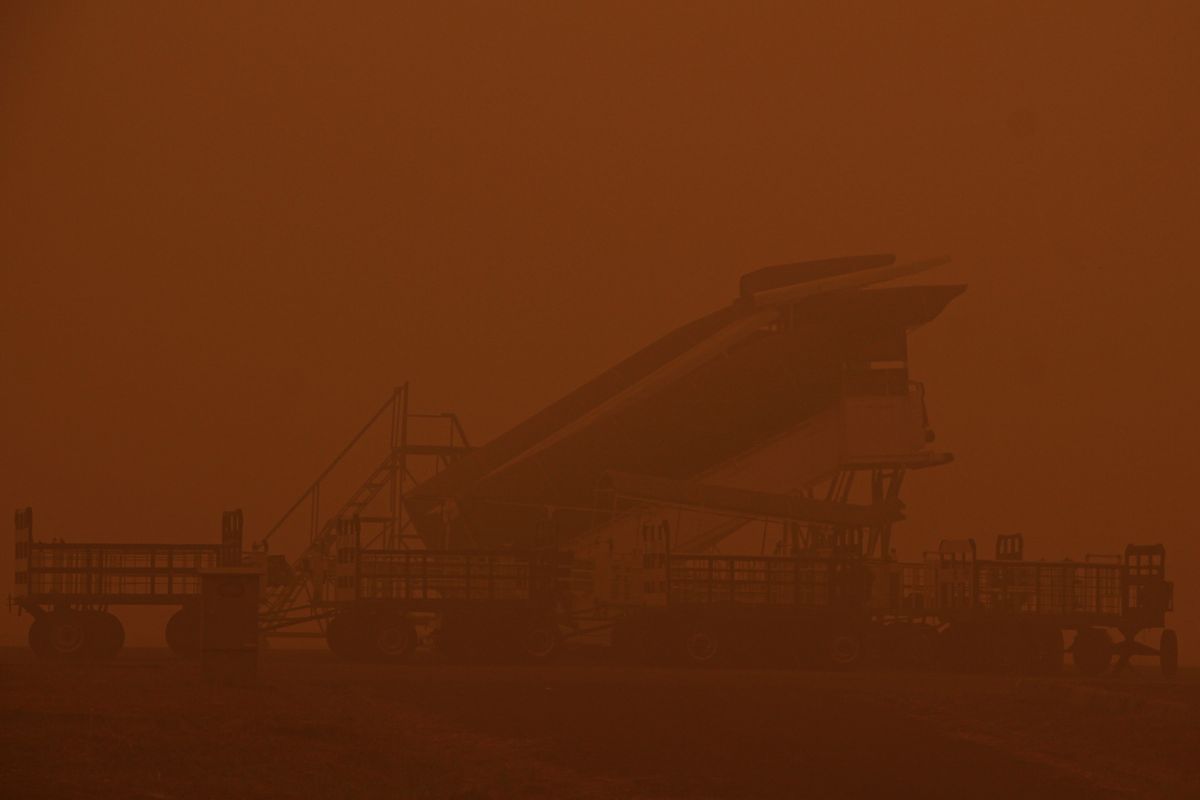
Smoke from forest and land fires enters homes, restricts work, and causes parents to worry about the safety of their children.
The Ministry of Forestry on October 10, 2026, reported that there are still areas with unhealthy to very unhealthy air quality, even pockets classified as hazardous in parts of Kalimantan and Papua.
This situation tests the government's ability to fulfill the right to a good and healthy living environment through protection that is tangible to the community.
The repeated experiences of facing forest fires should enhance the state's capacity to anticipate threats and protect the populace.
The government has deployed resources to address the fires, including continuing efforts in six provinces, as reported by the State Secretariat on October 12.
The work of teams and volunteers deserves recognition, but the scale of resource mobilization raises questions about the effectiveness of prevention before the fires spread.
Government success should be measured by reduced exposure for citizens, accessibility to health services, and lowered fire risks in subsequent seasons.
Without these measures, emergency response risks becoming an expensive routine that continually follows disasters.
Evaluations of forest fire management must be based on clear and verifiable data.
A press release from the Ministry of Forestry on October 10 noted 437 high-confidence hotspots nationwide based on monitoring conducted the day before, with 122 hotspots located in Central Kalimantan.
However, hotspots are indicators of temperature anomalies that still require on-the-ground verification; their number cannot be directly equated with the number of fire incidents or the extent of land burned.
This precision determines the accuracy of government responses while preventing hasty legal conclusions.
The public requires information that links monitoring results to verified fire locations, impacts on settlements, and actions taken.
The fires in Tanjung Puting National Park illustrate the vast threats to the safety of ecosystems and surrounding life.
On October 14, the Ministry of Forestry reported four priority response locations, including the Besalat area, which is close to an orangutan feeding ground.
Support from six firefighting helicopters in Central Kalimantan also faced visibility challenges due to thick smoke.
This situation demonstrates that fires can destroy habitats while limiting responders' ability to control them.
Assessing damage, therefore, must include the disrupted functions of ecosystems and the lives dependent on them, in addition to the area burned.
The constitution provides measures for assessing the state's responsibilities in facing these threats. Article 28H paragraph (1) of the 1945 Constitution guarantees every person the right to a good and healthy environment and access to health services.
Such guarantees must be realized through easily accessible danger information, protection from exposure, and affordable medical assistance.
Forest fire management policies need to pay special attention to children, the elderly, and communities without alternatives to leaving affected areas.
The gap between guaranteed rights and the protection received by citizens is an important reason to bring the government's obligations into the courtroom.
These constitutional guarantees have been elaborated through legal frameworks that provide both authority and obligations to the government.

























