

Prabowo Affirms He Is Not Anti-Corporation: We Need a Good and Responsible Private Sector
-
News
-
5 minutes ago
This article was translated by AI. Read the original article on Kompas.com. See Original
John Rawls’s (1971) thought in A Theory of Justice provides a relevant foundation.
Through the principle of justice as fairness, specifically the difference principle, Rawls explains that social and economic inequalities should be arranged to provide the greatest benefit to the least advantaged groups.
In the context of Indonesia, this principle reminds us that the success of natural resource management cannot only be assessed by economic growth, increased investment, or state revenues.
The more substantive question is whether the benefits of that wealth truly reach communities that have faced limitations in access to education, health care, productive land, and a decent living.
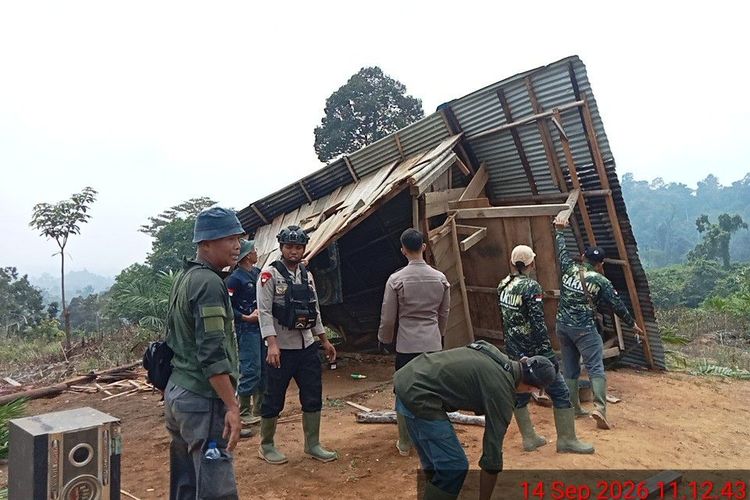
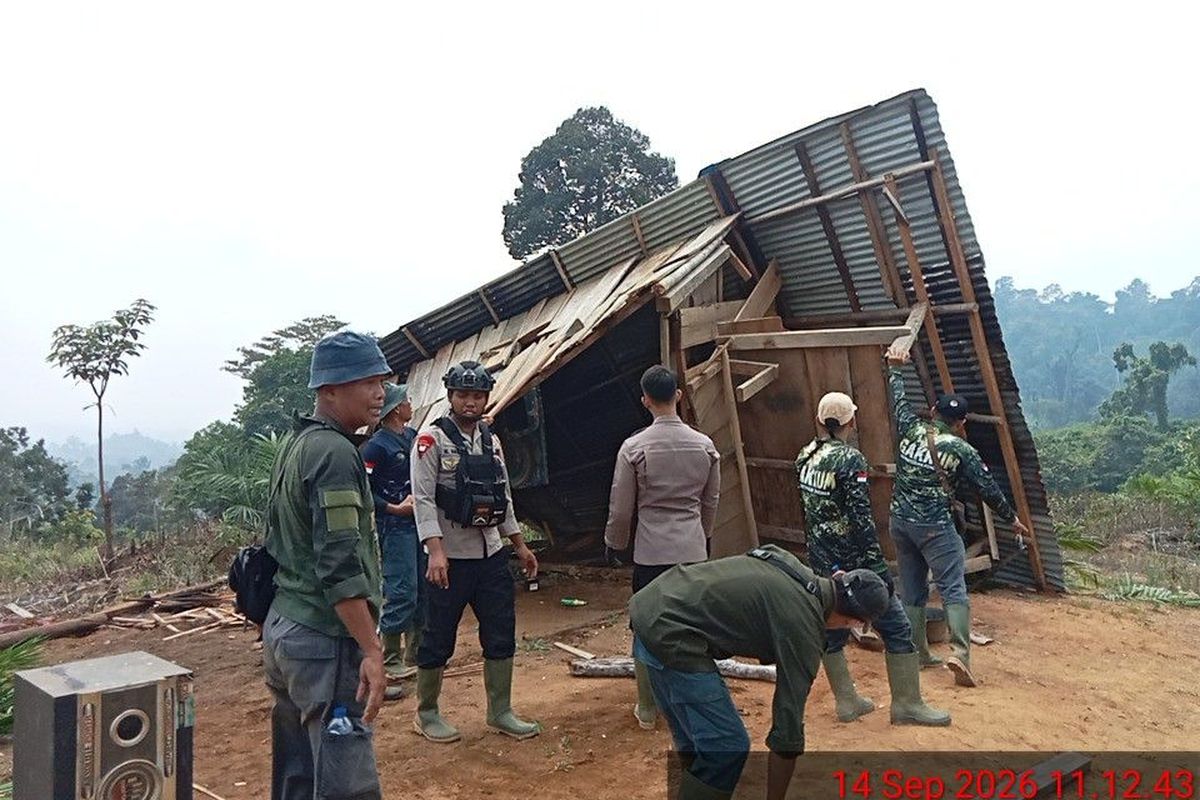
The achievements of Satgas PKH need to be followed up with measurable budget policies and environmental recovery. Funds entering the state treasury must be managed through transparent state financial mechanisms, prioritizing development that meets community needs.
In affected areas, attention should be given to forest rehabilitation, recovery of river basin areas, protection of indigenous rights, and strengthening local economies.
Saving state wealth will only have strong social legitimacy when communities can feel that law enforcement delivers real change in their lives.
The success of Satgas PKH should also become a momentum for improving how the state oversees natural resource management. So far, issues regarding forest areas have not always stood alone.
There is a relationship between business licensing, land control, tax compliance, spatial planning, land administration, and environmental oversight involving various institutions.
When data and authority operate independently, the potential for overlaps and violations becomes harder to manage.
Therefore, any policing action must be followed by the establishment of an integrated oversight system, based on spatial data, with a clear mechanism of accountability from the central to the regional level.
Within that framework, the state needs to build an asset recovery model that is not only repressive after violations occur but also preventive and corrective.
Each area that is regulated must have legal status clarity, identification of actors and their obligations, the results of environmental audits, and recovery or utilization plans that can be publicly monitored.
The use of satellite monitoring technology, openness in information licensing, compliance inspections, and financial transaction tracing can strengthen a warning system against deviations.
However, all these processes must still respect legal certainty and protect the legitimate rights of communities so that enforcement does not create new conflicts.
Equally important is ensuring continuity between law enforcement and governance after enforcement.
Areas that have been successfully reclaimed should not then become managed objects that repeat previous issues.
The state must clearly identify areas that need ecological function restoration, areas that can be utilized according to legal designations, and spaces that require resolution of community rights.
Thus, the measure of success should not solely be how many trillion rupiah have been recovered or how many million hectares have been regulated, but also how much environmental damage can be repaired, legal certainty is strengthened, and economic benefits are equitably felt.
The state wealth recovery achievements amounting to around IDR 52 trillion show that law enforcement and regulation of natural resources can yield significant economic benefits.
However, this figure simultaneously serves as a reminder of the importance of consistent oversight to prevent similar violations from recurring.
The state cannot merely respond when losses have occurred; it must also be capable of preventing deviations from the beginning.
Firmness against environmental crimes needs to be embedded as part of efforts to build accountable governance, create business certainty, and protect public interests from unlawful resource control practices.
Indonesia needs a strong state in enforcing laws, but that power must come with justice in its application.
The state must not only be firm against minor violations while major violations involving economic power and networks of interest go unaddressed.
Conversely, every enforcement action must be carried out proportionately, transparently, and based on legal proof.
In that lies the power of the state gaining legitimacy, not from the magnitude of authority exercised, but from its ability to protect citizens’ rights, safeguard communal wealth, and ensure no one is above the law.
The true test of state power is not when it successfully collects trillions of rupiah from violators, but when it ensures that natural wealth is no longer a source of inequality and suffering for the people.
The success of asset recovery must mark a turning point for more fundamental changes, namely the achievement of protected forests, restored environments, enforced laws equitably, and natural wealth that truly benefits people's welfare.
Because state assertiveness cannot simply be measured by the amount of punishment imposed or the number of assets returned, but by its ability to halt violation practices, prevent recurring damage, and create justice that can be felt by the people.
The state must not lose to environmental crimes, for what is at stake is not just wealth today, but the people's right to live prosperously and the sustainability of future generations.