

Prabowo Affirms He Is Not Anti-Corporation: We Need a Good and Responsible Private Sector
-
News
-
6 minutes ago
This article was translated by AI. Read the original article on Kompas.com. See Original
THE TRANSFER of IDR 13.24 trillion from the regularization of forest areas to the state on Tuesday (6/10/2026) is not just an administrative event that marks the government's success in increasing state revenue.
Behind that fantastic figure lies a much deeper issue regarding how Indonesia's natural wealth has been managed, supervised, and utilized over the years.
The transfer, directly witnessed by President Prabowo Subianto at the Attorney General's Office, also illustrates that violations in natural resource utilization have significant economic consequences.
The question arises: how much of the state’s wealth has been lost due to weak oversight, legal noncompliance, and practices regarding resource control that disregard public interests?
This issue is further highlighted by the achievements of the Forest Area Regularization Task Force (Satgas PKH).
Since its establishment in February 2025 until October 2026, or within two calendar years of its operations, Satgas PKH has carried out eight stages of financial recovery for the state, totaling around IDR 52 trillion.
This last transfer of IDR 13.24 trillion consists of approximately IDR 3.48 trillion in administrative forestry fines, IDR 1.54 trillion in non-tax revenues from handling special criminal offenses, and IDR 8.23 trillion from tax revenues.
This achievement shows the enormous potential for revenue recovery that can be realized through stricter law enforcement and oversight.
However, this figure also presents an irony: the natural wealth meant to be a source of prosperity for the people still leaves serious issues regarding legal compliance and management governance.
The problem becomes even more concerning when the economic benefits from natural resource utilization do not always correspond to the benefits received by the community.
Forests that should maintain ecological balance, mining areas that house mineral wealth, and plantations that promise economic growth in some cases directly confront issues of zoning violations, environmental degradation, and land control conflicts.
When profits are concentrated in the hands of certain parties, surrounding communities risk bearing substantial social and ecological costs.
Therefore, decisive action against environmental violations, including dismantling suspected networks of licensing mafias and illegal resource ownership practices, is not merely an administrative issue.
More than that, it concerns justice, state sovereignty over natural resource management, and the constitutional responsibility to protect the welfare of the people.
Here, the success of Satgas PKH should be a momentum to change how the state enforces laws and manages its natural wealth.
Rescuing IDR 52 trillion is indeed a significant achievement, but true success should not stop at the amount of money returned to the state treasury.
The more important question is whether legal enforcement can stop repeated violations, restore damaged environments, improve licensing governance, and ensure the benefits of natural wealth return to the community.
Because a strong state is not one that can merely collect fines from violators, but a state that dares to enforce the law impartially, protecting public interests from economic power abuses and making natural wealth a pathway to justice and shared prosperity.
The establishment of Satgas PKH through Presidential Regulation Number 5 of 2025 reflects the government's efforts to strengthen the regulation of business activities and control of forest areas that do not comply with legal provisions.
Through cross-institutional coordination, the state seeks to integrate oversight, collection of administrative obligations, reclaiming areas, and asset recovery.
This approach is important because issues related to natural resources often involve complex relationships between licensing, land administration, investment interests, sectoral authorities, and environmental oversight.
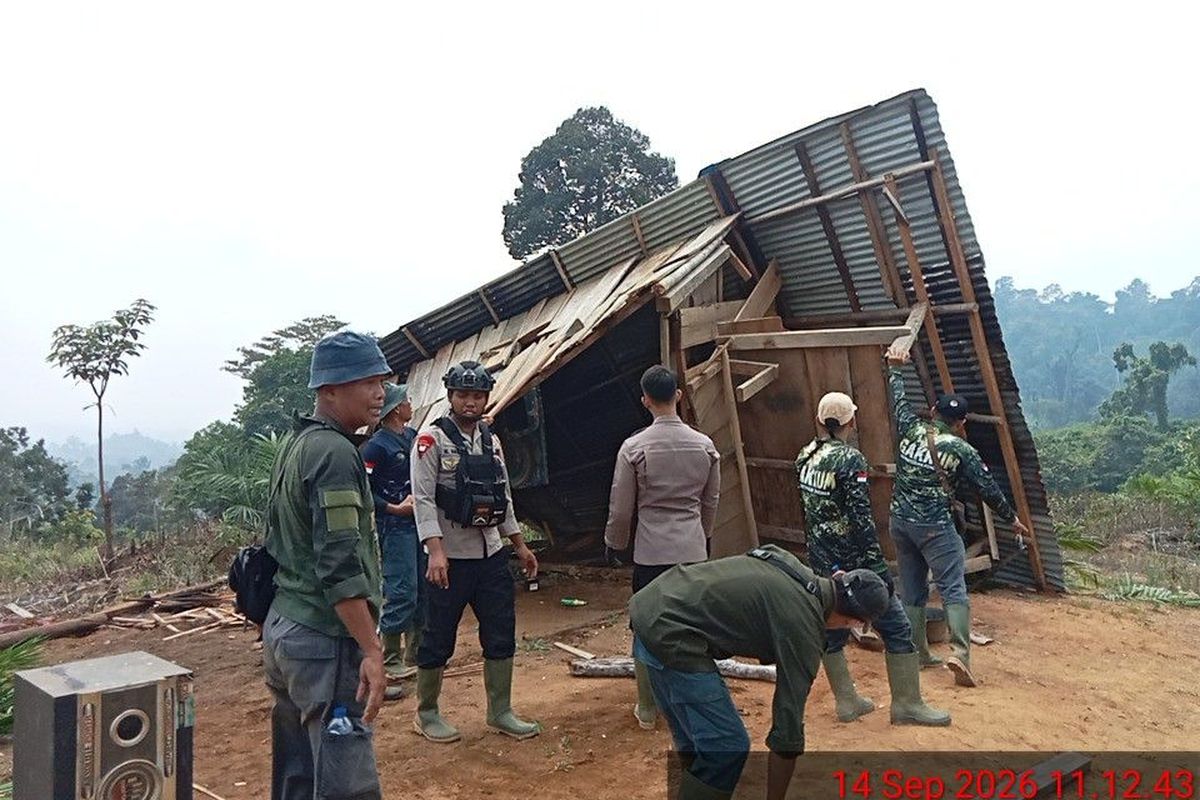
According to the Attorney General's Office (2026), Satgas PKH has reclaimed forest areas covering 6,220,845.93 hectares.
Of that total, about 6.21 million hectares are related to the plantation sector, while 14,633.79 hectares come from the mining sector.
In the eighth phase of the transfer, an area of 259,230.73 hectares was also handed over for further management.
Meanwhile, the IDR 13.24 trillion received in this same phase consists of approximately IDR 3.48 trillion in administrative forestry fines, IDR 1.54 trillion in non-tax revenues from handling special criminal offenses, and IDR 8.23 trillion from tax revenues.
This achievement deserves attention as it indicates the importance of the state's capacity to enforce legal compliance.
However, the large area that has been successfully reclaimed also serves as an evaluation of the effectiveness of the previous oversight system.
The state must ensure that issues are not only resolved downstream through fine collection or area takeover but also upstream through licensing improvements, spatial data integration, compliance audits, and conflict of interest prevention.
Without these changes, asset recovery risks becoming a repetitive activity to address violations that should have been preventable from the outset.
In the principle of the rule of law, economic power must not provide immunity from legal obligations.
Joseph Raz (1979) in The Authority of Law: Essays on Law and Morality, particularly through his discussion on The Rule of Law and Its Virtue, explains the importance of clear, open, relatively stable laws that are enforced through independent institutions and fair procedures.
This principle positions the law as a binding guideline for everyone while also limiting arbitrary state power.
Thus, firm legal enforcement must go hand in hand with legal certainty and the protection of rights.
This thought finds relevance in Article 1 paragraph (3) of the 1945 Constitution, which emphasizes that Indonesia is a rule of law state.
Consequently, no corporation, business group, official, or interest network should receive special treatment when faced with legal provisions.
Investment activities and natural resource utilization must obtain certainty and protection as long as they are conducted lawfully.
Conversely, violations must face proportional, transparent, and verifiable consequences.
Firmness against violators actually protects compliant businesses from being harmed by competition built through avoidance of obligations or licensing abuses.
The issue becomes more serious when environmental violations relate to mafia licensing practices, corruption, money laundering, or illegal market control.
Such allegations require investigation and accountable proof, not merely labeling.
The state must be able to trace who benefits, how violations are facilitated, and whether there is an abuse of authority.
Additionally, it is equally important that administrative fines should not be automatically understood as waiving criminal liability or obligations to restore the environment when there are legal bases that require it.
A rule of law must not only make violations expensive; the state must also prevent violations from becoming a seemingly profitable business option.
Environmental crimes have a different character from many other economic offenses.
Their losses are not always immediately visible in the state financial report.
The impacts can last for years and reach communities that do not benefit from activities that cause the damage.
The loss of forest cover can disrupt water systems, increase erosion, and heighten the vulnerability of certain areas to disasters.
River pollution can reduce access to clean water and disrupt livelihoods.
Meanwhile, changes in land use that ignore community rights can trigger social conflicts and narrow the living spaces of groups who depend on their environment.
Data from the Ministry of Forestry (2025) notes that Indonesia's forested land area in 2024 reached 95.5 million hectares or approximately 51.1 percent of the national land area.
In the same year, gross deforestation was recorded at 216,200 hectares, while net deforestation reached 175,400 hectares after accounting for reforestation.
These figures indicate that pressure on forest cover remains a real problem.
Of course, not all deforestation is illegal, as changes in forest cover can be influenced by various factors.
However, that data underscores the need for spatial planning oversight, control of business activities, and sustainable ecosystem protection.
From an environmental economics perspective, this issue can be understood through the concept of negative externalities described by Arthur Cecil Pigou (1920).
In essence, economic activities can generate social costs that are not fully borne by the parties profiting from it.
When business activities harm the environment, the costs of recovery, loss of productivity, health disruptions, or increased disaster risks can become burdens borne by society and the government.
In this situation, profits belong to private entities, while some losses are shouldered by the public. This imbalance in the distribution of benefits and costs needs to be corrected through policy and environmental law enforcement.
Thus, addressing environmental crimes cannot be solely measured by the number of companies sanctioned or the sizes of fines collected. The state must also account for ecological losses, social impacts, and long-term recovery costs.
Communities losing their livelihoods or experiencing environmental degradation need tangible recovery.
Without this dimension, saving the state's finances might appear successful on paper while environmental conditions and community lives remain largely unchanged.
Decisiveness in preserving state wealth should not stop at the success of increasing state revenues.
There is a more fundamental constitutional mandate, which is to ensure that all natural wealth is used for the greatest prosperity of the people as emphasized in Article 33 paragraph (3) of the 1945 Constitution.
This formulation implies that the state is not just the holder of authority over natural resources, but also responsible for the distribution of its benefits.
Thus, returning state wealth should be linked to improvements in public services, poverty reduction, environmental recovery, and expanding economic opportunities for the community.
John Rawls’s (1971) thought in A Theory of Justice provides a relevant foundation.
Through the principle of justice as fairness, specifically the difference principle, Rawls explains that social and economic inequalities should be arranged to provide the greatest benefit to the least advantaged groups.
In the context of Indonesia, this principle reminds us that the success of natural resource management cannot only be assessed by economic growth, increased investment, or state revenues.
The more substantive question is whether the benefits of that wealth truly reach communities that have faced limitations in access to education, health care, productive land, and a decent living.
The achievements of Satgas PKH need to be followed up with measurable budget policies and environmental recovery. Funds entering the state treasury must be managed through transparent state financial mechanisms, prioritizing development that meets community needs.
In affected areas, attention should be given to forest rehabilitation, recovery of river basin areas, protection of indigenous rights, and strengthening local economies.
Saving state wealth will only have strong social legitimacy when communities can feel that law enforcement delivers real change in their lives.
The success of Satgas PKH should also become a momentum for improving how the state oversees natural resource management. So far, issues regarding forest areas have not always stood alone.
There is a relationship between business licensing, land control, tax compliance, spatial planning, land administration, and environmental oversight involving various institutions.
When data and authority operate independently, the potential for overlaps and violations becomes harder to manage.
Therefore, any policing action must be followed by the establishment of an integrated oversight system, based on spatial data, with a clear mechanism of accountability from the central to the regional level.
Within that framework, the state needs to build an asset recovery model that is not only repressive after violations occur but also preventive and corrective.
Each area that is regulated must have legal status clarity, identification of actors and their obligations, the results of environmental audits, and recovery or utilization plans that can be publicly monitored.
The use of satellite monitoring technology, openness in information licensing, compliance inspections, and financial transaction tracing can strengthen a warning system against deviations.
However, all these processes must still respect legal certainty and protect the legitimate rights of communities so that enforcement does not create new conflicts.
Equally important is ensuring continuity between law enforcement and governance after enforcement.
Areas that have been successfully reclaimed should not then become managed objects that repeat previous issues.
The state must clearly identify areas that need ecological function restoration, areas that can be utilized according to legal designations, and spaces that require resolution of community rights.
Thus, the measure of success should not solely be how many trillion rupiah have been recovered or how many million hectares have been regulated, but also how much environmental damage can be repaired, legal certainty is strengthened, and economic benefits are equitably felt.
The state wealth recovery achievements amounting to around IDR 52 trillion show that law enforcement and regulation of natural resources can yield significant economic benefits.
However, this figure simultaneously serves as a reminder of the importance of consistent oversight to prevent similar violations from recurring.
The state cannot merely respond when losses have occurred; it must also be capable of preventing deviations from the beginning.
Firmness against environmental crimes needs to be embedded as part of efforts to build accountable governance, create business certainty, and protect public interests from unlawful resource control practices.
Indonesia needs a strong state in enforcing laws, but that power must come with justice in its application.
The state must not only be firm against minor violations while major violations involving economic power and networks of interest go unaddressed.
Conversely, every enforcement action must be carried out proportionately, transparently, and based on legal proof.
In that lies the power of the state gaining legitimacy, not from the magnitude of authority exercised, but from its ability to protect citizens’ rights, safeguard communal wealth, and ensure no one is above the law.
The true test of state power is not when it successfully collects trillions of rupiah from violators, but when it ensures that natural wealth is no longer a source of inequality and suffering for the people.
The success of asset recovery must mark a turning point for more fundamental changes, namely the achievement of protected forests, restored environments, enforced laws equitably, and natural wealth that truly benefits people's welfare.
Because state assertiveness cannot simply be measured by the amount of punishment imposed or the number of assets returned, but by its ability to halt violation practices, prevent recurring damage, and create justice that can be felt by the people.
The state must not lose to environmental crimes, for what is at stake is not just wealth today, but the people's right to live prosperously and the sustainability of future generations.