
Cak Imin Encourages Pesantren-Based Vocational Schools to Elevate Standards to International Levels
-
News
-
10 minutes ago
This article was translated by AI. Read the original article on Kompas.com. See Original
THE TRANSFER of IDR 13.24 trillion from the regularization of forest areas to the state on Tuesday (6/10/2026) is not just an administrative event that marks the government's success in increasing state revenue.
Behind that fantastic figure lies a much deeper issue regarding how Indonesia's natural wealth has been managed, supervised, and utilized over the years.
The transfer, directly witnessed by President Prabowo Subianto at the Attorney General's Office, also illustrates that violations in natural resource utilization have significant economic consequences.
The question arises: how much of the state’s wealth has been lost due to weak oversight, legal noncompliance, and practices regarding resource control that disregard public interests?
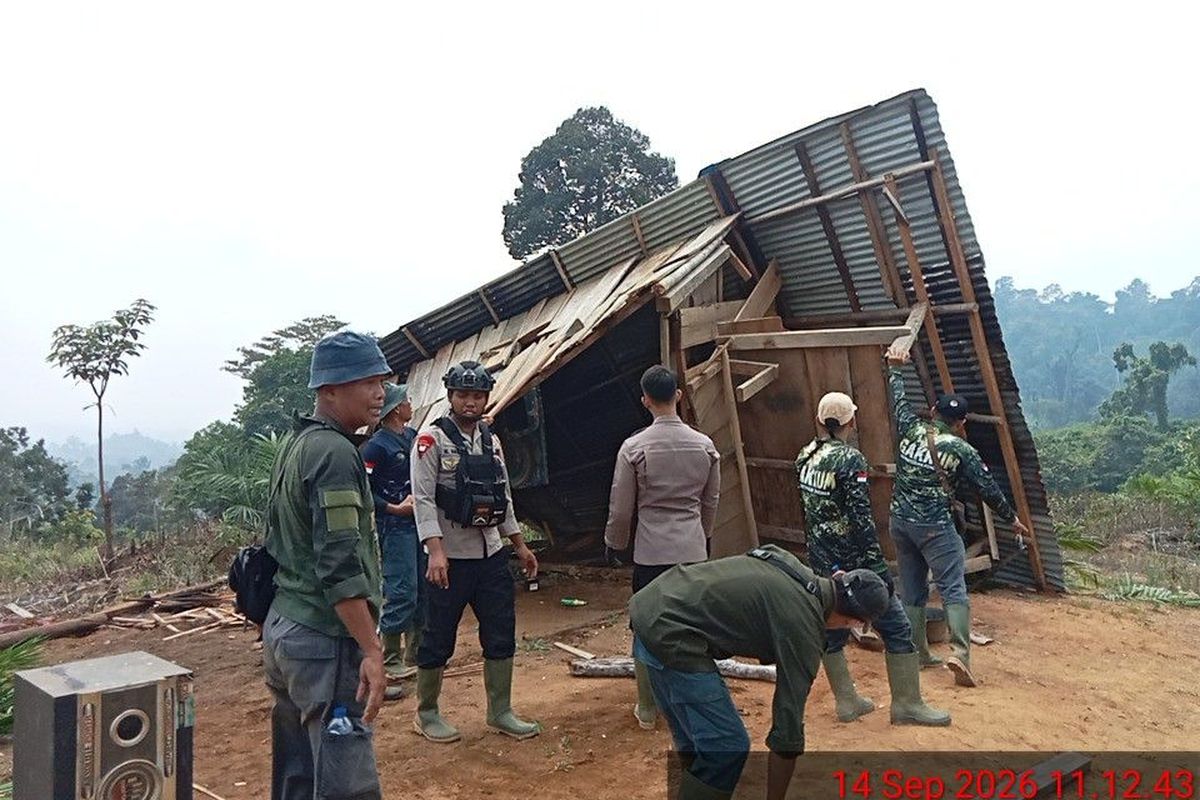
This issue is further highlighted by the achievements of the Forest Area Regularization Task Force (Satgas PKH).
Since its establishment in February 2025 until October 2026, or within two calendar years of its operations, Satgas PKH has carried out eight stages of financial recovery for the state, totaling around IDR 52 trillion.
This last transfer of IDR 13.24 trillion consists of approximately IDR 3.48 trillion in administrative forestry fines, IDR 1.54 trillion in non-tax revenues from handling special criminal offenses, and IDR 8.23 trillion from tax revenues.
This achievement shows the enormous potential for revenue recovery that can be realized through stricter law enforcement and oversight.
However, this figure also presents an irony: the natural wealth meant to be a source of prosperity for the people still leaves serious issues regarding legal compliance and management governance.
The problem becomes even more concerning when the economic benefits from natural resource utilization do not always correspond to the benefits received by the community.
Forests that should maintain ecological balance, mining areas that house mineral wealth, and plantations that promise economic growth in some cases directly confront issues of zoning violations, environmental degradation, and land control conflicts.
When profits are concentrated in the hands of certain parties, surrounding communities risk bearing substantial social and ecological costs.
Therefore, decisive action against environmental violations, including dismantling suspected networks of licensing mafias and illegal resource ownership practices, is not merely an administrative issue.
More than that, it concerns justice, state sovereignty over natural resource management, and the constitutional responsibility to protect the welfare of the people.
Here, the success of Satgas PKH should be a momentum to change how the state enforces laws and manages its natural wealth.
Rescuing IDR 52 trillion is indeed a significant achievement, but true success should not stop at the amount of money returned to the state treasury.
The more important question is whether legal enforcement can stop repeated violations, restore damaged environments, improve licensing governance, and ensure the benefits of natural wealth return to the community.
Because a strong state is not one that can merely collect fines from violators, but a state that dares to enforce the law impartially, protecting public interests from economic power abuses and making natural wealth a pathway to justice and shared prosperity.
The establishment of Satgas PKH through Presidential Regulation Number 5 of 2025 reflects the government's efforts to strengthen the regulation of business activities and control of forest areas that do not comply with legal provisions.
Through cross-institutional coordination, the state seeks to integrate oversight, collection of administrative obligations, reclaiming areas, and asset recovery.
This approach is important because issues related to natural resources often involve complex relationships between licensing, land administration, investment interests, sectoral authorities, and environmental oversight.
According to the Attorney General's Office (2026), Satgas PKH has reclaimed forest areas covering 6,220,845.93 hectares.
Of that total, about 6.21 million hectares are related to the plantation sector, while 14,633.79 hectares come from the mining sector.
In the eighth phase of the transfer, an area of 259,230.73 hectares was also handed over for further management.
Meanwhile, the IDR 13.24 trillion received in this same phase consists of approximately IDR 3.48 trillion in administrative forestry fines, IDR 1.54 trillion in non-tax revenues from handling special criminal offenses, and IDR 8.23 trillion from tax revenues.
This achievement deserves attention as it indicates the importance of the state's capacity to enforce legal compliance.
However, the large area that has been successfully reclaimed also serves as an evaluation of the effectiveness of the previous oversight system.
The state must ensure that issues are not only resolved downstream through fine collection or area takeover but also upstream through licensing improvements, spatial data integration, compliance audits, and conflict of interest prevention.
Without these changes, asset recovery risks becoming a repetitive activity to address violations that should have been preventable from the outset.
In the principle of the rule of law, economic power must not provide immunity from legal obligations.
Joseph Raz (1979) in The Authority of Law: Essays on Law and Morality, particularly through his discussion on The Rule of Law and Its Virtue, explains the importance of clear, open, relatively stable laws that are enforced through independent institutions and fair procedures.
This principle positions the law as a binding guideline for everyone while also limiting arbitrary state power.