
Cak Imin Encourages Pesantren-Based Vocational Schools to Elevate Standards to International Levels
-
News
-
10 minutes ago
This article was translated by AI. Read the original article on Kompas.com. See Original
IMAGINE a housing complex requiring every guest to register their name and leave an ID card at the security post.
The guest book is thick and neatly organized, but no one ever matches the guest's face with the photo on the card. Residents continue to sleep soundly because the procedure exists.
Auditors refer to this situation as a control that looks good on paper but does not actually work.
Therefore, before deciding whether a control should be tightened or relaxed, auditors first pose two tests.
The first is whether the control is relevant to the risks it aims to prevent. The second is whether the control can realistically be executed and verified at a reasonable cost.
Controls that fail either of these tests are merely formalities. Both tests are now applicable to educational requirements for presidential and vice-presidential candidates.
The current public debate is split in two. Former Constitutional Court Chief Jimly Asshiddiqie suggests that the educational requirement be removed from the law, emphasizing that what matters is that voters are informed, while proposing that the requirements for legislative candidates be raised to at least a bachelor's degree.
The opposing camp rejects the removal and demands stricter verification.
Both sides are debating the diploma issue, yet neither has tested whether the requirement can be deemed a control.
The first test pertains to relevance. Article 169 letter r of Law Number 7 of 2017 concerning Elections mandates that candidates must have at least a high school diploma or its equivalent.
This requirement is not mandated by the constitution, as Article 6 paragraph (2) of the 1945 Constitution merely delegates the regulation of candidate requirements to the law.
The risk to be prevented is that a candidate lacks the capacity to lead.
However, a high school diploma only proves that a person has completed one level of education.
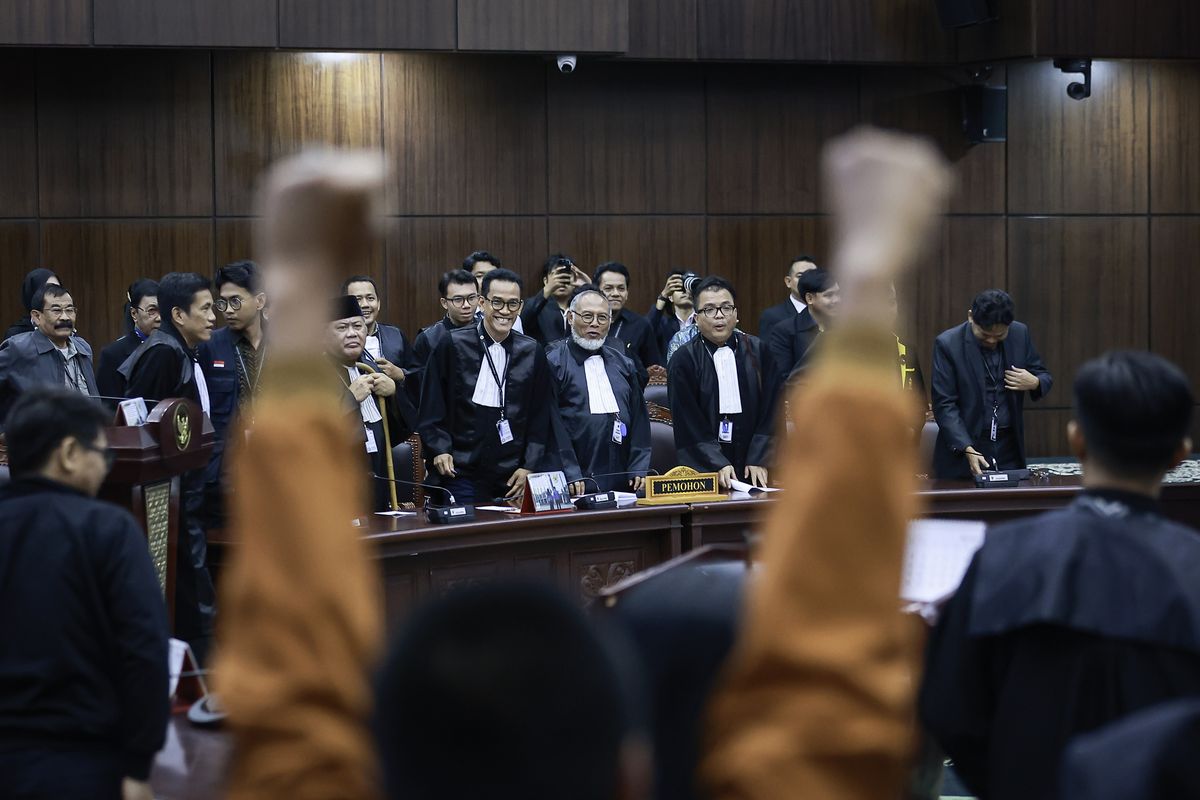
In Decision Number 87/PUU-XXIII/2025, the Constitutional Court noted that since the direct elections in 2004, many candidates proposed by parties have had education above the minimum threshold. This means, in practice, the requirement rarely filters candidates effectively.
It only becomes decisive when the validity of the documents is contested.