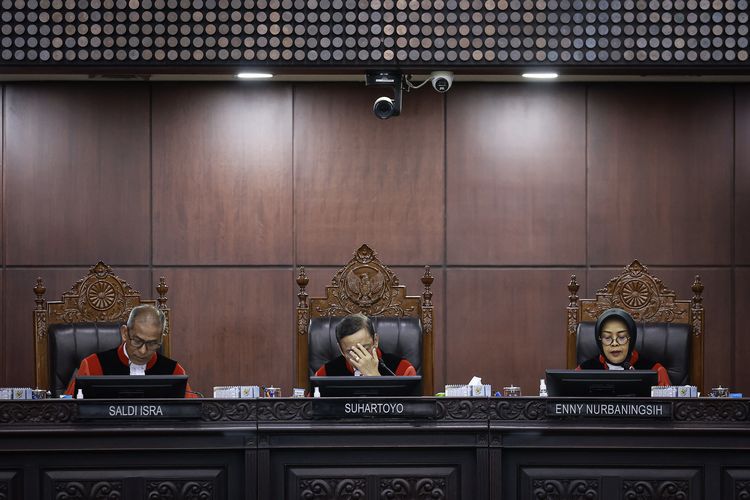


Bakom RI Dismisses Ulta Levenia Since November 1, 2026
-
News
-
17 minutes ago
This article was translated by AI. Read the original article on Kompas.com. See Original
All these concepts are valid. However, their sophistication does not erase a simple obligation: will we apply the same concepts if the subject of the case is a figure from our favored faction?
That is the true test of impartiality.
We must also be careful to distinguish legality from legitimacy. Electoral success yields electoral mandates; law determines the validity of positions; while legitimacy pertains to social acceptance of authority. The three are related but not identical.
A meta-analysis by Angus Chan, Ben Bradford, and Clifford Stott across 123 studies involving 200,966 participants found a significant relationship between procedural justice, social identity, and legitimacy.
Social identity has even been shown to mediate the relationship between perceptions of procedural justice and legitimacy (Chan, Bradford & Stott, 2023).
This research pertains to police legitimacy, not the Indonesian Constitutional Court. Thus, it is inappropriate to take its conclusions literally.
However, the psychological mechanisms provide a useful warning: perceptions of institutional justice are not solely shaped by outcomes but also by how processes are evaluated across different social groups.
Indonesia's experience indicates that institutional trust does not move in one direction.
LSI surveys noted public trust in the Constitutional Court was about 61 percent in January 2024, increasing to 73 percent in April 2024.
The April survey involved 1,213 respondents with a margin of error of plus or minus 2.9 percent. LSI linked this increase to positive public assessments during the presidential election dispute hearings of 2024 (LSI, 2024; Tempo, 19/4/2024).
This figure is important precisely because it refutes our temptation to create overly simplistic narratives: the legitimacy of the Court can indeed decline, but it can also recover.
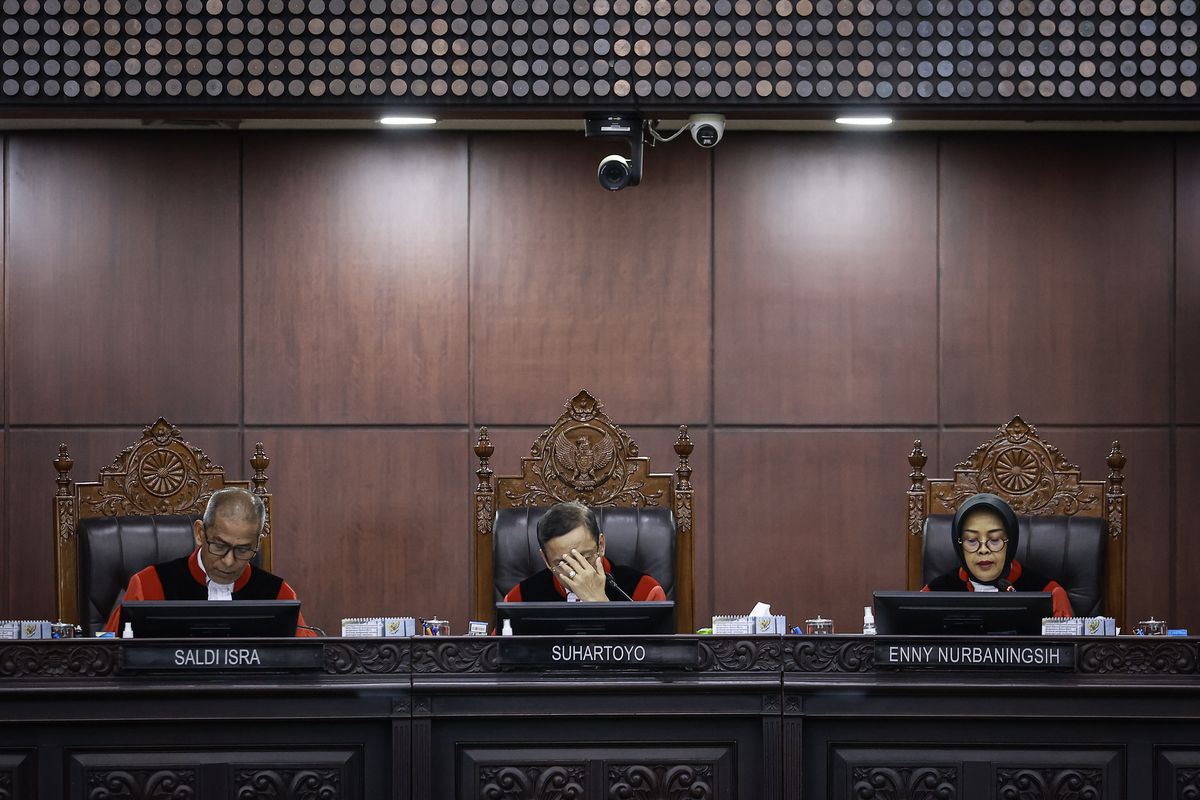
Therefore, it is unfair to conclude that the ruling in Gibran's case represents a “moral bankruptcy of the judiciary” simply because the outcome does not resolve the substantive disquiet of some public members.
Yet, equally unfair is using the inadmissible ruling to assert that all substantive questions automatically lose their relevance.
The law has jurisdictional limits. The public has the right to question. The two do not have to invalidate each other.
Here, the matter becomes larger than just a Vice President’s diploma. The threat to common sense arises not just when procedures defeat substance.



















