
Kabareskrim: Irjen Ahrie Sonta Mobilizes Demonstrations, Kombes Iman Creates Content Attacking Polri
-
News
-
4 minutes ago
This article was translated by AI. Read the original article on Kompas.com. See Original
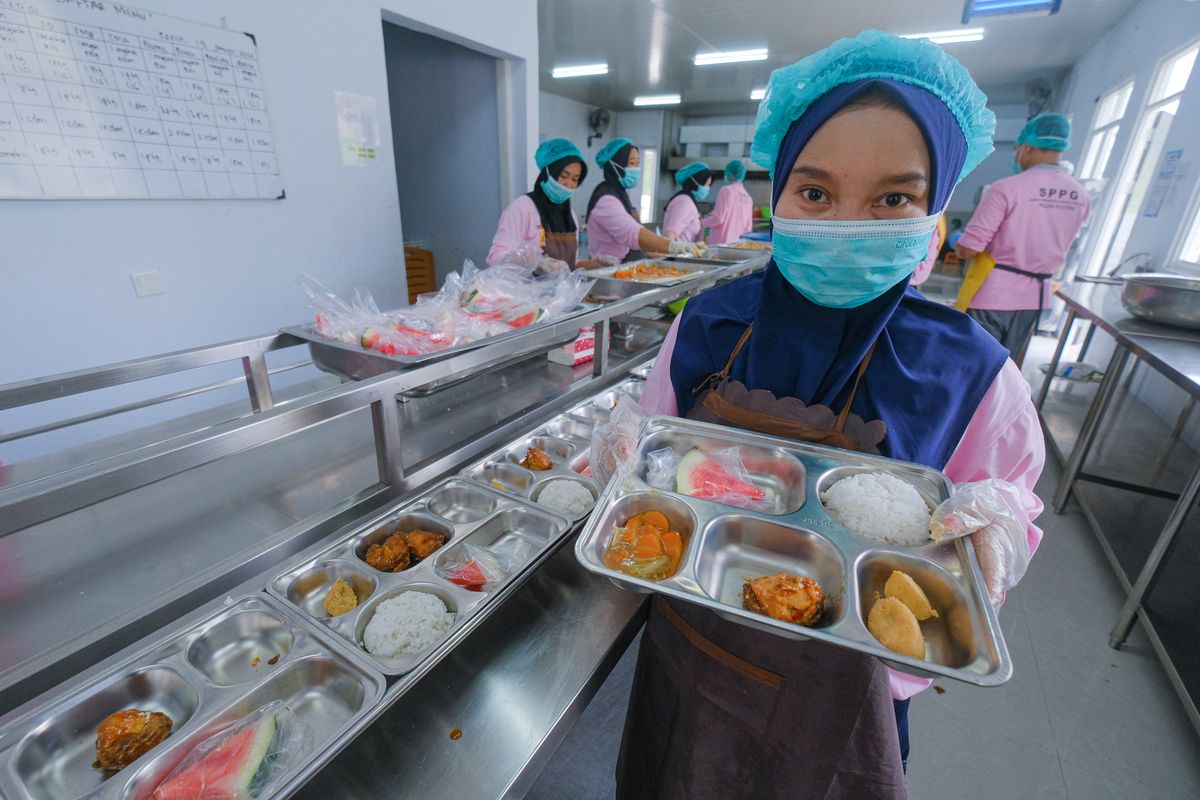
Agustinus Subarsono, a lecturer at the Department of Management and Public Policy at Gadjah Mada University (UGM), suggests that the main goal of the MBG policy should still be directed at solving the issues it aims to address, including food safety.
He argues that before determining the method of serving, policymakers need to first analyze the root causes leading to health issues caused by food.
"Public policies are fundamentally meant to solve public problems, such as addressing cases of student food poisoning in the MBG program and ensuring students' rights to safely consume their meals," Agustinus told Kompas.com on Wednesday (October 7, 2026).
He points out that if the source of the issue comes from bacterial, viral, or parasitic contamination during food preparation, then controls must be strengthened at that stage.
"Thus, the policy taken is preventive, aiming to avoid contamination during the cooking process. The method of serving the food is a secondary issue," he added.
Even so, Agustinus acknowledges that the buffet system also has the potential to enhance the quality of food presentation if managed well.
One key concern is the food being left uncovered and touched by many people.
Consequently, serving times, food temperatures, cleanliness of utensils, and queue management must be strictly regulated.
"Food safety and hygiene issues arise when food is left uncovered and touched by many people, which increases the risk of contamination. Serving times, food temperature, cleanliness of utensils, and queues must be tightly controlled," he noted.
Ubaid Martaji, the National Coordinator of the Indonesian Education Monitoring Network (JPPI), also cautions that the buffet system carries potential risks if time management and distribution processes are not executed properly.
According to Ubaid, cooked food that is distributed to schools must have clear serving time limits.
This control is crucial to prevent bacterial growth in the food.
"The potential for food poisoning in this buffet model still remains. If there are no adequate time limits, such as more than two hours, the risk of bacteria entering the food is possible," he explained to Kompas.com on Wednesday.
Furthermore, Ubaid states that the buffet system needs to be adapted to the conditions of Indonesian schools.
He cites Japan's system, which he believes is supported by different management structures.
In Japan, there are school kitchens or on-site kitchens that support this system.
Food service is also integrated with educational activities, allowing students to be involved in the meal service process.
"The buffet model is implemented in Japan because the kitchen is located in the school. Or what they refer to as on-site kitchens, the kitchens are positioned in the school," he stated.
This condition must be considered when implementing a similar system in Indonesia.
If MBG kitchens remain off-site and food must be sent beforehand, distribution processes, organization, and service must be carefully managed to avoid disrupting learning time.
Moreover, serving in classrooms may require involvement from teachers and students in organizing meals and managing queues.
"In Indonesia, involving teachers and having kitchens not located in schools could prolong the process and occupy precious learning hours," Ubaid warned.