
Kabareskrim: Irjen Ahrie Sonta Mobilizes Demonstrations, Kombes Iman Creates Content Attacking Polri
-
News
-
4 minutes ago
This article was translated by AI. Read the original article on Kompas.com. See Original
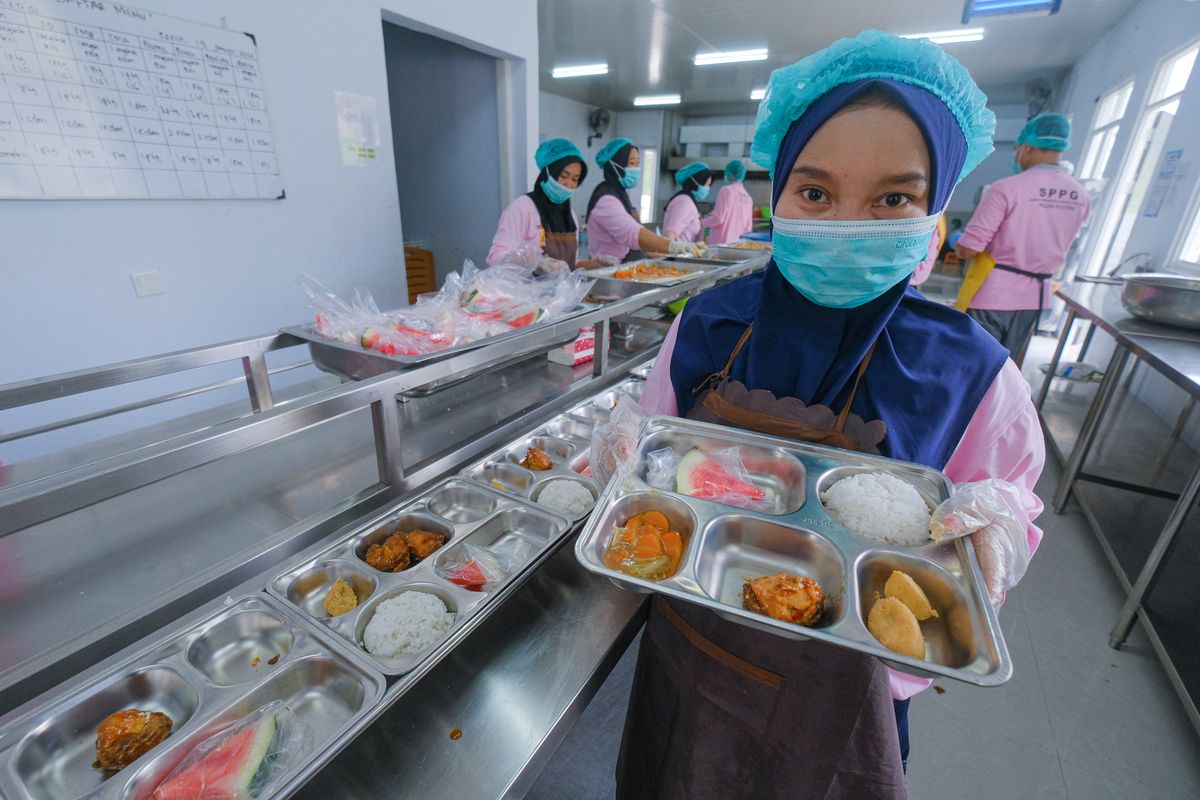
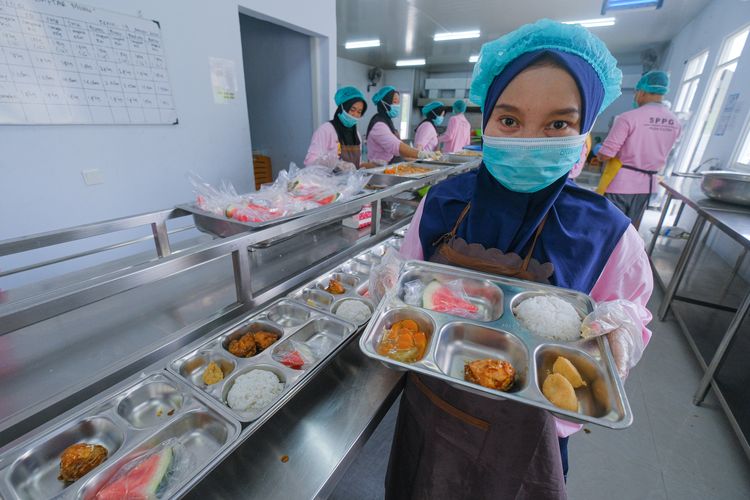
JAKARTA, KOMPAS.com - The Free Nutritious Meal program (MBG) is evolving beyond just the contents of meal boxes.
The method of food presentation is now under trial to ensure that the meals received by students remain safe, fresh, and do not end up as wasted leftovers.
The National Nutrition Agency (BGN) has commenced testing the MBG buffet-style serving in several schools.
This trial, involving over 60 kitchens, began on Monday (October 5, 2026) and is being implemented in various regions, including Central Java, East Java, Yogyakarta, and Papua.
BGN Head Sudaryono stated that under this scheme, food is brought from kitchens to schools while still warm.
Upon arrival, the food is immediately served in classrooms.
"As of today, starting from October 5, we have piloted more than 60 kitchens for buffet service in classrooms. Thus, food is brought warm to the classrooms and served there," Sudaryono said during a visit to the Ministry of Agriculture in Jakarta on Monday.
According to Sudaryono, serving directly in schools is expected to ensure fresher food, as it won't spend too long on the road.
This approach also aims to reduce the risk of food spoilage that can lead to health issues.
"It’s certainly fresher because there is no delay, thus reducing the risk of food spoilage that can cause health problems," he added.
In addition to food safety concerns, BGN believes that the buffet system allows students the freedom to choose the amount of food they wish to take.
Students can also take extra servings if food remains available.
This scheme is expected to align food portions more closely with students' needs, reducing leftovers on their plates.
However, this change in serving method also presents several challenges.
The buffet system is not merely a shift from boxes to serving tables.
Issues such as cleanliness, meal timing, availability of facilities, and waste management need to be addressed from the outset.
Agustinus Subarsono, a lecturer at the Department of Management and Public Policy at Gadjah Mada University (UGM), suggests that the main goal of the MBG policy should still be directed at solving the issues it aims to address, including food safety.
He argues that before determining the method of serving, policymakers need to first analyze the root causes leading to health issues caused by food.
"Public policies are fundamentally meant to solve public problems, such as addressing cases of student food poisoning in the MBG program and ensuring students' rights to safely consume their meals," Agustinus told Kompas.com on Wednesday (October 7, 2026).
He points out that if the source of the issue comes from bacterial, viral, or parasitic contamination during food preparation, then controls must be strengthened at that stage.
"Thus, the policy taken is preventive, aiming to avoid contamination during the cooking process. The method of serving the food is a secondary issue," he added.
Even so, Agustinus acknowledges that the buffet system also has the potential to enhance the quality of food presentation if managed well.
One key concern is the food being left uncovered and touched by many people.
Consequently, serving times, food temperatures, cleanliness of utensils, and queue management must be strictly regulated.
"Food safety and hygiene issues arise when food is left uncovered and touched by many people, which increases the risk of contamination. Serving times, food temperature, cleanliness of utensils, and queues must be tightly controlled," he noted.
Ubaid Martaji, the National Coordinator of the Indonesian Education Monitoring Network (JPPI), also cautions that the buffet system carries potential risks if time management and distribution processes are not executed properly.
According to Ubaid, cooked food that is distributed to schools must have clear serving time limits.
This control is crucial to prevent bacterial growth in the food.
"The potential for food poisoning in this buffet model still remains. If there are no adequate time limits, such as more than two hours, the risk of bacteria entering the food is possible," he explained to Kompas.com on Wednesday.
Furthermore, Ubaid states that the buffet system needs to be adapted to the conditions of Indonesian schools.
He cites Japan's system, which he believes is supported by different management structures.
In Japan, there are school kitchens or on-site kitchens that support this system.
Food service is also integrated with educational activities, allowing students to be involved in the meal service process.
"The buffet model is implemented in Japan because the kitchen is located in the school. Or what they refer to as on-site kitchens, the kitchens are positioned in the school," he stated.
This condition must be considered when implementing a similar system in Indonesia.
If MBG kitchens remain off-site and food must be sent beforehand, distribution processes, organization, and service must be carefully managed to avoid disrupting learning time.
Moreover, serving in classrooms may require involvement from teachers and students in organizing meals and managing queues.
"In Indonesia, involving teachers and having kitchens not located in schools could prolong the process and occupy precious learning hours," Ubaid warned.
Other issues arise from the readiness of school facilities.
The buffet system requires serving spaces, utensils, handwashing facilities, and mechanisms for disposing of food waste.
Agustinus believes these needs must be calculated during the planning phase, as implementing the buffet in classrooms could significantly increase the workload for schools.
"If served in classrooms, I predict that classrooms will likely become messy and require time for serving organization, while break times are limited," he said.
Thus, according to him, time management and risk need to be a primary consideration before this system is expanded.
Schools must also prepare for food waste management.
Leftover food from the buffet process cannot be separated from the cleanliness issues in school environments.
"Moreover, schools must provide waste disposal for leftover food, and this is a major challenge in terms of land and financial resources for schools," Agustinus added.
Member of Commission IX of the House of Representatives, Irma Chaniago, also highlights the preparedness of schools in adopting this system.
She suggests that implementing the buffet might be easier in schools that have multiple levels of education within one complex.
However, different conditions may be encountered in schools with limited classroom numbers and no special food service areas.
"For schools within a single complex, like elementary, junior high, and high school, it might be feasible. But, for schools with only four classrooms and no canteen space, it seems difficult to implement," Irma stated to Kompas.com on Thursday (October 8, 2026).
She also reminded that changes in service systems should not overly burden the MBG kitchen staff.
"As for the budget, the 47 kitchen staff are volunteers, not full employees, earning only Rp 2 million per month. If their duties are increased to manage the buffet, it would be unfair to them," she concluded.
Irma argues that the readiness of kitchens remains a crucial part before the buffet scheme is applied.
The Nutritional Fulfillment Service Units (SPPG) must meet standards related to food handling and storage facilities.
"First, SPPG needs to have qualified food handlers, hygienic standards, wastewater treatment facilities, and adequate cold storage for raw meat, poultry, fish, as well as chillers for vegetables, fruits, and milk," Irma emphasized.