

Habiburokhman Requests Ban on 4 Bullying Suspects in Malang from Taking Exams: No Special Treatment!
-
News
-
21 minutes ago
This article was translated by AI. Read the original article on Kompas.com. See Original
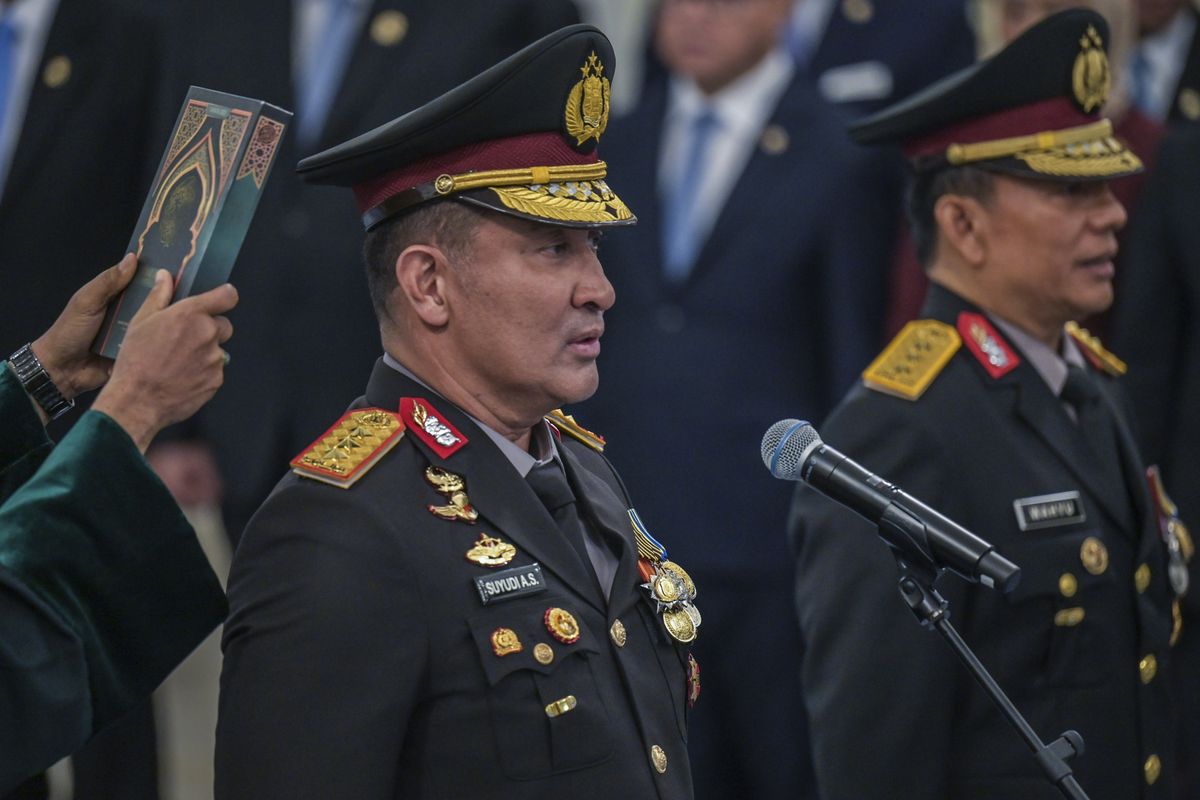
“For this, the National Police Chief will cleanse the internal police force and continue institutional reforms,” he stated.
The former Dean of FIKOM IISIP Jakarta added that the restructuring agenda aligns with institutional work priorities, such as addressing online gambling and corruption offenses.
In his view, this rotation of positions aims to align the executive ranks with the National Police Chief's leadership vision, given that the police adhere to a strict chain of command.
“For the command system to operate efficiently and effectively, compliance from all implementers of the quick wins program is necessary. Compliance can only be achieved through those who resonate with the National Police Chief’s vision,” Jamiluddin noted.
Bambang then reminded that simply replacing personnel does not automatically produce a cultural change.
Reshuffling is inadequate to address various aspirations articulated by Suyudi during the fit and proper test.
Just because there is a change of personnel does not mean community reports will be addressed promptly.
Likewise, it won't necessarily lead to quicker investigations, non-transactional law enforcement, or guarantee that citizens will feel secure when engaging with law enforcement.
“Therefore, replacing a regional police chief without reforming the regency police stations and sector police is akin to changing the head of a machine without fixing its transmission system. The true face of the police is not at the National Headquarters. The face of the police is at service counters, in investigative rooms, on the roads, in sector police offices, and when a citizen arrives to file a report,” Bamabang stated.
Furthermore, an elite turnover can become a mechanism for power reproduction if the promotion and reshuffling system remains unchanged.
If promotions are still determined by proximity, then elite changes will not yield institutional reform.
The same is true if careers continue to be influenced by patronage, oversight remains internal and formalistic, and success is judged more by loyalty than professionalism.
“Only the name on the title board changes. If the elite structure changes but the power relations remain the same, then reform occurs only on the surface. That is the greatest risk of Suyudi's “Blitzkrieg,” he mentioned.
Moreover, Bambang stated that the first 100 days serve as a proving ground, through improving and evaluating the public complaint system and resolving and mapping piled-up public reports.
Then, evaluating regency and sector police, not just officials at the National Headquarters and regional chiefs.
“Moreover, the promotion and reshuffling systems must be made more transparent.
This is why the first 100 days should not merely be a consolidation period for the new National Police Chief.
This is a test of whether Suyudi’s “Blitzkrieg” is truly the beginning of police reform or just a lightning war to seize control of the old fleet,” he concluded.
Member of the Indonesian House of Representatives, Lola Nelria Oktavia, also reminded that the reshuffle of 88 high-ranking officers (pati) and middle-ranking officers (pamen) should not be interpreted merely as a change of personnel.
This move should serve as a momentum to enhance the quality of the police.
According to Lola, the reshuffle and rotation of police officials—including regional police chiefs and top officials at the National Police Headquarters—are part of the National Police Chief’s authority to reorganize and consolidate the organization.
However, she warned that each reshuffle and rotation process needs to be conducted professionally, objectively, based on performance records, competence, organizational needs, and merit principles.
“Let it not be perceived that the reshuffle is merely a change of personnel, but rather a part of the effort to enhance the performance and quality of police services to the community,” she emphasized.
As a member of Commission III of the House of Representatives, she will monitor and oversee every policy implemented within the police force.
Because, according to her, the measure of success of the National Police Chief’s leadership is not only based on structural changes or personnel shifts.

























