

Habiburokhman Requests Ban on 4 Bullying Suspects in Malang from Taking Exams: No Special Treatment!
-
News
-
22 minutes ago
This article was translated by AI. Read the original article on Kompas.com. See Original
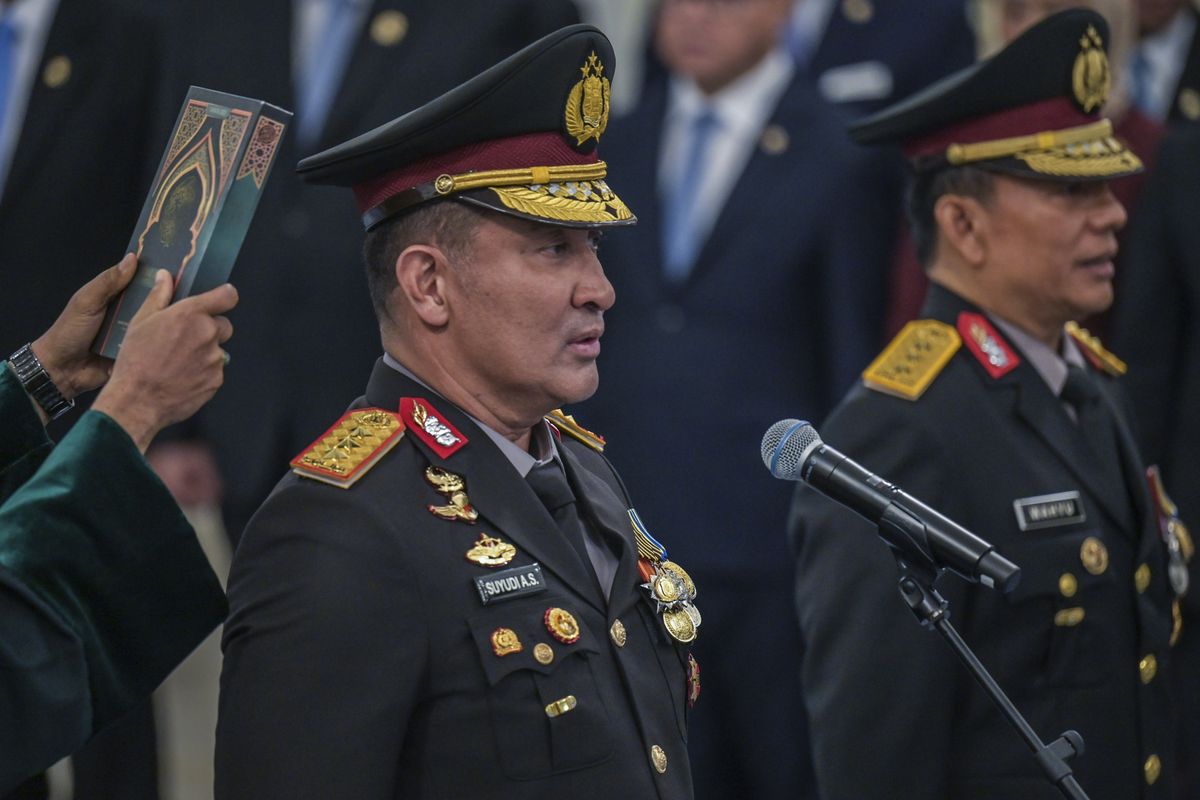
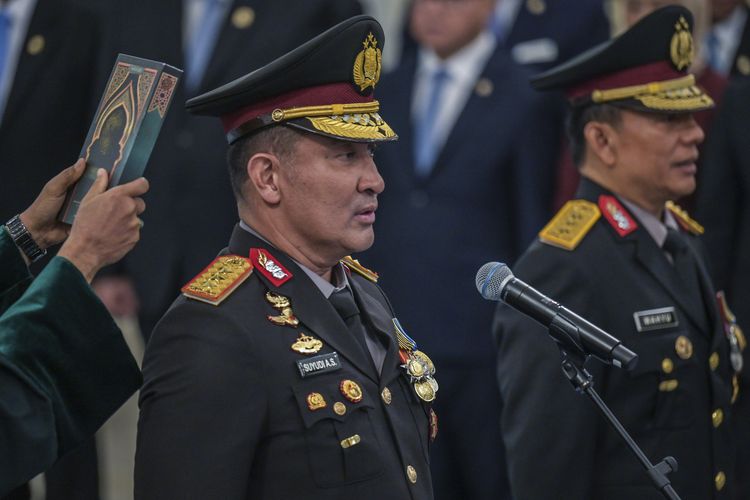
JAKARTA, KOMPAS.com - National Police Chief Suyudi Ario Seto took significant action by carrying out a reshuffle and promotion just a day after his appointment on Thursday (1/10/2026).
The changes are noteworthy, involving approximately 88 high-ranking officers and middle-ranking officers.
The reshuffle is outlined in Telegram Letter Number ST/2205/X/KEP./2026.
Seventy of these personnel received promotions or were assigned to new positions.
Many of the positions are considered strategic, including 14 top officials at the National Police Headquarters and 19 regional police chiefs (kapolda).
So, what drives Suyudi to reshuffle his ranks?
Police observer from ISESS (Institute for Security & Strategic Studies) Bambang Rukminto believes the reshuffle should not be merely seen as an organizational refreshment.
He argues that the replaced positions are not secondary roles.
The reshuffle includes high-ranking officials such as the Inspector General for Supervision (Irwasum), the Chief Criminal Investigator (Kabareskrim), the Chief Secretary (Kabaharkam), the Head of Education and Training (Kalemdiklat), and several regional police chiefs who are key nodes of power, oversight, law enforcement, security management, and organizational culture formation within the police.
Changing individuals in these critical positions, according to Bambang, signifies a shift in part of the internal power structure of the police.
“Especially since it happened immediately after the turnover of the National Police Chief and Deputy Chief.
I refer to this as a “Blitzkrieg”—a swift operation.
In fact, considering the breadth of positions affected, this move by General Suyudi Ario Seto could be termed a “bedol desa”,” Bambang said on Monday.
He also noted that the reshuffle represents a consolidation of power alongside the leadership transition.
According to Bambang, every new leadership, in this case the National Police Chief, needs trusted individuals.
This, he says, is part of organizational logic.
“It’s impossible for a new leader to be forced to execute a change agenda with the entire elite configuration shaped by the previous leadership. Therefore, consolidation is a reasonable step,” he explained.
While it is a form of consolidation, Bambang pointed out that there is a significant difference between leadership consolidation and power consolidation.
Leadership consolidation is necessary for the organization to operate effectively.
In contrast, power consolidation can be dangerous if its sole purpose is to ensure loyalty to the leadership.
“Here’s where Suyudi's actions must be scrutinized. Some of the officials transferred are figures that have long held certain positions or have held strategic roles multiple times. Their replacement can be interpreted positively as an effort to open up opportunities for regeneration and to break long-term concentrations of influence,” he stated.
Political communications observer from Esa Unggul University, Jamiluddin Ritonga, noted that this massive overhaul was also executed to realize the quick wins program put forth by the National Police Chief.
This restructuring, he said, is not surprising.
He recalled Suyudi’s commitment during the fit and proper test in the parliament.
Suyudi committed to restructuring the internal police force within his first 100 days in office.
“For this, the National Police Chief will cleanse the internal police force and continue institutional reforms,” he stated.
The former Dean of FIKOM IISIP Jakarta added that the restructuring agenda aligns with institutional work priorities, such as addressing online gambling and corruption offenses.
In his view, this rotation of positions aims to align the executive ranks with the National Police Chief's leadership vision, given that the police adhere to a strict chain of command.
“For the command system to operate efficiently and effectively, compliance from all implementers of the quick wins program is necessary. Compliance can only be achieved through those who resonate with the National Police Chief’s vision,” Jamiluddin noted.
Bambang then reminded that simply replacing personnel does not automatically produce a cultural change.
Reshuffling is inadequate to address various aspirations articulated by Suyudi during the fit and proper test.
Just because there is a change of personnel does not mean community reports will be addressed promptly.
Likewise, it won't necessarily lead to quicker investigations, non-transactional law enforcement, or guarantee that citizens will feel secure when engaging with law enforcement.
“Therefore, replacing a regional police chief without reforming the regency police stations and sector police is akin to changing the head of a machine without fixing its transmission system. The true face of the police is not at the National Headquarters. The face of the police is at service counters, in investigative rooms, on the roads, in sector police offices, and when a citizen arrives to file a report,” Bamabang stated.
Furthermore, an elite turnover can become a mechanism for power reproduction if the promotion and reshuffling system remains unchanged.
If promotions are still determined by proximity, then elite changes will not yield institutional reform.
The same is true if careers continue to be influenced by patronage, oversight remains internal and formalistic, and success is judged more by loyalty than professionalism.
“Only the name on the title board changes. If the elite structure changes but the power relations remain the same, then reform occurs only on the surface. That is the greatest risk of Suyudi's “Blitzkrieg,” he mentioned.
Moreover, Bambang stated that the first 100 days serve as a proving ground, through improving and evaluating the public complaint system and resolving and mapping piled-up public reports.
Then, evaluating regency and sector police, not just officials at the National Headquarters and regional chiefs.
“Moreover, the promotion and reshuffling systems must be made more transparent.
This is why the first 100 days should not merely be a consolidation period for the new National Police Chief.
This is a test of whether Suyudi’s “Blitzkrieg” is truly the beginning of police reform or just a lightning war to seize control of the old fleet,” he concluded.
Member of the Indonesian House of Representatives, Lola Nelria Oktavia, also reminded that the reshuffle of 88 high-ranking officers (pati) and middle-ranking officers (pamen) should not be interpreted merely as a change of personnel.
This move should serve as a momentum to enhance the quality of the police.
According to Lola, the reshuffle and rotation of police officials—including regional police chiefs and top officials at the National Police Headquarters—are part of the National Police Chief’s authority to reorganize and consolidate the organization.
However, she warned that each reshuffle and rotation process needs to be conducted professionally, objectively, based on performance records, competence, organizational needs, and merit principles.
“Let it not be perceived that the reshuffle is merely a change of personnel, but rather a part of the effort to enhance the performance and quality of police services to the community,” she emphasized.
As a member of Commission III of the House of Representatives, she will monitor and oversee every policy implemented within the police force.
Because, according to her, the measure of success of the National Police Chief’s leadership is not only based on structural changes or personnel shifts.
“But on how much the community feels a service improvement, fair law enforcement, professionalism, and a sense of security,” she added.
Meanwhile, the National Police Commission (Kompolnas) reminded that the reshuffle conducted by Suyudi should aim to realize its vision and mission.
Kompolnas member Choirul Anam stated that reshuffling is a concrete step to select the best ranks to realize his vision and mission.
“This reshuffle should be contextualized as the embodiment of vision and mission,” Anam stated on Sunday.
In alignment with Bambang, Anam raised at least two main challenges faced by the new officials.
The first is to bring the police closer to the community, in accordance with the current changed tagline.
The second is to expedite the handling of complaints and reports from the public.
Therefore, he encourages the establishment of a new work culture within the police.
One aspect of the culture that needs to be consistently built by senior officials (PJU) at the National Police Headquarters down to the regional level is a low-profile attitude.
“Proximity to the community will not happen without a new culture, one being low profile. This is a crucial challenge for the PKU at the National Police Headquarters and new officials in the regions,” Anam said.
Regarding the handling of public complaints, Anam urged the new officials to utilize and develop the digital complaint system that has been established.
Anam emphasized that the execution of duties and law enforcement must prioritize principles of transparency and accountability.
“Our message from Kompolnas is that whatever the choices and visions are, accountability and transparency remain paramount in services, law enforcement, and efforts to build closeness with the community,” he said.
Police Public Relations Division Head Brigadier General Trunoyudo Wisnu Andiko stated that the replacement of several officials within the police is a form of accelerating the institution's response to the dynamics and challenges faced by the community.
This is because the National Police Chief has emphasized the importance of the police’s presence in the community, alongside the institution’s changed tagline.
According to him, the principle of “Police alongside the community” is one of the key emphases in carrying out police duties.
“Thus, this opportunity will also enhance dynamics in line with community expectations,” he insisted.
Meanwhile, during the fit and proper test at the Indonesian House of Representatives, Suyudi mentioned his “aspirations” as he assumed the role of National Police Chief.
He expressed a desire that when victims of crime approach the police, they should find assistance rather than complications.
Furthermore, when the community provides criticism, the police should be able to listen without losing their authority.
When crime poses a threat, he believes the police should be at the forefront with courage and professionalism.
Finally, when a child sees the police, they should feel secure, not afraid.
“That is the meaning of police alongside the community,” Suyudi emphasized.

























